The short answer
For a first trip, we suggest a business hotel in a convenient neighborhood for most nights, plus one night in a ryokan (a traditional inn) for the part of Japan that is hardest to find at home: tatami floors, a hot spring bath, a multi-course dinner and a futon bed. Everything else is optional. Capsule hotels and temple stays are fun for one night, and a rental apartment suits families and long stays.
Japanese lodging differs from American lodging in a few ways that matter: rooms are smaller, many places charge per person not per room, most ryokan include dinner in the price, check-in is mid-afternoon and strict, and the hotel tax now varies a lot by city. This page covers each type, then taxes, neighborhoods for five cities, and when to book.
| Type | Typical price | US$ | Best for |
|---|---|---|---|
| Business hotel | ¥7,000-¥20,000 per room | about $45-127 | Most nights; solo and couples |
| Ryokan (with 2 meals) | ¥15,000-¥30,000 per person | about $96-191 | One memorable night |
| Minshuku | ¥5,000-¥14,000 per person | about $32-89 | Countryside; home cooking |
| Capsule hotel | ¥3,000-¥5,000 per person | about $19-32 | Budget, one night |
| Temple lodging (shukubo) | ¥6,000-¥20,000 per person | about $38-127 | Koyasan, with vegetarian meals |
| Love hotel | ¥6,000-¥12,000 per room | about $38-76 | Short or late stays |
The ranges come from a Japan-guide overview last updated in March 2025, so 2026 rates in big cities are often higher, and city center rates in Tokyo, Kyoto and Osaka in busy seasons can be double. The tier marks we use: $ is under $120 a night for a double, $$ is $120 to $300, and $$$ is over $300.
Business hotels
$ to $$. The business hotel is the workhorse of Japanese travel: a small, clean room with a private "unit bath" (shower, tub and toilet in one molded pod), a desk, free tea, slippers and a convenience store or vending machines downstairs. The big domestic chains tend to be near train stations, and that is the main reason to choose them. Many include a simple breakfast for a small extra charge.
What to know: singles are often around 100 to 160 square feet (9-15 m²), doubles around 130 to 215 square feet (12-20 m²), and "twin" means two single beds. Smoking and non-smoking floors both exist, so choose non-smoking when you book. Large suitcases are hard to open on the floor, so plan on keeping your main bag closed and using a smaller bag for daily needs, an approach that also helps with luggage forwarding.
If you want more space, search for "family room", "triple" or "serviced apartment"; the extra cost is often smaller than for a second room.
Different from home
There is no tipping at hotels, no resort fees and rarely a deposit, but you do give your passport at check-in. Japanese law requires hotels to record the passport details of foreign guests, and most will scan or photocopy it. Rooms can be priced per person, so confirm whether the quoted rate is for the room or per guest.
Ryokan: dinner, kaiseki, yukata and futon
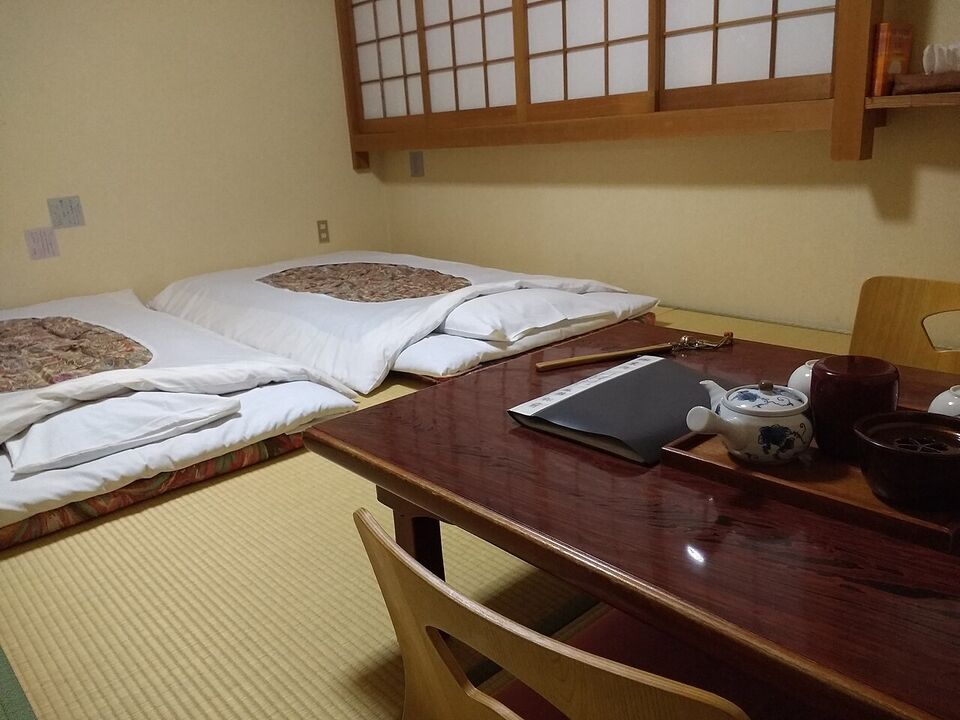
$$ to $$$. A ryokan is a traditional inn with tatami-floored rooms, a communal or private bath (often fed by a hot spring), and a rhythm that revolves around dinner. Typical rates run about ¥15,000 to ¥30,000 (about $96-191) per person per night with dinner and breakfast, though the range is wide, from about ¥6,000 (about $38) in a simple country inn to well over ¥60,000 (about $382) at the top end.
The schedule
- Check-in is typically from 3 p.m. Arrive by 4 or 5 p.m. so you have time for tea, a bath and the evening. Staff show you to your room and point out the baths and their hours.
- Dinner is usually at 6 p.m. or 7 p.m. in your room or a dining room. It is normally kaiseki, a series of small seasonal dishes served in order, so punctuality matters. You choose the time when you book. If you will be late, call the inn; many will delay or cancel the meal.
- Bedding: staff move the table and lay out a futon on the tatami while you are at dinner or in the bath. Futons are thinner than a Western mattress; if you have back problems, say so when booking.
- Breakfast is a Japanese set meal (rice, fish, miso soup, pickles) at about 7:30 to 8:30 a.m. Check-out is usually by 10 a.m.
You will be given a yukata, a light cotton robe. Wear it to the bath, dinner and bed, and around the inn. In some hot spring towns, you can stroll outside in it with wooden sandals. Wrap it with the left side over the right.
Baths and tattoos
Baths at ryokan are normally separated by gender, and you wash and rinse before getting in, with no swimsuit. Many places have private "family baths" you can book. Rules about tattoos vary; ask before you reserve if you have visible tattoos. Our hot springs guide explains the bathing steps and the tattoo question, and etiquette covers slippers, shoes and tatami.
Insider tip
Pick a ryokan in a place worth an evening, such as a hot spring town (Hakone is the usual first choice from Tokyo; see Hakone) rather than a city. Book the room with meals, and tell the inn about allergies, vegetarian needs or dislikes when you reserve, not at the table. Most can adjust a menu with a few days' notice, but kaiseki is hard to change on the night.
Minshuku, pensions and guesthouses
$. A minshuku is a family-run bed and breakfast, usually in the countryside, near hot springs, on the coast or in mountain villages. Rooms have tatami and futon, bathrooms and toilets are often shared, and meals are home-style. Rates are about ¥5,000 to ¥14,000 (about $32-89) per person, often with dinner and breakfast, and some places have breakfast only. You may be asked to lay out your own futon. Check-in is early, around 3 to 5 p.m., and the hosts expect you at dinner time.
Shirakawa-go and Gokayama are known for farmhouse stays of this kind, and rural Shikoku and Kyushu have many. Booking is often by phone, local tourist association or the big booking sites, and cash is common. See the Japanese Alps for farmhouse areas.
Capsule hotels and hostels
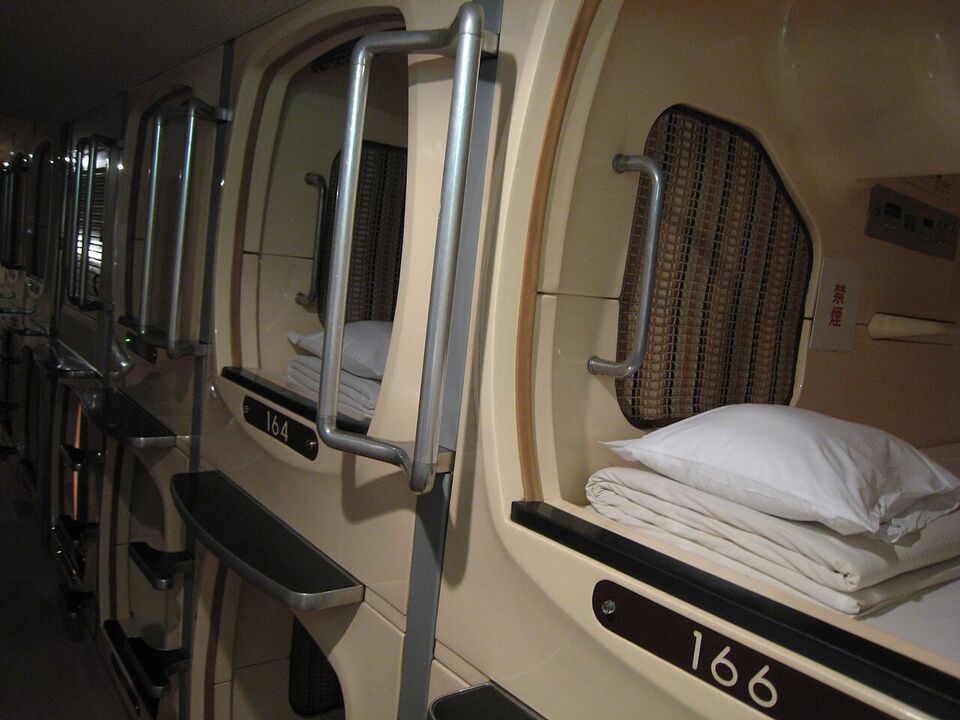
$. A capsule hotel gives you a bed-sized pod, about the length and width of a single bed and tall enough to sit up in, with a curtain or door, in a shared sleeping hall. Luggage goes in a locker, and you change into the provided robe and slippers. Prices are about ¥3,000 to ¥5,000 (about $19-32) per night by recent guides, and more in central Tokyo or peak season. Many are men-only, but newer ones offer women-only floors or entire separate floors and elevators, so check the listing.
Capsules are noisy if someone snores, and there is no space to unpack. We suggest them for a single night, such as the night before an early flight, not for a long stay. Hostels (dorm beds around ¥2,000 to ¥5,000, or $13-32) work for solo travelers who want company and cheap beds; Japan Youth Hostels runs more than 100 locations.
Temple lodging at Koyasan
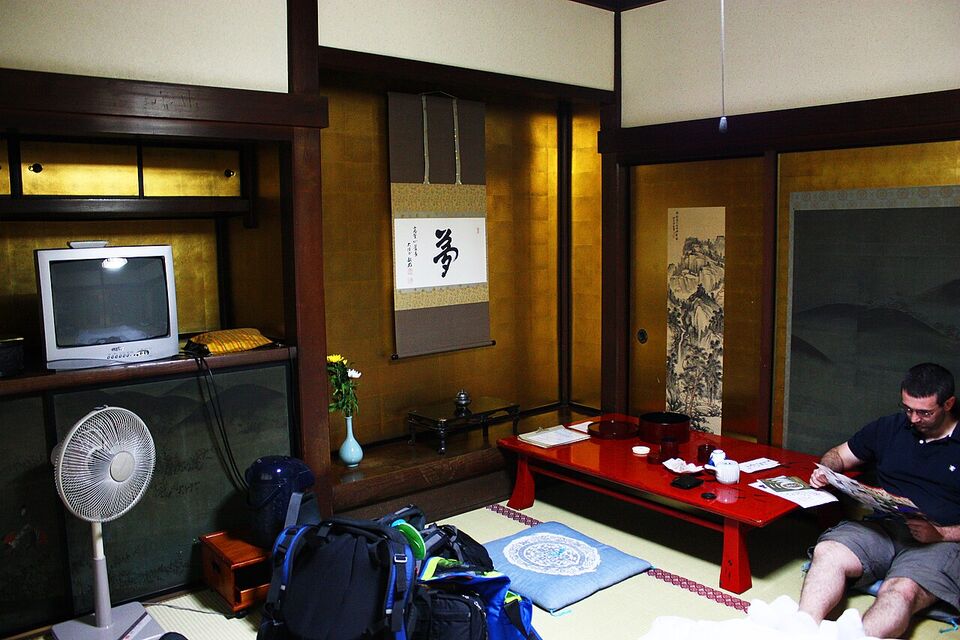
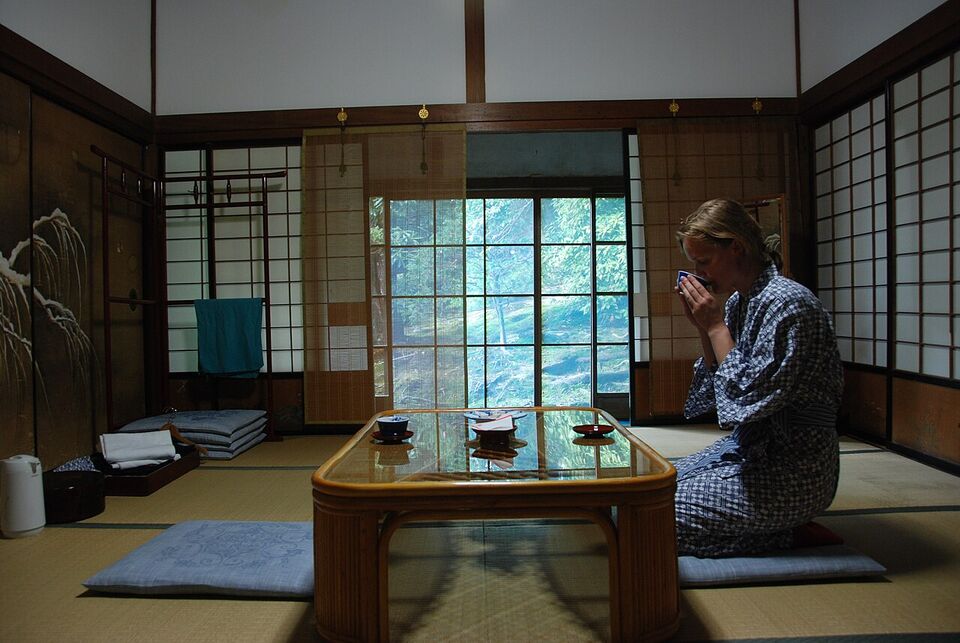
$ to $$. A shukubo is a temple that takes guests. Koyasan (Mount Koya), the Buddhist mountain monastery south of Osaka, has dozens of them, and it is among the best places in Japan to stay in one. A stay typically includes two vegetarian meals (shojin ryori) in the evening and morning, a tatami room with futon, and the option to join morning prayers, which usually start around 6 a.m. Rates are commonly quoted at about ¥6,000 to ¥20,000 (about $38-127) per person; check the specific temple.
It is simple: shared bathrooms are common, rooms are quiet, and lights and curtains follow monastery routines. Dinner is usually served early, around 5:30 to 6 p.m. Reservations go through the official Koyasan tourist association and shukubo association websites (the Japan National Tourism Organization points to both), through the temple itself, or by phone; book months ahead for autumn leaves. To get there, take the Nankai Line from Osaka's Namba Station, about 1.5 hours by express plus a five-minute cable car. See Temples and Shrines for temple manners.
Love hotels
Love hotels are a normal part of Japan's hotel landscape and not a subject for embarrassment. They are rooms that can be rented for a "rest" of two or three hours or for a night, usually at about ¥6,000 to ¥12,000 (about $38-76) per room, with automated check-in at a panel or a screen and little or no contact with staff. Rooms are often large and well equipped, and the "stay" rate from late evening can be cheaper than a business hotel.
They are not designed for tourists, so English service is limited and some do not take reservations. They also tend not to suit families, and some places restrict children. If you use one, check the overnight "stay" times, because they open and close at fixed hours, and confirm what is included. For most visitors, a business hotel is simpler.
Vacation rentals and the minpaku law
Apartments and houses are a good fit for families, groups and stays of a week or more. Since June 2018, short-term rentals have been regulated by the Private Lodging Business Act ("minpaku"). Hosts must notify the authorities and display a registration number, and are limited to 180 nights a year, and local governments can add stricter rules. Kyoto is widely reported to apply much tighter limits in many residential zones.
- Check the registration number in the listing before you book. An unregistered rental can be shut down on short notice, leaving you without a room.
- Read the house rules. Noise, trash sorting and shoes are taken seriously in Japanese buildings, and neighbors complain to the host.
- Check-in is often by lockbox or self-service code, and some hosts ask for a passport photo, as hotels do.
- Compare the total. Cleaning fees, the accommodation tax and platform fees add up, and a small hotel room is sometimes the better value for two people.
We have not summarized local rules for each city, and they change, so confirm with the host that the listing is registered and ask what limits apply in that city.
Watch out
Do not rely on a "free cancellation" rate that stops 30 or 60 days before arrival if your plans may change, and never book a rental you cannot find a registration number for. Keep proof of your booking, the address in Japanese and the host's phone number on your phone, and get a screenshot in case the listing disappears.
Check-in, small rooms and daily practicalities
Hotel check-in is usually from 3 p.m. to 4 p.m., sometimes as early as 2 p.m., and check-out is at 10 or 11 a.m. If you arrive early, all hotels will store your bag. Late arrivals after about 10 p.m. should tell the hotel, since the desk may be unstaffed or the booking may be released. Almost every hotel asks for your passport and a signature at check-in, so keep it handy rather than packed.
Plan on a small room, a firm bed, a tiny bath you can fill to the neck, and a toilet with a heated seat and buttons. Business hotels give you a nightwear set. Some hotels do not clean your room daily; ask at the desk if you want fresh towels. Elevators are small, so a large bag and a second person may not fit at once.
When you plan the first night, consider the airport arrival. A flight that lands in the afternoon at Tokyo or Osaka means you can check in at 4 p.m. after the train ride into town. A flight that lands at 6 a.m. will need luggage storage and a place to rest: see Flights to Japan for arrival times.
Hotel taxes you pay on top of the room rate
Japanese cities charge a per-person, per-night lodging tax, usually collected at check-in or check-out, and not included in the room rate. The tax is calculated on the room rate per person per night, excluding consumption tax. These amounts changed in 2025 and 2026 and are still changing, so check each city. The table shows the rates we found: Kyoto's come from the city's new schedule as reported by Time Out, Osaka's from Osaka Prefecture, Sapporo's and Hokkaido's from the city and prefecture, and the others from 2026 roundups.
| Place | Rate per person per night (by room price per person) | US$ |
|---|---|---|
| Kyoto City (from March 1, 2026) | Under ¥6,000: ¥200. ¥6,000-¥19,999: ¥400. ¥20,000-¥49,999: ¥1,000. ¥50,000-¥99,999: ¥4,000. ¥100,000 and up: ¥10,000 | about $1.30 to $64 |
| Tokyo (since 2002) | Under ¥10,000: free. ¥10,000-¥14,999: ¥100. ¥15,000 and up: ¥200 | free to about $1.30 |
| Osaka Prefecture (since 2017; rates raised September 1, 2025) | Under ¥5,000: free. ¥5,000-¥14,999: ¥200. ¥15,000-¥19,999: ¥400. ¥20,000 and up: ¥500 | free to about $3 |
| Hiroshima Prefecture (reported from April 2026; check) | Under ¥6,000: free. ¥6,000 and up: ¥200 | about $1.30 |
| Fukuoka City (check current rates) | Under ¥20,000: ¥200. ¥20,000 and up: ¥500 | about $1.30-3 |
| Sapporo (from April 1, 2026, city plus Hokkaido tax) | About ¥300 per person per night under ¥20,000, about ¥400 from ¥20,000 to under ¥50,000, and about ¥1,000 at ¥50,000 and up | about $1.90 to $6.40 |
| Elsewhere in Hokkaido | A prefectural tax began April 1, 2026, on top of any town tax. Kutchan (Niseko area) charges 3% of the room rate, and Niseko Town is reported to be moving to 3% from November 2026 | varies |
Tokyo has discussed a flat 3% rate from 2028 (a proposal, not law). Many other cities, including Sendai, Nagano, Kumamoto and Atami, have added taxes in 2025 and 2026. A rate of ¥200 is about $1.30, so the amounts are small for budget rooms, but Kyoto's new ¥4,000 and ¥10,000 tiers (about $25 and $64) matter for luxury ryokan and hotels. See Money in Japan and the budget guide for where lodging fits in daily costs.
Where to stay, city by city
The best base is almost always the one closest to a major train station on the line you will use most. These suggestions are reasoned from transit and the character of each area, not ratings.
Tokyo
- Shinjuku: the largest rail hub, with direct trains to Narita (Narita Express), Haneda, Hakone (Odakyu) and Mount Fuji (buses). Huge choice of business hotels, and lively at night; some streets are loud.
- Tokyo Station, Marunouchi and Nihombashi: best for Shinkansen arrivals and day trips, calm in the evening, and often more expensive.
- Asakusa and Ueno: older, more traditional streets, often cheaper, with the Skyliner to Narita from Ueno and Asakusa's temple area.
- Shibuya and Ginza: Shibuya for young nightlife, Ginza for shopping and quiet streets, both with convenient subways.
See Tokyo for neighborhood details.
Kyoto
- Kyoto Station area: trains from Tokyo and the airport, buses, and the easiest luggage handling. Less atmosphere, but practical.
- Kawaramachi and Shijo: central, walkable, with restaurants and markets and easy bus access to the east side.
- Higashiyama and Gion: historic streets and many ryokan, with the best evenings but the most crowds by day. Respect the private-alley rules in Gion.
- Arashiyama: quiet at night, good for ryokan and early starts, but far from the rest.
Our Kyoto guide has more on neighborhoods and getting around.
Osaka
- Namba: food, nightlife and the Nankai train to Kansai Airport and Koyasan. Very busy.
- Umeda (Kita): around Osaka Station, with good rail links to Kyoto, Kobe and Himeji, and many business hotels.
- Shin-Osaka: next to the Shinkansen, handy for early departures, quiet in the evening.
- Tennoji and the bay area: cheaper rooms, and Universal Studios Japan is on the bay line.
See Osaka for the districts.
Hiroshima
- Around Hiroshima Station: Shinkansen and the trains to Miyajimaguchi, with plenty of business hotels.
- Peace Park and Hondori: central, walkable to the Peace Memorial Museum and tram lines.
- Miyajima: a few ryokan on the island offer quiet evenings after day-trippers leave; check the last ferry time.
Sapporo
- Sapporo Station and Odori: subway, trains to the airport, and the snow festival site (February 4-11, 2027), so book early.
- Susukino: the nightlife and ramen district, with many hotels; loud late.
- Nakajima Park: a quiet area near a park, a short subway ride from the center.
Read Hokkaido for the wider region, including driving, and see Driving in Japan if you want a rental car.
When to book
Japan's busy periods are tight, and the best rooms go early. A rough guide, which we base on how the season works, not on any hotel's published release dates:
- Cherry blossoms (about late March to early April): book Kyoto and Tokyo six to twelve months ahead, and ryokan as soon as dates open. Because bloom forecasts only appear from December to February, choose free-cancellation rates. See Cherry Blossoms.
- Autumn leaves (mid-November to early December): book six to nine months ahead. In 2026 the forecast peak was about November 30 in Tokyo and December 14 in Kyoto, but the dates move; see When to Go.
- Golden Week, Obon and New Year: Golden Week 2027 runs about April 29 to May 5, Obon is about August 13 to 16, and New Year is about December 29 to January 3. Prices rise, and many ryokan sell out. Book as early as you can.
- Snow Festival in Sapporo (February 4-11, 2027) and ski weeks: book at least four to six months ahead.
Save money
Book a refundable rate as soon as dates open, then watch for lower prices and rebook. Midweek nights are cheaper than Saturdays, and a ryokan on a weekday can cost a good deal less than on a weekend. Dinner-inclusive rates are often better value than adding dinner separately, because the meal is hard to buy cheaply in a small onsen town.
Add it to a route in the trip builder, or ask us to plan the hotels, trains and guides for you.