Overview
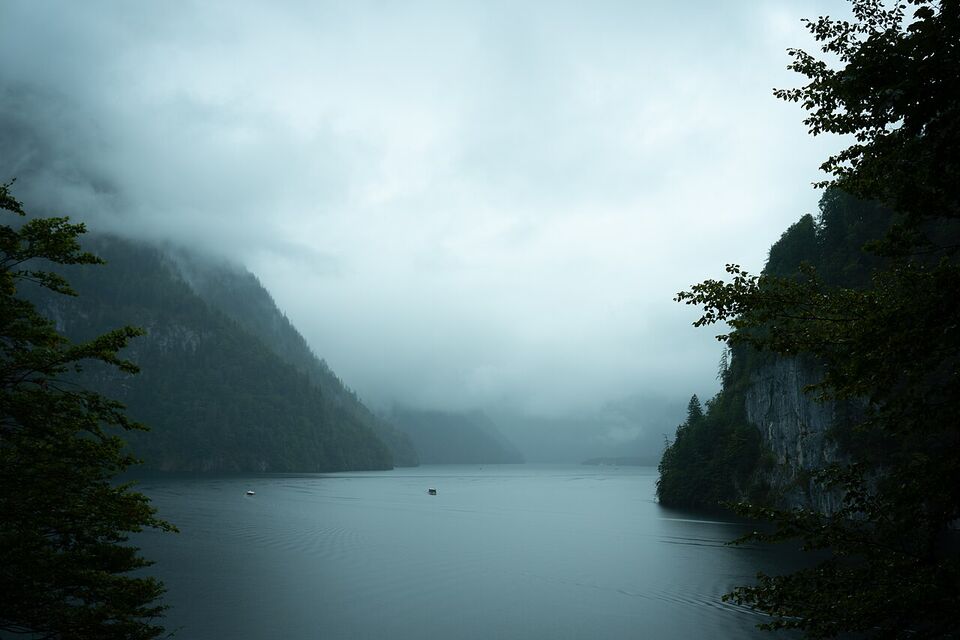
The Bavarian Alps are the part of southern Germany where the country runs into the mountains, along the Austrian border south of Munich. The two bases most visitors use are Garmisch-Partenkirchen in the west, under Germany's highest mountain, and Berchtesgaden in the far southeast, around the Königssee. Both are reachable from Munich without a car, and both have enough to fill two or three days.
Plan around the season. Summer (June to September) is for hiking, lake boats and cable cars. Winter (December to March) is for skiing and quiet village walks. The months in between, roughly late October through mid-November and April through May, are the awkward ones: many lifts stop for annual maintenance and some mountain huts close. That matters in November 2026: the summer lift season ends on November 8, and the Zugspitze has a series of maintenance closures before winter operation starts on November 27.
This page covers the main stops in a logical order: how to get there, Garmisch and the Zugspitze, the villages of Mittenwald, Ettal and Oberammergau, then Berchtesgaden, the Königssee and the Obersalzberg. It finishes with hiking basics, skiing, where to stay and a three-day plan. If you want the most famous castle in the same part of Bavaria, see our guide to Neuschwanstein, which lies about an hour west of Garmisch.
Getting there from Munich
By train
Garmisch-Partenkirchen sits on a regional rail line from Munich Hauptbahnhof (main station), with trains roughly every hour. The trip takes about 1 hour 20 minutes to 1 hour 40 minutes depending on the train. The line continues to Mittenwald (about 20 minutes further) and on to Innsbruck in Austria.
Regional trains are covered by the Deutschlandticket, the national monthly pass (€63, about $71, in 2026; €66.80, about $75, from January 1, 2027). For a single trip, a Bavaria day ticket for regional trains is often cheaper than a point-to-point fare for two or more travelers; check the current price on bahn.de. Our guide to train tickets explains the options.
Berchtesgaden is slower. You usually take a regional train from Munich to Freilassing and change to the local line, which takes about 2.5 to 3 hours in total. Note that the Rosenheim-Salzburg line is scheduled to close for renovation from February 7 to July 9, 2027, and trains between Munich and Salzburg will be diverted (the EC trains via Mühldorf). Expect replacement buses or longer trips on the Berchtesgaden route in that period, and check bahn.de before booking.
By car
The drive from Munich to Garmisch is about 55 miles (90 km), roughly an hour without traffic, on the A95 and then the B2. Berchtesgaden is about 95 miles (155 km), usually 1.5 to 2 hours on the A8. On sunny summer weekends and at the end of ski weekends, expect heavy traffic on both roads. Parking at the Zugspitze, the Partnach Gorge and the Königssee is paid and fills up by mid-morning in season. See our driving guide for rules, winter tires and fuel.
Different from home
Germany has temporary controls on its land borders, including with Austria. Berchtesgaden is almost surrounded by Austria, and Salzburg is only about 12 miles (20 km) away. Carry your passport on any day trip across the border, even if no one stops you.
Garmisch-Partenkirchen
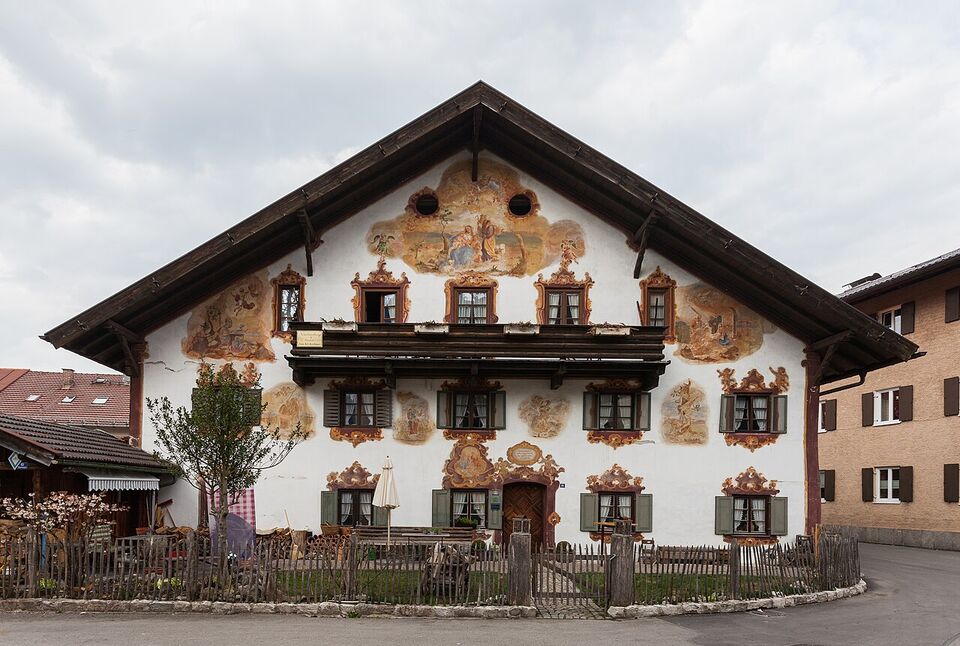
Garmisch-Partenkirchen is two old villages joined in 1935 for the Winter Olympics of 1936. It is the largest base in the western Alps, at 2,320 ft (708 m), with painted house fronts, a pedestrian-friendly center and trailheads you can reach on foot. The 1936 ski stadium is still in use for the New Year's ski jumping.
Zugspitze
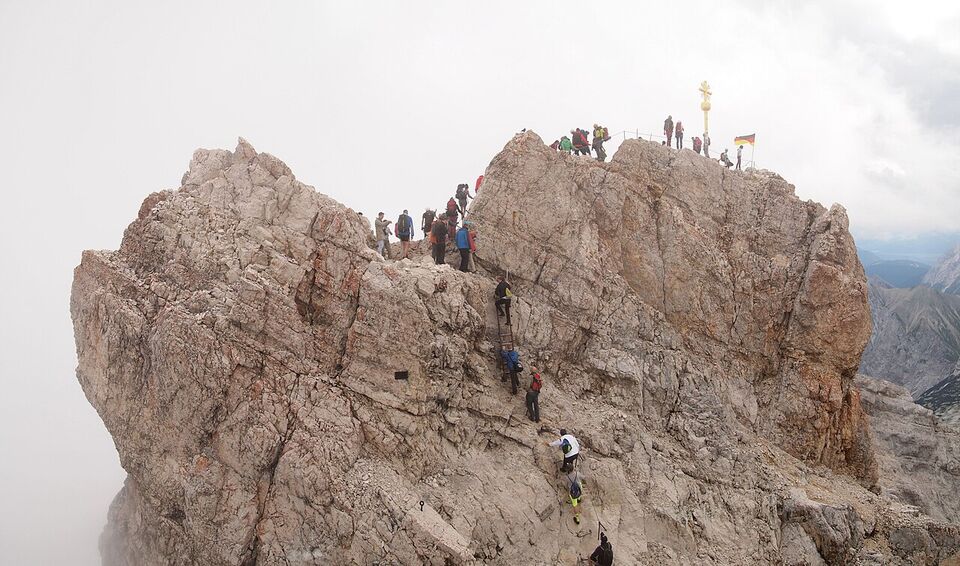
The Zugspitze, at 9,718 ft (2,962 m), is Germany's highest mountain and the usual reason to come here. You can go up in two ways: by cogwheel train from Garmisch-Partenkirchen, via Grainau and Lake Eibsee, then through a tunnel to a station near the glacier; or by the Eibsee cable car straight to the summit. The Gletscherbahn (glacier cable car) links the glacier plateau with the summit. A round-trip ticket covers one ascent and one descent plus the Gletscherbahn, and you can combine the two routes (for example, up by train, down by cable car).
| Ticket | Price | US$ | Notes |
|---|---|---|---|
| Round trip, summer prices | €78 | about $87 | Valid through November 22, 2026 |
| Round trip, winter, online | €70.50 | about $79 | Valid from November 27, 2026; online price applies until 11:59 p.m. the day before |
| Round trip, winter, ticket office | €78 | about $87 | Same ticket bought on site |
| One way (train or cable car, plus Gletscherbahn) | €46 | about $52 | Useful if you hike down or up |
| Child 6-15, winter round trip | €35.50 online | about $40 | Under 6 free with a parent |
The first cogwheel train leaves Garmisch at 8:15 a.m. (a 7:39 a.m. train runs in the winter season), the last ascent is at 2:15 p.m., and the last train down leaves the summit at 4:30 p.m. (timetable valid from September 1, 2026). The operator's hours page listed the summit cable car at 8:30 a.m. to 4:45 p.m. in early November 2026. Hours stretch in summer and when the ski season opens, so check the operator's hours page for your date.
Watch out
The summer season at the Zugspitze, Garmisch-Classic and Wank areas ends on November 8, 2026. The operator lists maintenance closures for the Gletscherbahn (November 9-13, 16-20 and 23-26) and for the cogwheel train above Grainau (November 9-13 and 16-26), plus a rail replacement service on the lower section on some of those days. In practice the Zugspitze is hard to reach from about November 9 to 26. Winter operation starts around November 27, with the ski season expected to run from November 27, 2026 to about May 2, 2027. Maintenance dates can change on short notice, so confirm before you travel.
Tickets are not for a specific time slot, and sales can stop when daily quotas are reached on busy days. Bad weather is not a reason for a refund. The summit is often about 25°F (14°C) colder than Garmisch, and clouds can hide the view completely, so look at the summit webcam before you pay. Bicycles are not carried. Dogs ride for a small fee. The Deutschlandticket covers only the cogwheel train between Garmisch-Partenkirchen and Grainau, not the cable cars.
Save money
Buy winter tickets online by the day before (€70.50, about $79, against €78, about $87, at the counter). If you want only the scenery, the lower-priced Garmisch-Classic mountains (the Alpspitze and the Kreuzeck) have a round-trip lift ticket at €39 (about $44), about half the Zugspitze price, with similar views of the valley.
Partnach Gorge
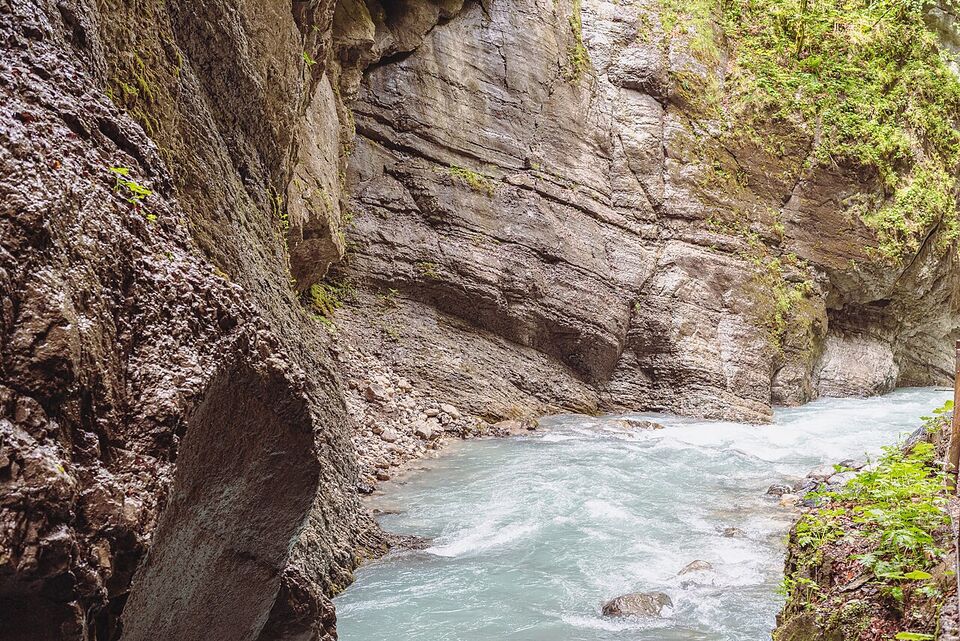
The Partnach Gorge (Partnachklamm) is a narrow cut in the rock, about 0.4 mile (700 m) long, that you walk through on a path blasted into the wall, with the river roaring below and water dripping from above. In winter, icicles hang from the walls. The path starts about 20 to 30 minutes' walk from the Olympic ski stadium in Garmisch. An entry fee applies (a few euros; the recent adult price was about €10, so confirm the current price on the gorge's site). Wear shoes with grip and a waterproof jacket, since the tunnel is wet all year. The gorge's site notes that there is no phone signal or Wi-Fi inside, so load your ticket first. A path beyond the gorge toward Vordergraseck is closed until November 20, 2026 for bridge construction, but the other trails around the gorge remain open.
Other things to do in Garmisch
- Walk the Maximilianstraße and Ludwigstraße in Partenkirchen, the older half, for painted facades (Lüftlmalerei).
- Ride the Alpspitzbahn or Kreuzeckbahn on a clear day (from €39 round trip, about $44, on winter prices).
- Walk from Garmisch to Lake Eibsee (about 2 to 3 hours each way on trails) or take the train and walk the 4.7-mile (7.5-km) loop around the lake.
Mittenwald, Ettal and Oberammergau
West and north of Garmisch, three small places make good half-day stops. You can reach Mittenwald by train and the other two by bus or car.
Mittenwald
Mittenwald is known for violin making, which started here in the 1600s, and for its painted houses on the Obermarkt. The Karwendel cable car climbs to a rocky ridge on the Austrian border. It is a quieter alternative to Garmisch and a good base for families.
Ettal Abbey
The Benedictine abbey was founded in 1330, and its domed basilica is free to enter, daily from about 8 a.m. to 6 p.m. (not during services). The abbey still brews beer and makes liqueur. There are no regular public tours in November 2026. In December there are special tours, including a 45-minute English basilica tour at €5 (about $6) and a 90-minute brewery and distillery tour with tasting at €15 (about $17). Book those through the abbey.
Oberammergau
The village is famous for its Passion Play, staged once every ten years since 1634. The next season is 2030. In other years you can still see the painted house fronts, woodcarving shops and the Passion Theater by guided tour. It is also the base for visiting Linderhof Palace, about 14 miles (22 km) away.
Linderhof Palace
The smallest of King Ludwig II's palaces and the only one he lived to see finished. A combined ticket is €18 (about $20); the palace alone is €11 (about $12). The park buildings and Venus Grotto are usually closed in winter, so check hours before you go. Our castles guide covers how to combine it with the other Ludwig sites.
Berchtesgaden and the Königssee
Berchtesgaden sits in a pocket of Germany that sticks out into Austria, at the foot of the Watzmann massif. It is a calmer, more rural base than Garmisch, with an old market square, a salt-mining heritage and the national park that surrounds the Königssee.
Königssee boats
The Königssee is a long, narrow, steep-sided lake, sometimes compared with a Norwegian fjord. Electric-motor boats take visitors across it, and the skipper stops mid-lake to play a trumpet and let the echo bounce off the rock face. The most popular trip goes to St. Bartholomä, a red-domed pilgrimage chapel on the far shore, about 35 minutes each way. A round trip from the Königssee landing (Seelände) is listed at €23.40 (about $26); one way is €11.70 (about $13). Boats to St. Bartholomä run year-round except December 24, weather permitting. The operator advises traveling out before 10:30 a.m. and back by about 2:30 p.m. on busy days.
The operator's price page says boats no longer go to Salet and the Obersee, while its timetable page still mentions sailings there from late April to mid-October. Confirm this before planning a hike to the Obersee. Fog, storms or high water can suspend sailings at short notice.
Documentation Obersalzberg
Above Berchtesgaden, the Obersalzberg was Adolf Hitler's mountain retreat and a second seat of the Nazi leadership. Most of the buildings were destroyed after the war. The Documentation Obersalzberg, a history museum on the site, explains how the regime used the place, and takes visitors through the underground bunker system. It is a serious, sober exhibition rather than an attraction, and it is open daily from 9 a.m. to 5 p.m. as of November 2026. Admission is a few euros (the recent adult price was about €6; check the current price on the museum's site). Allow about two hours. For the wider story, see our history guide.
The Eagle's Nest
The Kehlsteinhaus (Eagle's Nest) stands on a ridge at 6,017 ft (1,834 m) above the Obersalzberg. It was built in 1937-38 as a diplomatic and party guest house and given to Hitler for his 50th birthday. Before the fire, visitors took a special bus up a mountain road and then a 407-ft (124-m) brass elevator through the rock to the house, which since 1952 has been a restaurant. The season normally ran from mid-May to late October.
Watch out
The Kehlsteinhaus was severely damaged by fire on the night of October 23-24, 2026, and the building and surrounding area are closed until further notice, with no reopening date. The Bavarian authorities have said they expect it to be rebuilt. If you bought an online ticket for the Kehlstein route, the Berchtesgaden tourism office has a refund form on its Kehlstein page. The Documentation Obersalzberg is not affected.
Other options in the valley
- Berchtesgaden Salt Mine: guided tours in miners' overalls, with slides and a boat across an underground salt lake. Check hours and prices on the mine's site.
- Jenner cable car: a lift above the Königssee, with hiking at the top in summer.
- Rossfeld panoramic road: a toll road with views into Austria, open when snow allows.
Hiking basics and mountain huts
You do not need to be an expert to hike in the Bavarian Alps, but you do need to prepare. Trails are well signed with yellow signposts showing destinations and walking times, and the times are realistic. Many paths are labeled by difficulty, commonly blue (easy), red (moderate) and black (difficult, exposed or secured with cables). See our outdoors guide for gear, maps and national-park rules.
- Start early. Summer afternoons bring thunderstorms; be off summits and ridges by early afternoon.
- Check the weather the night before and the lift timetable. Last descents can be as early as 4 p.m.
- Carry layers, a rain jacket, water, a map or offline map, and a charged phone. Coverage is patchy in gorges and valleys.
- Wear boots with ankle support. Snow can linger above 6,500 ft (2,000 m) into June, and early snow can arrive in September.
- Call 112 for mountain rescue. The Bergwacht, a volunteer rescue service, covers the main areas.
Mountain huts (Hütten) serve hot meals and drinks and rent beds in dormitories. Most open from late May or June to October and close in winter, except a few with winter service. A typical hut meal is soup, Kaiserschmarrn (a shredded sweet pancake) or a Brotzeit (a cold plate of bread, cheese and cured meats). Many take cash only. For an overnight, reserve weeks ahead in July and August, bring a sleeping-bag liner (a hut sheet), and expect shared bathrooms. Huts run by the German Alpine Club (DAV) give discounts to members.
Insider tip
Weekday mornings are much quieter than weekends. In the Berchtesgaden area, taking the first boat across the Königssee and walking back up the lake path gives you several hours with few other people. In Garmisch, the Partnach Gorge before 9 a.m. is calm and photographs better in low light.
Skiing and winter
The Bavarian Alps have small to mid-sized ski areas with good scenery rather than huge lift networks. They suit beginners, families and travelers who want one or two days on snow added to a trip.
| Area | Expected season | Day pass |
|---|---|---|
| Zugspitze (glacier plateau) | About November 27, 2026 to May 2, 2027 | €70.50 online (about $79), €78 on site (about $87) |
| Garmisch-Classic (Hausberg, Kreuzeck, Alpspitze) | About mid-December to March 29, 2027 | €69 online (about $77), €72 on site (about $81) |
| Wank (Garmisch) | December 25, 2026 to January 10, 2027 (expected) | Check operator |
| Berchtesgaden (six lifts, including Jenner and Götschen) | December 2026 to April 2027 | 3-day pass €102 (about $114); 6-day €190 (about $213) |
Season dates depend on snow and can change. The Zugspitze glacier area has the most reliable snow because of its altitude. Winter tickets go on sale online in mid-November. Children aged 6 to 15 pay about half. Rental shops in the valley rent skis, boots and helmets, and ski schools offer lessons in English. Non-skiers can still ride up for the view or walk cleared winter trails. Our when to go guide shows how winter compares with other seasons.
Where to stay
Choose the base by what you want to do rather than by town size.
- Garmisch-Partenkirchen: the most lodging and restaurants, and the easiest access to the Zugspitze by train. Good for first visits and for non-drivers.
- Mittenwald: quieter, with a smaller center and a short walk to trails. Good for a calm stay and for families.
- Berchtesgaden or Schönau am Königssee: for the lake, the national park and the Obersalzberg. Schönau puts you close to the boats.
- Oberammergau or Ettal: small, with few evening options. Good if you have a car and want a peaceful base.
Rooms are $ in simple guesthouses and farm stays (Pension, Ferienwohnung), $$ in most family-run Alpine hotels, and $$$ in spa hotels and at peak times. Most resort towns charge a small per-person spa tax (Kurtaxe), usually a few euros a night, added to your bill. In return, hotels often hand out a guest card that covers local buses and some lifts or discounts. Ask when you book. Rooms fill up in July and August, around Christmas and New Year, and during Bavarian school holidays in February, so book those periods months ahead. More lodging advice is in our where to stay guide.
A three-day plan
- Day 1
Garmisch and the gorge
Take the early train from Munich (arrive by 10 a.m.). Walk to the Partnach Gorge in the morning, have lunch in Partenkirchen and spend the afternoon on the Kreuzeck or Alpspitze lift if the weather is clear. Sleep in Garmisch.
- Day 2
Zugspitze, then Ettal
Go up on the first cogwheel train, spend a couple of hours at the top, and descend by the Eibsee cable car for a lakeside walk. In the afternoon, visit Ettal Abbey on the way toward Oberammergau and Linderhof, if you have a car or the bus schedule suits you.
- Day 3
Over to Berchtesgaden
Travel east by train or car (allow half a day). In the afternoon, visit the Documentation Obersalzberg. Sleep in Berchtesgaden or Schönau.
With an extra day, take the first boat on the Königssee, hike to the Obersee only if the boats serve it, and visit the salt mine. If your itinerary includes Munich on either end, see our Munich guide. If you are heading north afterward, the Romantic Road runs from Füssen, about 40 miles (65 km) west of Garmisch.
When to go
June to September is the standard hiking window, with the highest crowds and prices in July and August. Late September and early October are often clear and cheaper, though huts begin closing. November is the quietest month of the year, with some lifts closed and small hotels shut for a break. December to March is ski season, with a pause between Christmas markets and snow. The Christmas markets in Garmisch and Mittenwald are small and local; for bigger ones, see our Christmas markets guide.
Add it to a route in the trip builder, or ask us to plan the hotels, trains and guides for you.