Overview
Germany has two coasts that feel like different countries. The Baltic coast in the northeast has chalk cliffs, white-sand beaches and old Hanseatic trading towns. The North Sea coast in the northwest has wide tidal flats, dikes, islands and a reputation for wind. Between them, Hamburg and Bremen make good bases for a short trip. This guide covers the Hanseatic cities of Lübeck, Wismar and Stralsund, the islands of Rügen, Usedom and Sylt, the Wadden Sea, and the port cities of Bremen and Bremerhaven.
Most American visitors have never heard of these places, which is part of the appeal in summer: the crowds are German families, not tour groups. The trade-off is the weather. The sea is cold, the weather changes quickly and the season is short. If you are building a longer trip, our trip planning guide shows how to fit a coast leg into a route, and Hamburg is the natural starting point.
Getting there and getting around
The coast is easiest by train from Hamburg, and most places in this guide are reachable without a car. Regional trains (RE and RB) are covered by the Deutschlandticket, which costs €63 a month in 2026 and is expected to cost €66.80 from January 1, 2027. The ICE and IC long-distance trains are not covered. See German Train Tickets and Passes for how the options compare for a short coast trip.
- Hamburg to Lübeck: a regional train takes under an hour. A planned major rebuild of the Lübeck-Hamburg line is scheduled for 2028, which may mean longer trips or buses then.
- Hamburg to Bremen: about an hour by fast train.
- Hamburg or Berlin to Rügen and Stralsund: long-distance trains run to Stralsund and Binz in the main season. Allow about 3 to 4 hours from Berlin and check bahn.de, because direct services change by season.
- Hamburg to Sylt: direct trains go from Hamburg-Altona to Westerland in roughly 3.5 hours. You cross the Hindenburgdamm causeway on the train.
Hamburg to Berlin by ICE takes about 1 hr 45 min, but plan for extra time because of construction. A rental car makes sense only if you are visiting several coastal villages, or if you need to reach rural beaches. If you decide to drive, read Driving in Germany first. Germany has had temporary controls on all land borders since September 2024, so carry your passport if you visit Poland from Usedom or Denmark from Sylt.
Lübeck
Lübeck is the best Hanseatic city to visit on a short trip, with a compact island old town that is a UNESCO World Heritage Site (listed in 1987). It was the leading city of the medieval Hanseatic League, a trading network of northern towns, and the old town is full of red-brick churches, gabled merchant houses and narrow passages. It is under an hour from Hamburg, so it works as a day trip, but staying one night gives you the evening streets.
The Holsten Gate
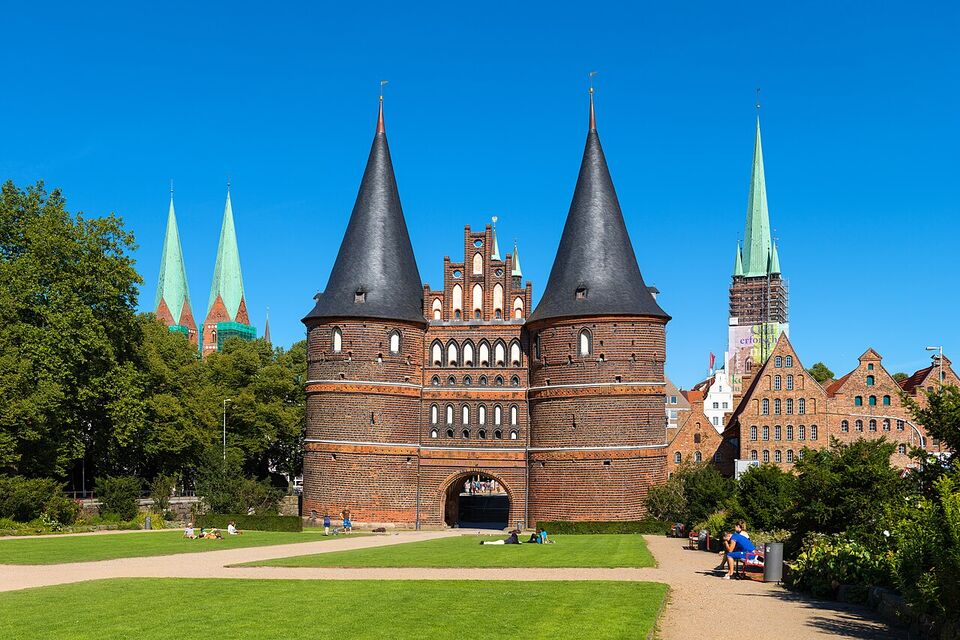
The Holstentor is the city's symbol: two round brick towers that lean visibly because the ground below is soft. A museum inside covers the city's history as a trading power. We could not confirm the current admission price or winter hours, so check the museum's website before you go. You can admire the gate from outside for free, and the walk through the old town takes 2 to 3 hours.
Marzipan
Lübeck is famous for marzipan (sweet almond paste), and Niederegger is the best-known maker. The Café Niederegger at Breite Straße 89 is open Monday to Friday 9 a.m. to 7 p.m., Saturday 9 a.m. to 6 p.m. and Sunday 10 a.m. to 6 p.m., according to the company site. The company also has a shop and a marzipan museum; check their pages for hours and prices. Marzipan keeps well and is a safe souvenir. Note that US customs rules for food apply when you bring it home, and our shopping and shipping guide covers this.
Insider tip
Lübeck's old town is on an island, and most sights are within a 15-minute walk of the Holstentor. Leave the car at the edge and walk. If you want a beach, Travemünde is a seaside district of Lübeck reachable by local train and bus.
Wismar and Stralsund
Wismar and Stralsund share a UNESCO listing as Hanseatic towns on the Baltic (listed in 2002). Both are small, walkable and quieter than Lübeck. They are good places to understand how the Hanseatic League shaped northern Germany: the brick Gothic style, the harbors and the big churches.
- Wismar: a large market square, an old harbor and a mix of brick Gothic and Dutch-style buildings. Regional trains reach it from Lübeck, Schwerin and Rostock. Allow half a day.
- Stralsund: a harbor town on the sound facing Rügen, with a large old town and an aquarium and sea museum complex. It is the rail gateway to Rügen. Allow half a day or stay overnight before heading to the island.
We could not confirm current admission prices at the Stralsund museums, so check before you go.
Rügen
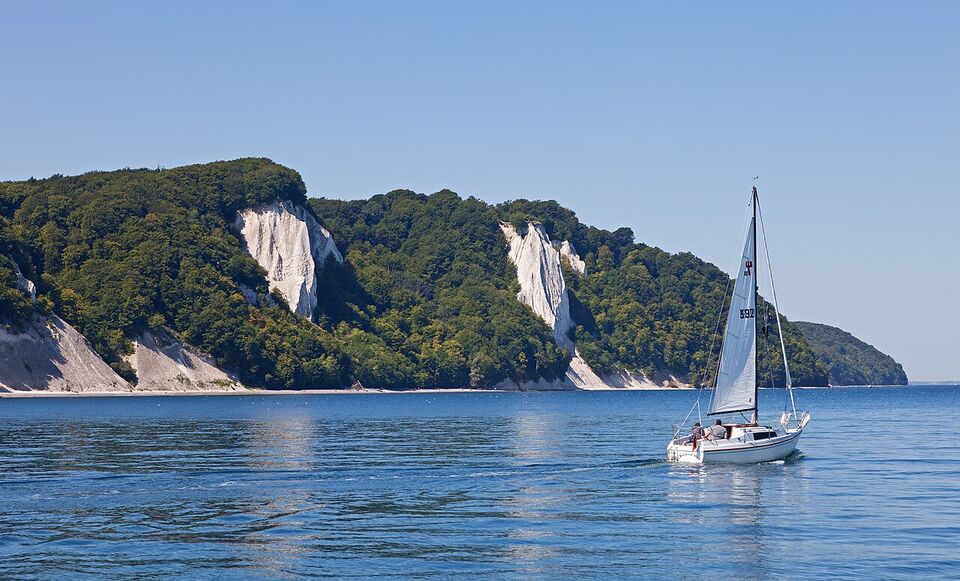
Rügen is Germany's largest island, reached from Stralsund by road and rail over the Rügendamm. It is known for white chalk cliffs, beech forests, long beaches and old seaside resorts with white villas. It is the best choice for a classic Baltic beach trip.
Jasmund and the chalk cliffs
The chalk cliffs of Jasmund National Park rise to the Königsstuhl (King's Chair), about 390 ft (118 m) above the sea. The Königsstuhl National Park Center is open every day, currently from 10 a.m. to 5 p.m., with adult admission at €14 (about $16), €8 (about $9) for children 6 to 14 and €30 (about $34) for a family, according to the center's website. The page does not say when those prices were set, so confirm on the center's site. Parts of Jasmund's beech forests are also UNESCO listed.
The best way to see the cliffs is to walk through the forest trail from Sassnitz or Hagen. Trails can be muddy and slippery after rain. Cliff edges are unstable, so stay on marked paths and out of the beach area under the chalk; falls do happen.
Binz and the resorts
Binz is the main resort, with a long pier, white villas along the seafront and a promenade. It is busy in July and August. The island's narrow-gauge steam railway, the Rasender Roland, runs between Putbus and Göhren and is a pleasant way to see several villages, but fares and timetables vary by season, so check before planning around it. Prora, a very long former Nazi holiday complex on the beach, now holds a documentation center, hotels and apartments. For other places that cover this period of history, see History Sites in Germany.
Hiddensee, a small car-free island west of Rügen, is reached by ferry from Schaprode or Stralsund. It is quiet and good for walking or cycling.
Usedom
Usedom is a Baltic island east of Rügen, shared between Germany and Poland. Its German side has three old resorts known as the Kaiserbäder (emperor's spas): Heringsdorf, Ahlbeck and Bansin. They have wide beaches, piers and spa-era villas. Ahlbeck's pier and Heringsdorf's pier are popular walking spots.
The island is served by a regional train line, and you can walk or cycle along the beach promenade into the Polish town of Świnoujście. Schengen rules apply, but given the current border controls, carry your passport. Usedom is a good family choice because the beaches are wide and shallow, and it is generally less crowded than Rügen's top resorts.
Sylt and the North Sea islands
Sylt is Germany's best-known North Sea island, a long, thin strip of dunes and beach near the Danish border. It is also the country's priciest resort: expect high hotel prices in summer and restaurants that charge for the scenery. Most people go for walks on the dunes and long beach days, not a list of sights.
Getting there
You can reach Sylt without a car. Regional and long-distance trains run to Westerland, and they cross the Hindenburgdamm causeway. If you bring a car, you drive onto a car train at Niebüll for the crossing to Westerland, which takes about 35 minutes. Two companies run it:
| Operator | Car, one way | Car, round trip | Notes |
|---|---|---|---|
| DB Sylt Shuttle | €75 (about $84) | €130 (about $146) | Up to 18 trips each way a day; online saver fares from €19.99 |
| Blue CAR TRAIN Sylt | €80 (about $90) | €138 (about $155) | Up to 13 trips each way a day; online saver fares from €19.90 |
An alternative is the Sylt ferry from Havneby on the Danish island of Rømø to List, with cars from €67.80 (about $76) one way. Prices are as listed by the island's tourism site and can change by date and season. Book the car train ahead for summer weekends.
Visitor tax and beaches
Sylt charges a visitor tax (Kurtaxe or Kurabgabe), which we understand is per person per day, with the amount depending on the village and season. In Westerland, Rantum, Keitum and the villages around them, the in-season rate (May 1 to October 31) is €4.10 (about $5) and the off-season rate is €2.05 (about $2). Kampen charges €4.00 in season (April 1 to October 31) and List €3.60 (May 1 to September 30). If you sleep on the island, your host collects it with your bill and gives you a guest card. Day visitors buy a day guest card at the beach crossings: €4.10 in Westerland in season, with other towns between €3.50 and €4.50. Check sylt.de for the current amounts.
Other islands
The North Sea has two island chains. The North Frisian islands near Sylt include Föhr and Amrum, reached by ferry from Dagebüll. The East Frisian islands along the Lower Saxony coast include Borkum, Norderney, Juist, Langeoog and Spiekeroog; several of them are car-free. Helgoland, a red-rock island farther out, is known as a duty-free shopping stop. Each requires a ferry, so plan around the tide and the timetable.
Different from home
At many German beach towns, you pay to get onto the beach, not just to park. The visitor tax covers the beach, the promenade and local services. Day visitors pay a smaller day card at a beach gate. Americans used to free public beaches are sometimes surprised.
Wadden Sea mudflat hikes
The Wadden Sea is a vast tidal area along the North Sea coast, protected as a national park and UNESCO World Heritage Site. At low tide, the sea retreats and leaves a huge expanse of mud and sand. A guided mudflat walk (Wattwanderung) is one of the best ways to see it.
Walk only with a certified guide. The tide returns faster than most people expect, fog can hide the shoreline, and channels fill with water before the flats around them are covered. Do not go alone, even for a short distance, and do not follow other people's footprints out from the dike.
- Book a tour at a national park house or online. Places are limited. One national park tour we found is for ages 6 and up, excludes dogs and prams, and recommends sturdy socks or wading shoes because shells can cut feet.
- Dress for wind, rain and mud. Rubber boots are not recommended on some tours because they stick in the mud.
- Check the tide table for the day and plan around the guide's meeting time. Tours run at low tide, so times shift by about an hour each day.
Watch out
Never attempt a long crossing, such as the walk to the island of Neuwerk off Cuxhaven, without a guide. Walkers who misjudge the tide or lose sight of the shore can be cut off quickly.
Bremen and Bremerhaven
Bremen
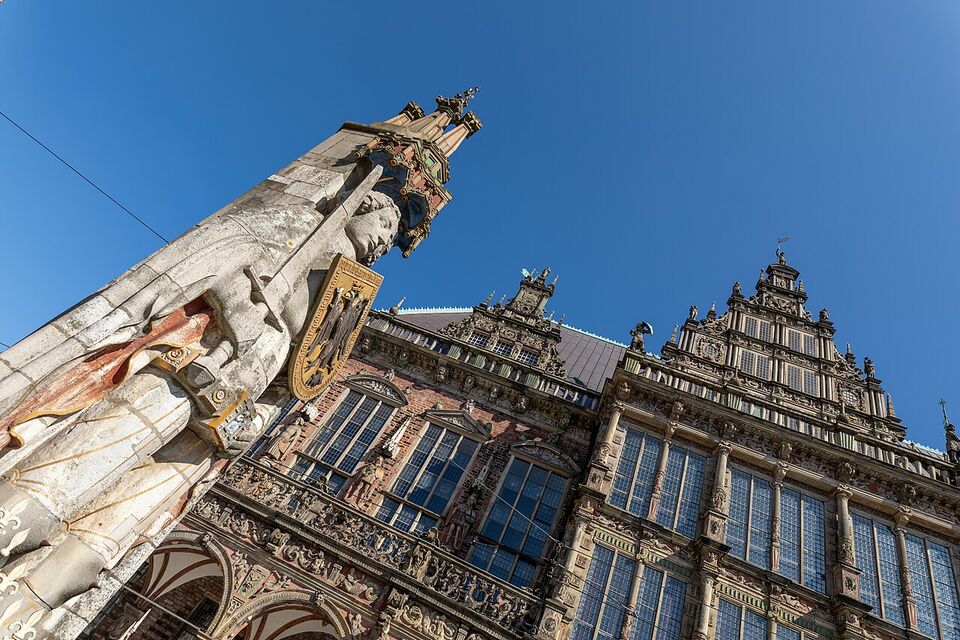
Bremen is a compact city-state about an hour from Hamburg. Its market square is a UNESCO World Heritage Site that includes the Town Hall and the Roland statue, a knight figure that stands for the city's freedom. Next to the town hall is the bronze statue of the Town Musicians of Bremen, the donkey, dog, cat and rooster from the Brothers Grimm fairy tale. Visitors rub the donkey's front legs for luck, so they shine.
The Schnoor quarter is a tangle of small houses and lanes from the 15th and 16th centuries, now holding shops, cafes and small galleries. Nearby, Böttcherstraße is a short brick lane with art-nouveau style buildings. The tourist office offers guided town hall tours and a free audio guide. Bremen charges a city tax on hotel stays of 5.5% of the net price, according to a 2026 compilation of local taxes.
Bremerhaven and the emigration center
Bremerhaven is Bremen's seaport, about 40 minutes by regional train. Its main sight for Americans is the German Emigration Center (Deutsches Auswandererhaus), a museum that follows emigrants from the decision to leave, through the port, to arrival in America. The museum says about 7 million people left Europe through Bremerhaven's port (confirm the figure and dates on its site).
The museum is open every day, including Mondays and holidays. Hours are 10 a.m. to 5 p.m. from November 1 to the end of February and 10 a.m. to 6 p.m. from March 1 to October 31, with last entry an hour before closing. It is closed on December 24 and open until 4 p.m. on December 31. Admission, valid from July 1, 2026, is €22 (about $25) for adults, €10 (about $11) for children 5 to 16, €38 (about $43) for a small family and €58 (about $65) for a large family. A student rate of €10 runs until December 31, 2026. Tickets are sold at the desk, with no reservation needed, and guided tours need advance registration.
The rail line between Bremen and Bremerhaven is scheduled to close for renovation from July 9 to December 11, 2027, so replacement buses are likely during that period. For tracing family records, see Tracing German Roots.
Beach chairs, tax and the season
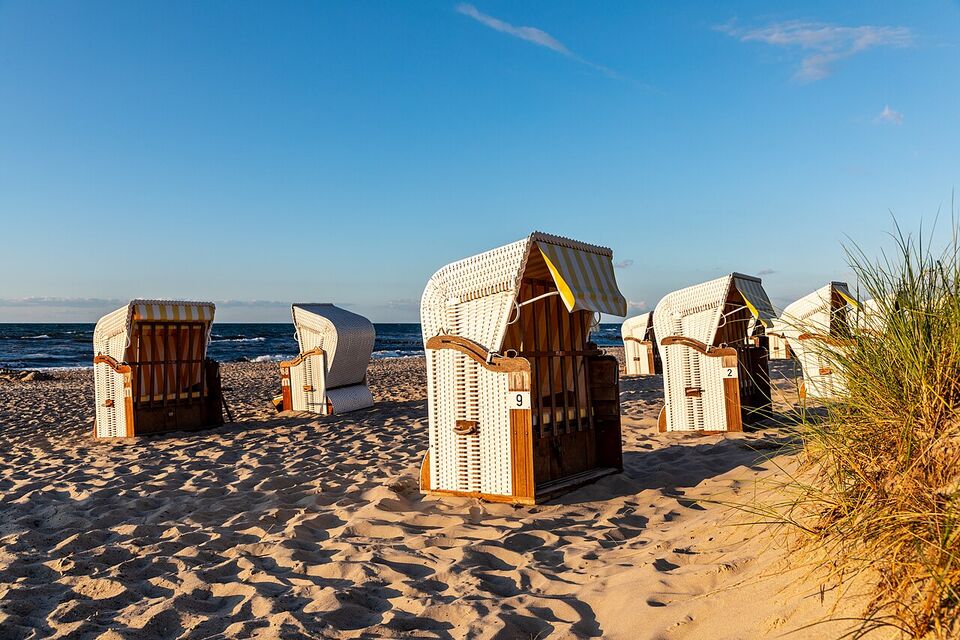
The covered wicker beach chair, the Strandkorb, is the symbol of the German coast. It is a two-seat basket with a hood and a footrest, set facing the sea and turned away from the wind. You rent one by the day (or half day) at the beach, from a seasonal operator. Prices vary by resort and season, and we could not confirm a current range, so ask the beach office or check the resort's site. Reserve in advance for July and August weekends.
The season is short. Beaches are busiest from June to early September, with the highest prices in July and August. May and September offer more room and lower prices, but cooler air and water. Sea water on the Baltic and North Sea rarely goes above the high 60s°F (about 20°C), so swimming is for people who like cold water. In winter, many seaside businesses shorten their hours or close from November to March, and the island resorts are quiet; it can be a good time for a walk and a spa, not a beach day.
Save money
Sleep in the shoulder season, in May or September, when hotel rates and the Kurtaxe are lower. On Sylt, the off-season visitor tax is half the in-season amount.
Plan weather backup for every day: a museum, a sauna or an indoor pool. Clothing for the coast is practical: a windbreaker, layers and shoes that can get wet.
A sample coast route
- Day 1
Hamburg to Lübeck
Take a morning regional train, see the Holstentor and old town, and eat marzipan cake in the afternoon.
- Day 2
Wismar and Stralsund
Travel east by train and stay in Stralsund for the evening harbor.
- Day 3
Rügen
Take the train or bus to Sassnitz and walk in Jasmund to the Königsstuhl. Spend the evening in Binz.
- Alternative
North Sea loop
From Hamburg, go to Bremen for the Town Musicians and Schnoor, then Bremerhaven for the emigration museum, with a guided mudflat walk or a ferry to an island.
You can also link the coast to the rest of the country by returning to Hamburg and continuing to Berlin; see Germany's Destinations for other regions.
Add it to a route in the trip builder, or ask us to plan the hotels, trains and guides for you.