German food in one page
German food is more regional than most Americans expect. A table in Hamburg and a table in Munich may share nothing but the beer glass: herring and pickled beets in one, roast pork and pretzels in the other. The common thread is hearty cooking, good bread, serious sausage, and cake in the afternoon. This guide covers what to eat by region, what is in season, how restaurants actually work, and what meals cost.
The biggest surprise for first-timers is not the food but the system around it. Nobody brings you free water, nobody refills your soda, the bill arrives only when you ask for it, and you may well seat yourself. None of that is rude. It is just a different set of rules, and once you know them a German restaurant is a relaxed place. For drinks, see our guide to beer and wine in Germany.
Regional dishes from north to south
There is no single German cuisine, so the best plan is to eat the local specialty wherever you are. The table lists the dishes you are most likely to see on menus, grouped by region. Menus use German names, so we give both.
| Region | Order this | What it is |
|---|---|---|
| North coast (Hamburg, Bremen, Lübeck) | Fischbrötchen, Labskaus | A roll with pickled or fried fish, onions and sauce, sold at harbor stands. Labskaus is a sailors' dish of corned beef, potato and beet, often with herring, a pickle and a fried egg. It looks odd and tastes better than it sounds. |
| Berlin | Currywurst, Königsberger Klopse | Sliced sausage under curry-spiced ketchup, eaten with fries or a roll. Klopse are meatballs in a creamy caper sauce. |
| Rhineland (Cologne, Düsseldorf) | Sauerbraten, Himmel un Ääd | Beef marinated for days in vinegar and spices, often served with red cabbage and dumplings. Himmel un Ääd ("heaven and earth") is fried blood sausage with mashed potato and apple. In Cologne you may also see a Halve Hahn, which is a rye roll with cheese, not chicken. |
| Franconia (Nuremberg, Würzburg, Bamberg) | Nürnberger Rostbratwürste, Schäufele | Finger-sized grilled sausages, served in sixes or eights or three in a roll. Schäufele is a roast pork shoulder with crackling and a potato dumpling. |
| Bavaria (Munich, the Alps) | Weisswurst, Schweinshaxe, Obatzda | Pale veal-and-pork sausage with sweet mustard and a pretzel; roast pork knuckle with crisp skin; a spread of ripe cheese, butter and paprika for bread, usually in a beer garden. |
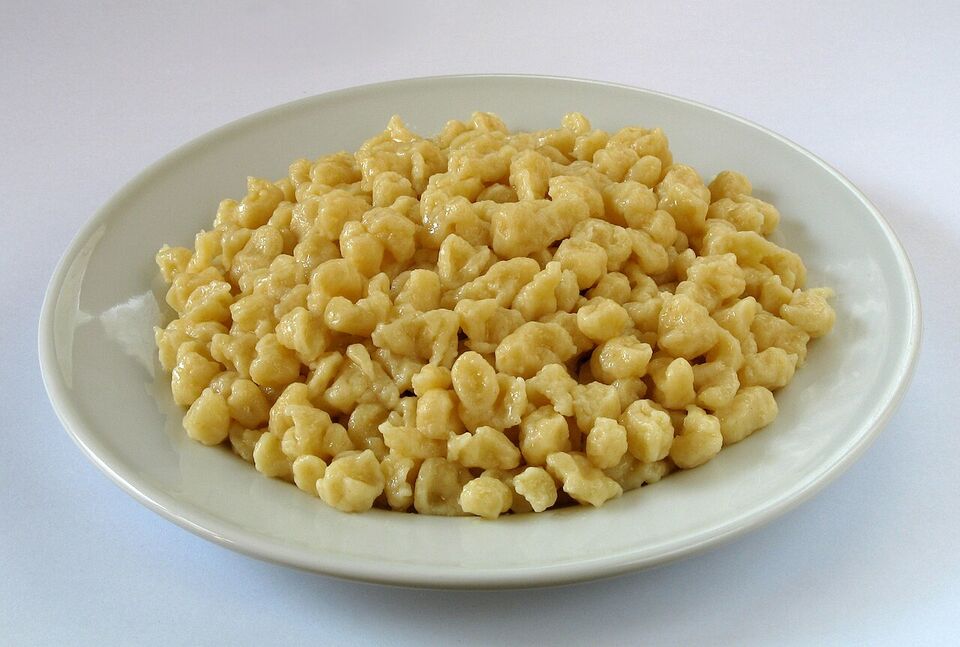
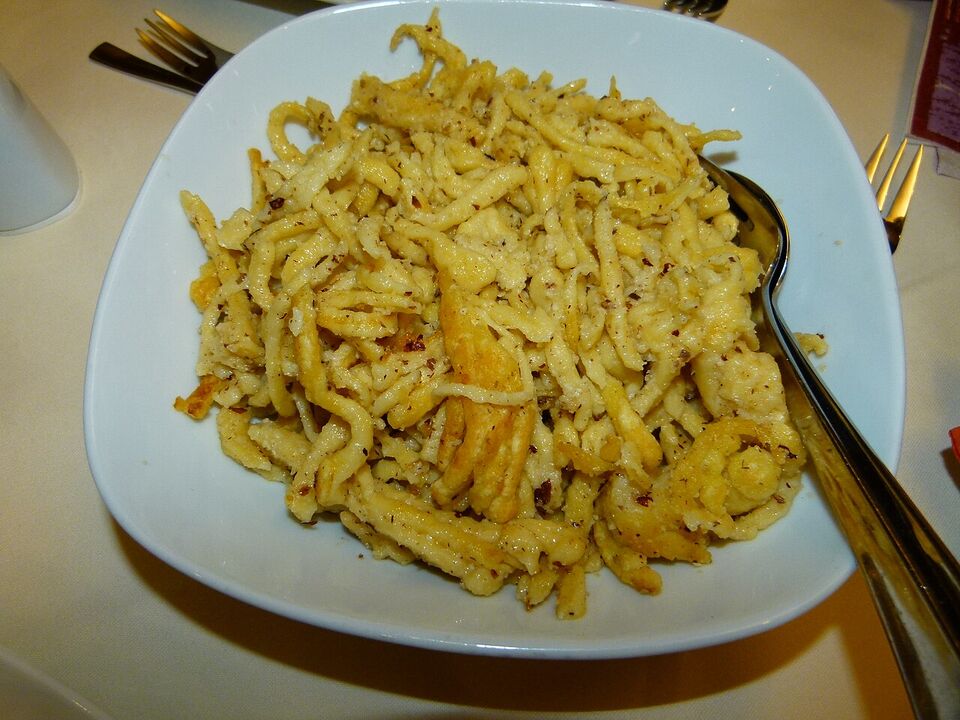
| Swabia (Stuttgart, Black Forest edge) | Spätzle, Maultaschen | Soft egg noodles, often baked with cheese and onions (Käsespätzle); large filled pasta squares served in broth or fried with egg. |
| Saxony (Dresden, Leipzig) | Eierschecke, Quarkkeulchen, potato soup | A layered custard-and-quark cake; fried quark-and-potato pancakes with apple sauce; a creamy local potato soup. |
| Black Forest | Schwarzwälder Kirschtorte | Chocolate sponge, whipped cream and sour cherries, made with cherry brandy (Kirschwasser). Bakers in the region say a real one has to contain it. |
The Bavarian rules
Bavaria has the most food customs. Weisswurst is traditionally a morning food, eaten before noon (the old reason was that the sausages were made fresh each morning and had no preservatives). Few restaurants will refuse you after noon today, but many stop serving it, and a local will smile if you order it at 6 p.m. Eat it with a pretzel and a wheat beer. You can cut it open and eat the filling, or follow the older way of sucking the filling out of the skin, called zuzeln. Do not eat the skin.
Roast pork knuckle (Schweinshaxe in Munich, Eisbein in the north, where it is boiled instead) is a big plate meant to be shared by hungry people. For the beer-hall side of this, see our Munich guide, and for Franconian sausages and Lebkuchen, our Nuremberg guide.
Bread, bakeries and breakfast
The Bäckerei (bakery) is where most Germans start the day, and it is the cheapest good meal you can find. Rolls are called Brötchen in most of the country, but Semmeln in Bavaria, Schrippen in Berlin and Weckle in Swabia. A plain roll costs roughly €0.60 to €1.10 (about $0.70 to $1.25), and a filled roll (cheese, ham, or egg salad) roughly €3 to €5 (about $3.40 to $5.60). A pretzel (Brezel or Laugenbrezel) is around €1.50 to €2.50 (about $1.70 to $2.80).
Look for dark, dense rye and whole-grain loaves, seeded rolls, and sweet pastries such as Franzbrötchen (Hamburg), Berliner (a jelly doughnut, called Pfannkuchen in Berlin) and Streuselkuchen. Many bakeries have a few standing tables and sell filter coffee for roughly €3 to €4.50 (about $3.40 to $5). A bakery breakfast of a roll, a pastry and coffee runs about €5 to €8 (about $5.60 to $9).
A hotel breakfast buffet (Frühstück) usually has rolls, cold cuts, cheese, boiled eggs, muesli, yogurt and fruit, and often scrambled eggs and sausage. If breakfast is not included in your room price, a bakery is often cheaper and better.
Different from home
Do not expect a drive-through-style coffee and a muffin. Coffee is usually a small espresso-based drink or filter coffee in a ceramic cup, and many people sit down for it. "Coffee to go" exists, but a plain American-style large drip coffee is rare. Ask for a Filterkaffee or an Americano if you want something close.
Sausages and the classic mains
Germany has a huge range of regional sausages, and you do not need to learn them all. The ones to know: Bratwurst (grilled or fried pork sausage, the default), Currywurst (Berlin and the Ruhr area), Weisswurst (Bavaria), Thüringer Rostbratwurst (a long grilled sausage from Thuringia), Bockwurst (a boiled sausage with mustard) and Leberkäse (a baked meatloaf, served in slices, often in a roll). At a stand a bratwurst in a roll costs roughly €3.50 to €5 (about $4 to $5.60), and a currywurst with fries roughly €5 to €7 (about $5.60 to $8).
Schnitzel is the classic restaurant main. A true Wiener Schnitzel is veal; a Schnitzel Wiener Art ("Vienna style") is pork, which is cheaper and very common. It comes with fries, potato salad or a slice of lemon. Other staples are Rouladen (rolled beef), roast duck or goose with red cabbage and dumplings, and Kassler (smoked pork chop) with sauerkraut. Potatoes appear as Bratkartoffeln (fried), Kartoffelsalat (potato salad, vinegar-based in the south, mayonnaise-based in parts of the north) and Knödel or Klöße (dumplings).
The doner kebab (Döner) is arguably Germany's most popular street food, brought by Turkish immigrants in the 1970s. A sandwich runs about €7 to €10 (about $8 to $11) in 2026 depending on the city, and it is a filling meal. Berlin has the best-known versions; our Berlin food guide goes further into it, along with the city's Turkish and Vietnamese kitchens.
What is in season
Germans eat by the calendar more than most Americans do, and seasonal menus are a good guide to what a kitchen does well.
Spring and summer: asparagus and chanterelles
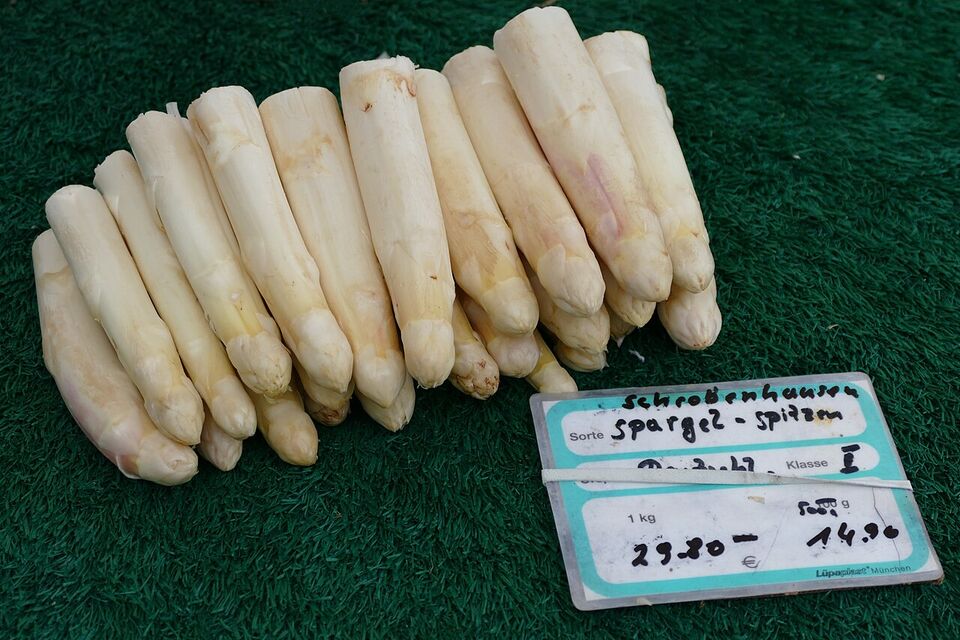
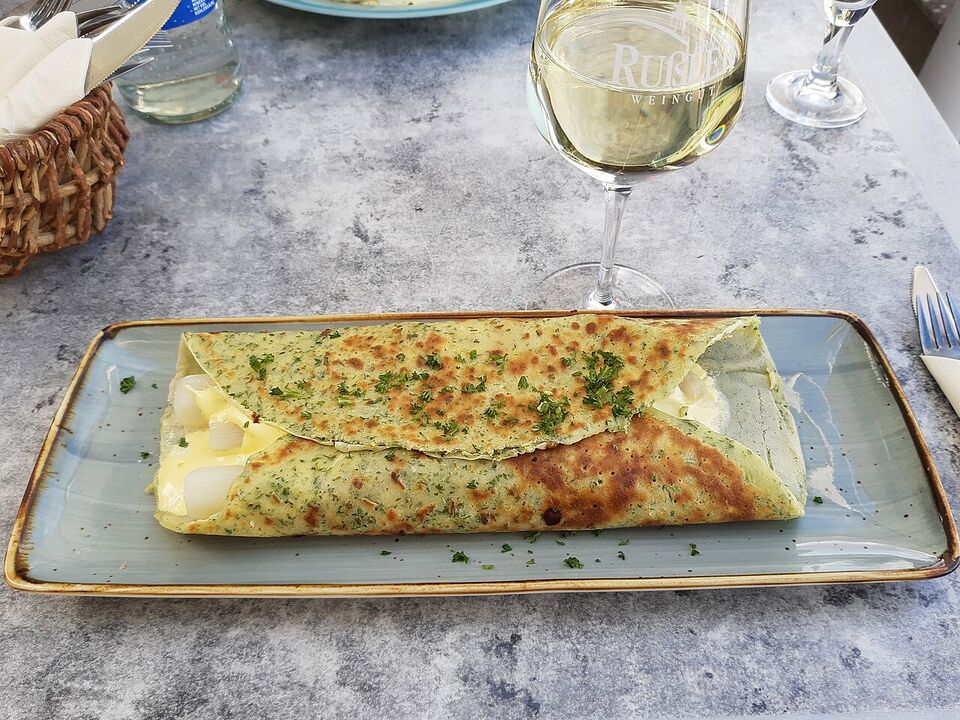
Spargel (white asparagus) is the national spring obsession. The season runs from about mid-April to June 24, and growers traditionally stop cutting on that date so the plants can recover. It is served peeled and boiled, with new potatoes, hollandaise or melted butter, and ham or schnitzel. Expect a main course at about €18 to €30 (about $20 to $34). From early summer into fall, wild Pfifferlinge (chanterelles) appear on menus, usually in cream sauce with dumplings.
Fall: goose, game and new wine
Around St. Martin's Day on November 11, restaurants serve Martinsgans: roast goose with red cabbage and dumplings. It is usually sold as a set meal for two or more and is often booked out, so reserve a few days ahead. Fall is also game season (Wild, such as venison and wild boar), and the time of onion tart (Zwiebelkuchen) served with new wine, which we cover in the drinks guide. In the north and west, kale (Grünkohl) with smoked sausage is a winter dish.
Advent: Christmas baking
In December the bakeries fill with Stollen (a dense fruit loaf dusted with sugar, famously from Dresden), Lebkuchen (soft spiced gingerbread, famously from Nuremberg), Spekulatius (thin spiced cookies) and Plätzchen (home-style cookies). Markets add roasted almonds, Bratwurst, Reibekuchen (potato pancakes) and, of course, hot mulled wine. For what to eat at each market and when they open, see our Christmas markets guide. A roast carp (Karpfen) is a traditional Christmas Eve meal in some families.
Kaffee und Kuchen
Afternoon coffee and cake, Kaffee und Kuchen, is a real institution, typically between 2 and 5 p.m. You go to a Café or a Konditorei (pastry shop with seating), choose from a display case and have a slice with coffee. A slice costs roughly €4 to €6.50 (about $4.50 to $7.30), and a coffee about €3 to €4.50 (about $3.40 to $5). Cream (Sahne) is often an extra.
The standards are Käsekuchen (a quark cheesecake that is lighter than the American kind), Apfelstrudel, Bienenstich (almond-topped cake with custard filling), Streuselkuchen (crumb cake), Frankfurter Kranz and, of course, the Black Forest cake. To order a pot of coffee for sharing, ask for a Kännchen Kaffee. Cafés are open on Sundays, which makes this one of the best things to do when shops are closed.
How restaurants work
This is the part Americans most often get wrong. None of it is hard, but it is different.
Seating and ordering
In casual places, such as bakeries, beer halls, beer gardens, pub-style inns (Gasthäuser) and cafes, you find your own table. In more formal restaurants, wait at the door until someone shows you a table, and book ahead on Friday and Saturday evenings. A card on a table reading Reserviert means it is taken. A sign reading Stammtisch marks the regulars' table: do not sit there unless invited, even if it looks empty.
In busy beer halls and gardens, sharing a table with strangers is normal. Ask "Ist hier noch frei?" ("Is this seat free?") and sit down. Many traditional restaurants close the kitchen between lunch and dinner (often from about 2 to 5:30 p.m.), and many have a weekly rest day (Ruhetag), commonly Monday or Tuesday.
Water, drinks and refills
Tap water is safe to drink, but restaurants rarely serve it free. Most sell bottled water by the glass or the bottle, in a small size (0.25 or 0.33 liter) or a 0.75-liter bottle at roughly €5 to €8 (about $5.60 to $9). Ask for water still (ohne Kohlensäure or still), medium or sparkling (mit Kohlensäure or Sprudel). If you simply say "water," you will often get the sparkling kind. Asking for tap water (Leitungswasser) is acceptable, though some places say no or charge a small fee.
There are no free refills. A soft drink comes in a small bottle or a glass of about 0.3 liter, and a second one is a second charge. Ice is rare. In some places a bread basket arrives at the table and is charged only for what you eat, so check before you tuck in.
Insider tip
Look for the Mittagstisch or Mittagsmenü, the weekday lunch special. Many restaurants offer a main course, often with a soup or salad, for about €10 to €16 (about $11 to $18), which is a large discount on the same dishes at dinner. Lunch is usually from 11:30 a.m. to 2 p.m.
The bill and tipping
The server will not bring the bill until you ask, because rushing you would be rude. Catch their eye and say "Zahlen, bitte" ("Pay, please"). The server will ask if you are paying together or separately (Zusammen oder getrennt?). Splitting is normal and easy, so answer "Getrennt" and tell the server who had what.
Tipping works by saying the total aloud when you pay. On a €18.50 bill, say "Machen Sie 20" ("make it 20") and hand over €20 or tap the card for €20. Do not leave coins on the table afterward. A tip of 5 to 10% is typical, and a recent Germany-wide survey reported by The Local found just over half of Germans tip in that range. Our money guide covers tipping in other settings and when cards are accepted.
Watch out
Do not assume you can pay by card. Plenty of bakeries, snack stands, beer gardens and country inns still take cash only, and some do not take foreign Visa or Mastercard debit cards. Ask "Kann ich mit Karte zahlen?" before you order, and keep €30 to €50 in cash handy. A federal plan to require a digital payment option from 2027 was proposed in September 2026 but is not law yet.
Vegetarian, vegan and allergies
Germany is one of the easiest countries in Europe for vegetarians, and the large cities are very good for vegans. Supermarkets stock a wide vegan range, and big-city menus label dishes vegetarisch or vegan. Look for Käsespätzle, mushroom dishes in season, potato pancakes, asparagus, salads and Turkish and Middle Eastern places, where a falafel plate is easy.
In traditional inns, the catch is hidden animal products. Soups and sauces are often made with meat stock, Spätzle or lentils may come with bacon, and the potato salad may include bacon. Ask "Ist das vegetarisch?" and "ohne Speck?" ("without bacon"), and say you eat no Fleischbrühe (meat broth) if that matters. Our phrase guide has more food phrases.
For allergies, restaurants in the EU must be able to tell you which of 14 major allergens (including gluten, nuts, milk, egg, fish and celery) are in a dish. Many menus mark dishes with letters or numbers keyed to a list. Say "Ich bin allergisch gegen ..." ("I am allergic to ...") and ask. For celiac disease, glutenfrei items are easy to find in supermarkets but cross-contamination is a risk in small bakeries, so be direct. If you carry an epinephrine injector, our health guide explains how pharmacies and emergency care work.
What things cost
Prices vary a great deal by city and by neighborhood, with Munich, Hamburg and tourist centers at the top. The figures below are typical ranges we compiled as of late 2026 from menus and city guides, not a price survey, so check the menu board before you order. Many prices rose in 2025 and 2026.
| Item | Typical price | Notes |
|---|---|---|
| Bakery roll | €0.60 to €1.10 (about $0.70 to $1.25) | Filled roll about €3 to €5 |
| Coffee at a bakery or cafe | €3 to €4.50 (about $3.40 to $5) | Cappuccino and latte cost a bit more |
| Slice of cake | €4 to €6.50 (about $4.50 to $7.30) | Cream is often extra |
| Bratwurst or currywurst at a stand | €3.50 to €7 (about $4 to $8) | Fries or a roll often extra |
| Doner kebab | €7 to €10 (about $8 to $11) | Cheaper at the edge of big cities |
| Weekday lunch special | €10 to €16 (about $11 to $18) | Often with soup or salad |
| Main course at dinner | €16 to €28 (about $18 to $31) | Asparagus and goose are higher |
| Beer, 0.5 liter | €4.50 to €6.50 (about $5 to $7.30) | More in tourist spots |
| Bottle of water, 0.75 liter | €5 to €8 (about $5.60 to $9) | Charged in restaurants |
| Dinner for two with drinks | €60 to €110 (about $67 to $123) | Mid-range restaurant, before tip |
A traveler eating bakery breakfasts, a lunch special or a stand meal, and one sit-down dinner a day can plan roughly €40 to €60 per person per day (about $45 to $67), in addition to drinks. Cities with a large immigrant food scene, such as Berlin, are cheaper than their reputation suggests.
Save money
Make lunch your main meal, using the lunch special, and picnic from a supermarket in the evening. Buy bread, cheese, fruit and a salad from the supermarket, and you can eat well for under €10 (about $11). Skip bottled water by carrying a refillable bottle, since tap water is safe, and fill it at your hotel.
Supermarkets and Sunday closings
Discount chains such as Aldi and Lidl are the cheapest, and Rewe and Edeka are the standard full-range supermarkets. The drugstore chain dm and the organic chain Alnatura also sell many food items. You bag your own groceries at the checkout, and the cashier works fast, so bring a tote. Plastic bags cost a small amount.
Shops are generally closed on Sundays and public holidays in all 16 states. A few exceptions are shops in airports and train stations, gas stations, and a limited number of special Sundays a year, with Bavaria also allowing small unstaffed digital stores. Bakeries and cafes often open for a few hours on Sunday morning, but that varies by state and town. If you need groceries for a Sunday, buy on Saturday. Plenty of restaurants are open all day on Sundays, which are popular for family meals.
Bottles and cans carry a deposit, called Pfand: 25 cents on single-use bottles and cans, usually 15 cents on reusable bottles, and about 8 cents on beer bottles. Return them to a machine in the supermarket and take the receipt to the register. The drinks guide explains the system in more detail.
Different from home
Restaurant prices on the menu already include tax and, in general, a service charge is not added. What you see is what you pay, apart from the tip you decide to leave. Americans also tend to be surprised that "to go" containers are less common: ask for a box (Doggy Bag or zum Mitnehmen), but many restaurants expect you to finish your plate.
Food and customs
Going to Germany, you cannot bring meat, milk or most products made from them from a non-EU country, and that includes a ham sandwich or cheese from your plane meal. Bread, cakes, cookies, chocolate and sweets without meat or dairy filling have no quantity limit, and powdered infant milk and baby food are allowed up to 2 kg. Anything that does not comply must be declared or surrendered, and fines are possible.
Coming home, US rules are stricter in some areas than visitors expect. CBP says you may not import fresh, dried or canned meat or meat products from most foreign countries, or food prepared with meat, so sausage and cured meats stay behind. Fresh fruit and some dairy items are also restricted, and the details change with animal-disease outbreaks. CBP lists bakery items and certain cheeses as allowed, and packaged spices, condiments and honey as generally admissible, which covers sealed chocolate, mustard, packaged cookies, Stollen and Lebkuchen in most cases. Declare all food on your customs form (it is much better to declare and lose an item than to be fined) and check the current CBP and USDA pages before you buy. For wine and spirits, the US limits what you can bring duty-free per adult, so ask your airline and check CBP. Our shopping and shipping guide covers what you can bring back.
Finally, the practical points that tie it together: eat the regional specialty, eat your main meal at lunch, keep some cash, tell the server your total when you tip, and ask for the bill when you are ready. You can also plan around holidays and local dishes with our festivals guide.
Add it to a route in the trip builder, or ask us to plan the hotels, trains and guides for you.