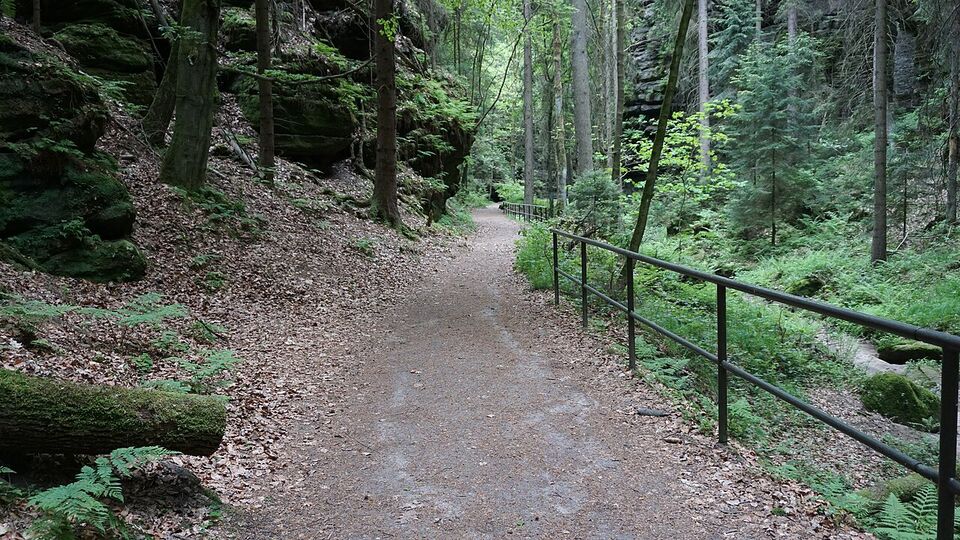
Overview: an organized country for walking and riding
Germany is easier to hike and cycle than most Americans expect. Trails are marked, villages sit every few miles, and trains and buses reach many trailheads. You do not need a car for most routes, and you do not need a permit for nearly all of them. What is different is the rulebook: wild camping is banned, bikes on trains follow specific rules, and the Alps need real mountain judgment.
This page covers hiking regions and long-distance trails, mountain huts and how to behave in them, cycling the big river paths, lakes and swimming, a skiing summary, national parks, camping, ticks and the German habit of nude sunbathing and saunas. For region details, see The Bavarian Alps, Dresden and Saxony, Heidelberg and the Black Forest and The Rhine and Moselle.
For getting to trailheads, the Deutschlandticket (€63 a month in 2026, about $71; €66.80 or about $75 from January 1, 2027) covers regional trains and buses across the country but not ICE or IC trains. It makes sense mostly for longer stays. See German Train Tickets and Passes.
Different from home
There is no equivalent of US public-land camping or dispersed camping in Germany. Almost all land is privately owned, state-owned or protected, and "walking anywhere" works in forests but not for sleeping. Plan your nights around villages, huts and campgrounds, and you will have a much easier trip.
Hiking regions at a glance
Bavarian Alps
Germany's high mountains, with the Zugspitze at 9,718 feet (2,962 m). Valley trails, cable-car-assisted summit walks and hut-to-hut routes. The Königssee near Berchtesgaden is a long, cold lake with electric boats only.
Saxon Switzerland
Sandstone towers and gorges along the Elbe. The Bastei rocks and bridge are 636 feet (194 m) above the river. The Malerweg ("Painters' Way") circles the national park in eight stages.
Black Forest
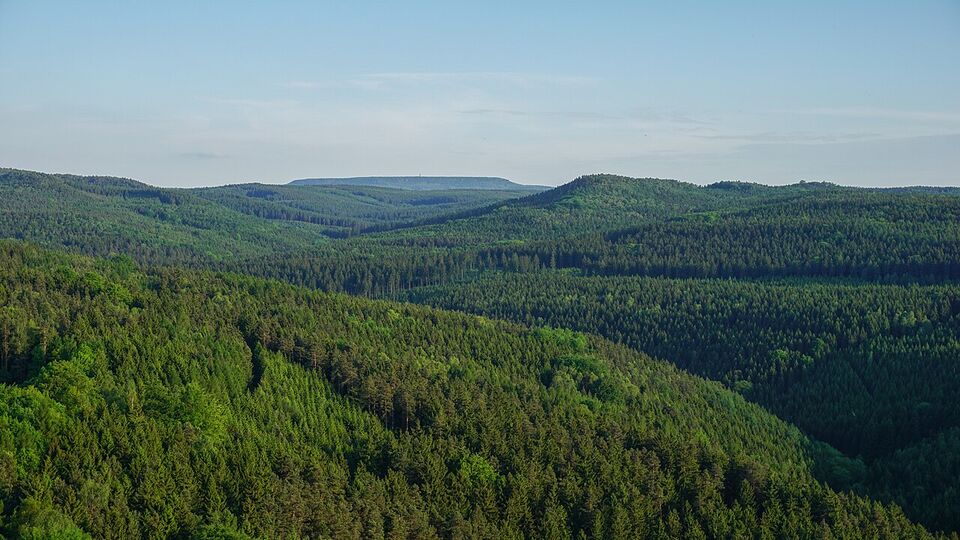
Spruce ridges, lakes and waterfalls. The Westweg runs the length of the forest, and the Schluchtensteig follows gorges in the south. The Feldberg, at 4,898 feet (1,493 m), is the highest peak.
Rhine and Moselle
Vineyard slopes, castle ruins and river views. The Rheinsteig follows the right bank of the Rhine for about 200 miles (320 km) between Wiesbaden and Bonn.
Harz and central uplands
Rounded forested mountains, with the Brocken as the main summit. Long trails include the Harzer Hexenstieg, and the Rennsteig is described by the German tourist board as the oldest long-distance trail in Germany. See Weimar, the Wartburg and the Harz.
How trails work
Marked trails use yellow signposts with the next destination and the distance or walking time. In the Alps, signs usually give walking time in hours. Local trails also carry colored or symbol waymarks on trees, posts and rocks, and long-distance trails have their own logo. "Premium" and "Quality" trail labels indicate good marking and scenery, not difficulty. Check the difficulty and the elevation gain before you set out.
Most hikers use phone apps such as Komoot or Outdooractive with offline maps, along with a printed or downloaded regional map. Mobile coverage is patchy in valleys and on high routes, so download maps in advance. Dogs must be on a leash in many areas. Leave nothing behind, and do not pick protected plants such as edelweiss.
Hiking season and weather
In the Alps, high routes and huts run from roughly June to early or mid-October. Snow can remain on shady slopes into June, and afternoon thunderstorms are common in summer, so start early and plan to be off ridges by early afternoon. Lower-elevation forests (the Black Forest, the Rheingau, the Palatinate) are walkable from April to November. Spring and autumn are the most comfortable seasons in the valleys, and autumn color arrives in October.
Watch out
Do not treat Alpine routes like city park trails. Weather changes fast, trails can be exposed, and rescue costs can be high and may not be covered by a US health plan. Buy travel insurance that covers mountain rescue and evacuation (see Health and Medical Care). In an emergency, call 112. The international Alpine distress signal is six signals a minute (shouts, whistle blasts or flashes), then a pause of one minute, then repeat.
The Alps in practice
The easiest approach for first-timers is a base in Garmisch-Partenkirchen, Berchtesgaden or Oberstdorf, and day hikes from the valley with cable cars where you want height without effort. Guest cards given by many Alpine hotels often include local buses and some lifts, so ask at check-in. For more on the towns, see The Bavarian Alps.
The Zugspitze can be reached by a cogwheel train and cable car without hiking. In summer 2026 the adult round-trip "Ticket Zugspitze" was €78 (about $87), valid through November 22, 2026, and the one-way ticket €46 (about $52). Climbing it on foot is a serious one- or two-day route (the Reintal route is the usual hike), and the via ferrata (Klettersteig) routes need equipment and experience.
Near Berchtesgaden, the Königssee has only electric boats, which keeps the water quiet and clear. The Watzmann, at 8,901 feet (2,713 m), is a serious mountain, not a stroll.
The Kehlsteinhaus ("Eagle's Nest") near Berchtesgaden was heavily damaged in a fire on October 23 and 24, 2026 and is closed, with the area including its hiking routes shut, and no reopening date. The separate Dokumentation Obersalzberg history museum is not affected.
Mountain huts: how they work and how to behave
Alpine huts (Hütten) are mountain lodges run by the German Alpine Club (DAV) and by private owners. They serve hot meals, drinks and cake, and many have beds. Staying one night in a hut, with dinner and breakfast, is part of the experience of hiking in the Alps. Huts are not hotels: expect a bunk in a shared dorm (Matratzenlager), basic washrooms and a set schedule.
- Reserve ahead. Contact the hut directly, usually online. Summer weekends fill. If your plans change, cancel or call; mountain weather makes no-shows a safety issue.
- Bring a hut sleeping bag liner (Hüttenschlafsack). Huts supply blankets and pillows but not sheets.
- Take your boots off at the entrance and switch to hut slippers, or go in socks.
- Carry cash. Many huts take cash only, or have unreliable card readers. Showers, if any, may cost extra.
- Keep to the quiet hours, usually from about 10 p.m. Lights out is not a suggestion.
- Greet people. A "Hallo," "Servus" or "Grüß Gott" on the trail and when entering a hut is standard in the south.
- Carry out your trash and use water sparingly, since water and power can be limited.
DAV members get lower prices than non-members. Some American Alpine Club members may qualify for reciprocal member rates, so ask the club and the hut before you rely on it. Most huts close in the off-season, from about October to June depending on height. The usual meal is a hot dish such as Kaiserschmarrn (shredded pancake), Spätzle or soup, and a "Brotzeit" (cold snack plate).
Insider tip
Try a hut for lunch before you commit to a night. Walking to a hut for a meal is a normal day hike, costs far less than a bed, and lets you see what the rules and atmosphere are like.
Saxon Switzerland, the Black Forest and the Rhine
Saxon Switzerland and the Malerweg
Saxon Switzerland is a sandstone landscape of towers, gorges and forests along the Elbe, about an hour from Dresden. The S-Bahn line S1 runs from Dresden along the river, and a ferry crosses to Rathen for the Bastei. The Bastei is the busiest spot, so go early or late. The Malerweg is a trail in eight stages, about 70 miles (112 km) in all, that follows the viewpoints that Romantic painters made famous. Individual stages are 6 to 12 miles long. It is a good first multi-day hike for Americans because you sleep in villages, not huts. See Dresden and Saxony.
The Black Forest
The Westweg runs about 177 miles (285 km) from Pforzheim to Basel along the main ridge, and the Schluchtensteig runs about 74 miles (119 km) through gorges in the south. Day hikes from Titisee, Triberg and Freiburg are easier to plan. Many lodgings take part in the KONUS guest card, which makes local buses and trains free. See Heidelberg and the Black Forest.
The Rheinsteig and the Moselle
The Rheinsteig is a premium trail on the right bank of the Rhine, roughly 200 miles (320 km) long, from Wiesbaden to Bonn, with steep climbs from the river to vineyard and forest ridges. It passes the Rhine Gorge near the Loreley. The right-bank rail line, which hikers use to get to and from stages, is closed for renovation until December 12, 2026, so check for replacement buses if you hike before then. The Moselle has its own long trail on the hills above the river. See The Rhine and Moselle.
Cycling in Germany
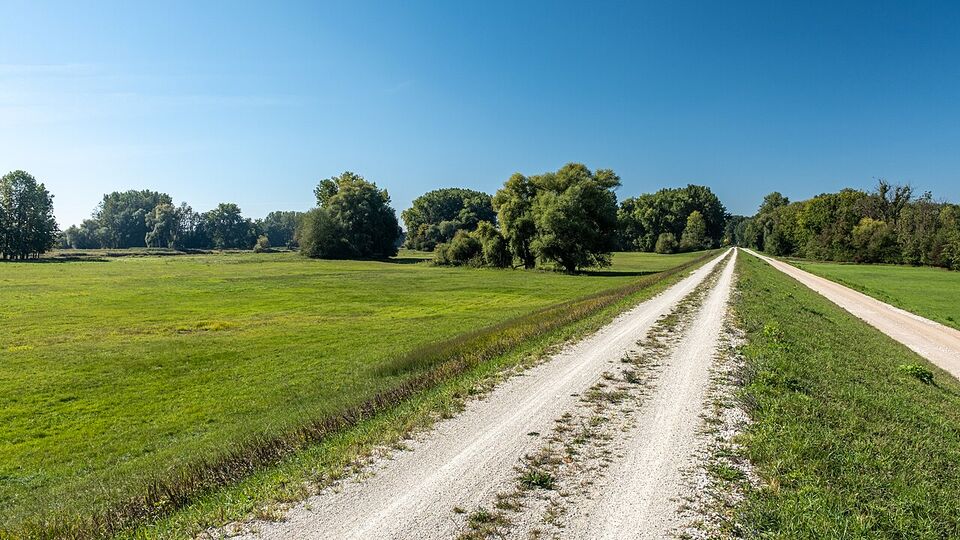
Germany is one of the best countries for easy long-distance cycling. The river paths are mostly flat, paved or compacted, signposted, and close to villages, cafes, ferries and train stations. Typical rides are 25 to 45 miles (40 to 70 km) a day, with a rest day or two for sights.
| Route | Rough length | Character |
|---|---|---|
| Danube Cycle Path (Donauradweg) | Donaueschingen to Passau, roughly 370 miles (600 km) | Gentle river path through Ulm, Regensburg and the Danube valley; continues to Vienna and beyond |
| Elbe Cycle Route (Elberadweg) | More than 500 miles (800 km) in Germany | From Saxon Switzerland through Dresden and Meissen to Hamburg and the North Sea; mostly flat |
| Rhine Cycle Route (Rheinradweg) | Mainz to Cologne about 120 miles (190 km) | Castles and ship traffic on both banks; busy in places |
| Moselle Cycle Path (Moselradweg) | Trier to Koblenz about 125 miles (200 km) | Gentle vineyard valley; wine villages every few miles |
| Lake Constance Cycle Path | About 160 miles (260 km) around the lake | Flat, with three countries and ferries; see Lake Constance |
Lengths are rounded and depend on where you start and which bank you use, so treat them as a rough guide and use the route's official page for stages.
Rentals, e-bikes and rules
Rental shops are common in towns on the main routes. Rough ranges, which we could not confirm for 2026, are €10 to €20 (about $11 to $22) a day for a city or trekking bike and €30 to €45 (about $34 to $50) a day for an e-bike, with discounts for several days and one-way fees if you drop the bike elsewhere. Book ahead in summer. Baggage transfer services can move your bags between hotels if you book a tour.
Cyclists follow traffic lights and use marked bike lanes, which are often reddish paving next to the sidewalk. Pedestrians who stand on a bike lane get run into, so keep off it. Lights are required after dark (white at the front, red at the back). Helmets are not required by law but are a good idea. Pedelecs (e-bikes) stop assisting at 25 km/h (15.5 mph). Drink-driving limits and penalties apply to cyclists too.
Bikes on trains
| Train type | Bikes | Notes |
|---|---|---|
| ICE (high-speed) | Mostly not carried | A few services have limited bike spaces, shown at booking; folding bikes in a bag are luggage |
| IC and EC (Intercity) | Yes, with a reservation | Bike ticket needed; the fee was about €9 (about $10) in recent years, so check the current price |
| Regional trains (RE/RB/S-Bahn) | Usually yes, space permitting | Fees and peak-hour bans depend on the regional transport association; the Deutschlandticket does not automatically cover a bike |
These are general rules we could not re-confirm on the Deutsche Bahn site for this guide, so check Deutsche Bahn and the regional operator when you plan. In practice: avoid commuter peaks, book IC bike spaces early, and expect crowded bike areas on summer weekends. See Getting Around Germany for the rail basics.
Lakes, wild swimming and the water
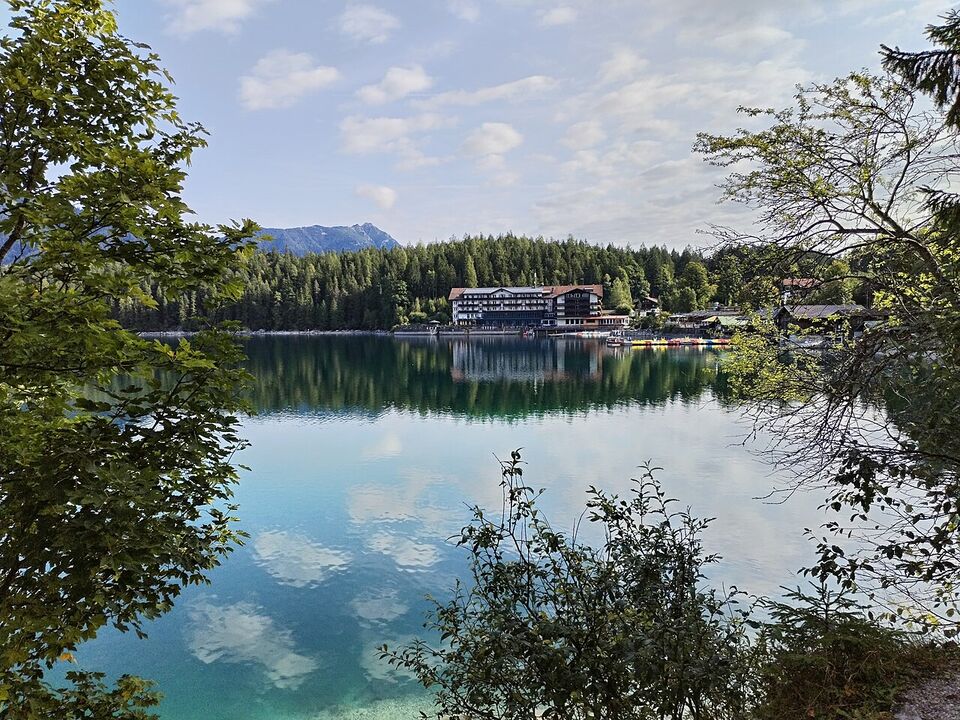
Germany has thousands of lakes. The best-known are Lake Constance (see Lake Constance), the Königssee, the Chiemsee and Starnberger See near Munich, and the Mecklenburg Lake District in the northeast. Most have swimming spots, boat rentals and lakeside cafes. The Baltic and North Sea beaches are covered in The North Sea and Baltic Coast.
Swimming in lakes is allowed in most open waters unless a sign says no, and not in nature reserves, drinking water reservoirs or harbors. The season is roughly June to September. Alpine lakes stay cold even in midsummer. Look for supervised beaches with lifeguards, a sign listing water quality, and warnings about blue-green algae in hot spells. Do not swim in shipping rivers such as the Rhine, where currents and ships are dangerous, and think twice about fast alpine rivers.
Different from home
Germans treat lakes as public space. You will see people changing on the shore, sunbathing on the lawn at a lido, and nude areas set aside at some lakes and beaches. Cold water and sudden storms are the real risks for visitors who are not used to them.
Skiing in brief
Germany's skiing is in the Bavarian Alps, with smaller areas in the Black Forest and the central uplands. The season runs roughly December to March, longer on the Zugspitze glacier, and snow is less reliable at lower elevations. For lodging, trains and the towns, see The Bavarian Alps.
| Area | Price (winter 2026/27) | US$ (approx.) | Notes |
|---|---|---|---|
| Zugspitze, adult 1-day | €70.50 online, €78 at the ticket office | $79 / $87 | Prices valid from November 27, 2026; also the non-skier round trip price |
| Garmisch-Classic, adult 1-day | €69 online, €72 on site | $77 / $81 | Garmisch-Partenkirchen ski area |
| Berchtesgaden lift network | 3 days €102, 6 days €190 | $114 / $213 | Multi-day passes shown; no single-day price found |
| Feldberg (Black Forest) | Dynamic daily pricing | Varies | Price changes with date and demand; check the day you go |
| Oberstdorf-Kleinwalsertal | Not confirmed | - | Check the lift company's site for dates and prices |
The Zugspitze season-opening date for 2026/27 was not published when we checked, and winter tickets go on sale online in mid-November. Rental gear, lessons and parking are extra. Book lodging early for the holidays and for February school-break weeks.
National parks and protected areas
Germany has 16 national parks, from Alpine peaks to tidal flats. Most are free to enter, and many have visitor centers, marked trails, and ranger-led walks in English or German. Typical rules: stay on marked paths in core zones, keep dogs on a leash, take away your trash and do not camp, light fires or fly drones.
- Berchtesgaden: the only Alpine national park in Germany, with the Königssee and the Watzmann.
- Bavarian Forest: Germany's oldest national park (1970), with a treetop walkway and wild forest.
- Black Forest: created in 2014 along the northern ridge near the B500 and Ruhestein.
- Saxon Switzerland: sandstone towers and the Bastei, close to Dresden.
- Jasmund (Rügen): chalk cliffs on the Baltic coast.
- Wadden Sea parks: tidal mudflats on the North Sea, where guided mudflat walks are the safe way to explore. Tides rise fast, so never go out alone without a guide.
Park entry is free in most cases, but treetop walks, visitor attractions and some parking lots charge fees. Check each park's official site.
Camping rules: wild camping is banned
Wild camping (wildes Campen) is illegal across nearly all of Germany. That means pitching a tent, parking a camper overnight or lighting a fire on land that is not an official campground or designated site. Rules are set by the states and municipalities, and fines vary: they can be modest in some places and substantial in protected areas. Sleeping in a car to rest before driving on is tolerated in many places for one night if you are not camping (no chairs, awning or grill), unless a sign forbids it.
What works instead: official campgrounds (Campingplätze), with a pitch for a tent usually in the range of €20 to €45 (about $22 to $50) a night in season, which we could not confirm for 2026. Dedicated camper-van sites (Stellplätze) are cheaper and basic. Trekking camps, bookable tent sites on long trails, exist in a few regions such as the Black Forest and the Palatinate. Mountain huts cover the Alps.
Fire risk matters too. In dry summers, forest-fire warnings can ban fires and, in many states, smoking in forests for part of the year. Obey signs.
Save money
If you are traveling with a tent, campgrounds are the cheapest way to sleep in Germany and often sit next to lakes or trailheads. Book in July and August, and check whether a campground charges extra per person, per car and for showers.
Ticks and other outdoor health risks
Ticks live in forests, tall grass and brush from spring to autumn, and on mild winter days. They can carry Lyme disease and tick-borne encephalitis (TBE, FSME). In 2026, 185 districts are officially TBE risk areas, with Bavaria and Baden-Württemberg almost entirely covered and parts of Hesse, Thuringia, Saxony and other states included. Germany reported 693 TBE cases in 2025, nearly all in people who were unvaccinated or incompletely vaccinated.
- Wear long pants tucked into socks in grass or brush, and use insect repellent.
- Check your whole body every evening, including the scalp, groin and behind the knees.
- Remove a tick promptly with tweezers or a tick card, and note the date. See a doctor if a rash spreads or you develop a fever.
- There is no Lyme vaccine. Ask a travel-medicine clinic about TBE vaccination: the series takes weeks, so ask well before you fly.
For more on doctors, pharmacies and insurance, see Health and Medical Care.
Nudity, FKK and saunas
Germany has a long tradition of Freikörperkultur (FKK, "free body culture"). Nude sunbathing and swimming are allowed in signed areas of beaches and lakes, and some city parks have tolerated areas, such as parts of Munich's English Garden. The tradition is especially visible on the Baltic coast. Nudity is treated as ordinary, not sexual, and staring, photography and comments are unwelcome.
The same applies to saunas. German saunas are generally mixed-gender and nude, including in hotel spas and public baths. Rules: shower first, sit or lie on your own towel, don't wear a swimsuit inside, keep quiet and don't photograph. Some spas have textile-free days and mixed days, so check before you go (see Heidelberg and the Black Forest for Baden-Baden). If you don't want to join, no one will mind: use a swimsuit area or skip it. For general manners, see German Etiquette.
Three outdoor trips and how to pick one
- Alps, 4 days
Garmisch and the Zugspitze
Base in Garmisch-Partenkirchen. Ride the Zugspitze lifts on a clear day, hike a valley gorge, and take one low-level ridge walk. Add Berchtesgaden if you have more time.
- Saxony, 3 days
Dresden and Saxon Switzerland
Two nights in Dresden, then a day on the S1 line for the Bastei, a ferry and a half-day section of the Malerweg. Easy to do without a car.
- Rivers, 5 days
Moselle or Danube by bike
Rent bikes in Trier or Ulm, and ride 25 to 35 miles a day between wine villages or old towns, with a train back to the start.
Choose the Alps for dramatic scenery and cable cars, Saxon Switzerland for compact hiking without huts, and the rivers for gentle multi-day riding. See Germany by Interest for other themes and Germany Packing List for gear.
Add it to a route in the trip builder, or ask us to plan the hotels, trains and guides for you.