Beer and wine in Germany
Germans drink beer in every region, and wine in the west and south, and local habits matter more here than a single national style. Order what the region brews or grows and you will get it fresh, well served and fairly priced. This guide covers the main beer styles, beer halls and beer gardens, the customs in Cologne and Düsseldorf, the wine regions, seasonal drinks, and the rules about age, public drinking and deposits.
A glass of beer is also cheap by American standards in most places. A half-liter (a bit under 17 US fluid ounces) typically costs roughly €4.50 to €6.50 (about $5 to $7.30) in a restaurant, as of late 2026, and more in tourist centers. For food that goes with it, see our German food guide.
The beer styles to know
Germany has several thousand beers but only a handful of styles you will see over and over. Alcohol figures below are typical ranges and vary by brewery.
| Style | Where you will find it | What it tastes like |
|---|---|---|
| Helles | Munich and all of Bavaria | Pale, soft and malty with a gentle hop finish, about 4.7 to 5.2% alcohol. The everyday Bavarian beer. |
| Pils (Pilsner) | Everywhere, especially the north | Crisp, dry and more bitter, about 4.8 to 5.2%. The most common style nationwide. |
| Weissbier or Weizen | Bavaria, served all over | Wheat beer, hazy, with banana and clove notes, about 5 to 5.5%. Served in a tall, vase-shaped glass. Hefeweizen is the cloudy version. |
| Dunkel | Bavaria and Franconia | Dark lager, bready and lightly roasted, not heavy, about 4.5 to 5.5%. |
| Bock and Doppelbock | Bavaria, especially in spring and fall | Strong lagers, about 6.5% for Bock and 7% or more for Doppelbock. Sweet, malty and warming. |
| Kölsch | Cologne only (and a few nearby places) | Light, clean, slightly fruity, about 4.8%. Served in a small, narrow glass. |
| Altbier | Düsseldorf and the lower Rhine | Copper-brown, bitter and malty, about 4.5 to 5%. "Alt" means old, for the old method of top fermentation. |
| Rauchbier | Bamberg, in Franconia | Beer made with malt dried over beechwood smoke. It tastes like smoked bacon or ham. Many people either love it or leave it after a sip, so start with a small glass. |
| Gose | Leipzig and Goslar region | A cloudy wheat beer brewed with salt and coriander, tart and refreshing, about 4 to 5%. Often sold with a flavored syrup. |
Two other drinks show up on menus. A Radler (in northern Germany an Alster) is beer mixed half and half with lemon soda, about 2.5% alcohol, popular on hot days and on hikes. Alcohol-free beer (alkoholfrei) is very widely sold, and alcohol-free wheat beer in particular is a common choice after sports.
The Reinheitsgebot
You will often see the Reinheitsgebot, the "purity law," on labels and menus. It dates from 1516 in Bavaria and said that beer should be made only from water, barley and hops (yeast was added once it was understood). Brewers still advertise it as a point of pride, and it shapes the style of most German beer. Today it works more as a tradition and a marketing promise than as a strict rule: the modern law allows wheat malt and other ingredients, and the market includes fruit beers, radlers and craft beers that do not follow it. Treat it as a mark of the old-fashioned brewers rather than a guarantee of quality.
Beer halls and beer gardens
A Bierhalle or Bräuhaus is a large, indoor hall with long tables, waiters in traditional dress, and food that suits the beer: pretzels, roast pork, sausages and dumplings. Munich has the best known, and our Munich guide covers where to go and how the halls differ. Order at the table, drink from a half-liter glass or a one-liter Maß (a heavy glass mug, about 34 US fluid ounces), and pay the server at the end.
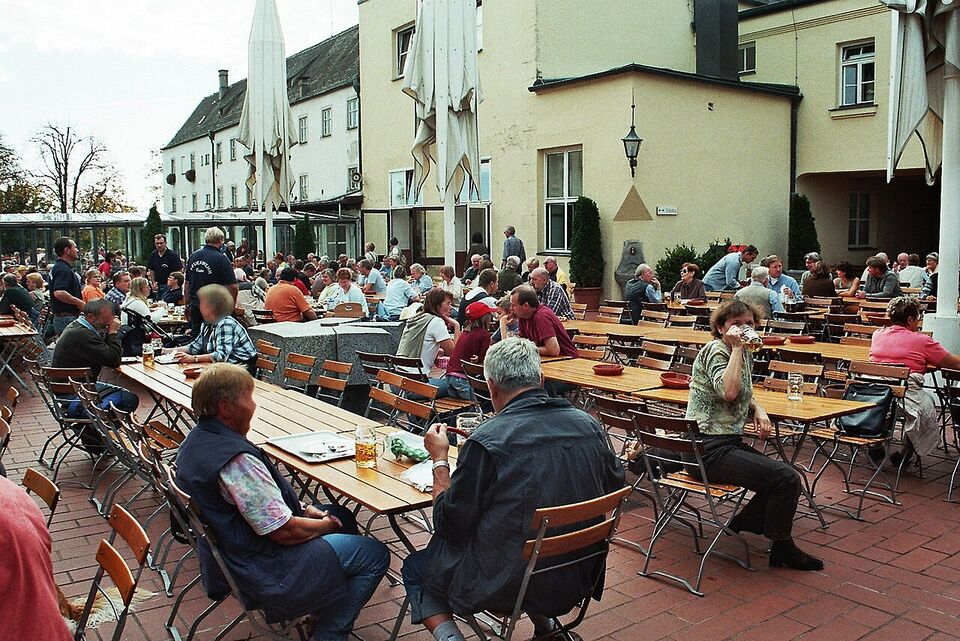
A Biergarten is an outdoor space with trees, picnic tables and a relaxed mood, and the classic ones are in Bavaria. At a traditional one you may bring your own picnic food (Brotzeit) to the tables that have no tablecloths, and buy only your drinks. Tables with a tablecloth usually mean table service and house menus. The beer is often served in a one-liter Maß, so ask for a half-liter (eine Halbe) if you want less. A Maß in a Munich hall or garden usually costs more than €10 (about $11) in 2026, so check the board. Hours depend on weather, and many gardens close in cold or wet spells and from about October to March.
Different from home
A beer is not a rushed drink. Nobody expects you to order a second round quickly, and the server will not push you. Beer is served at a cool cellar temperature, not ice-cold, and the pour includes a head of foam, which is intentional. If you want a refill, make eye contact or say "Noch ein Bier, bitte." Wait for the host to say "Prost," look people in the eye as you clink glasses and do not cross arms with someone else.
Cologne and Düsseldorf
These two Rhine cities have a famous beer rivalry, and each has its own ritual. Both are easy to visit in a day from each other; see our Cologne guide for the city.
Kölsch in Cologne
Kölsch is served in a Stange, a straight 0.2-liter glass, by a waiter called a Köbes, who carries a round tray (a Kranz) of full glasses. The Köbes will replace each empty glass without being asked, putting a mark on your coaster for each one. To stop, place your coaster on top of your glass. If you forget, you will keep receiving beers, and the final bill will show it. By the rules of the Kölsch Konvention, a trade agreement among Cologne brewers, a true Kölsch is brewed in the Cologne area and served in this kind of glass. A small glass costs roughly €2 to €3.50 (about $2.30 to $4), so keep a count.
Altbier in Düsseldorf
Düsseldorf's Altbier is served in a short glass of about 0.25 or 0.3 liter, and in the old-town brewpubs servers circulate with trays of fresh glasses, just as in Cologne. It is less strictly ritualized, but you stop the same way.
Our money guide explains how to tip a Köbes or a bartender: rounding up or adding a euro or two is standard.
Monastery breweries
Some of the most atmospheric places to drink beer are monasteries that still brew, in Bavaria. Two are well suited to a day trip. At both, check opening hours before you go, since gardens depend on the weather and the season.
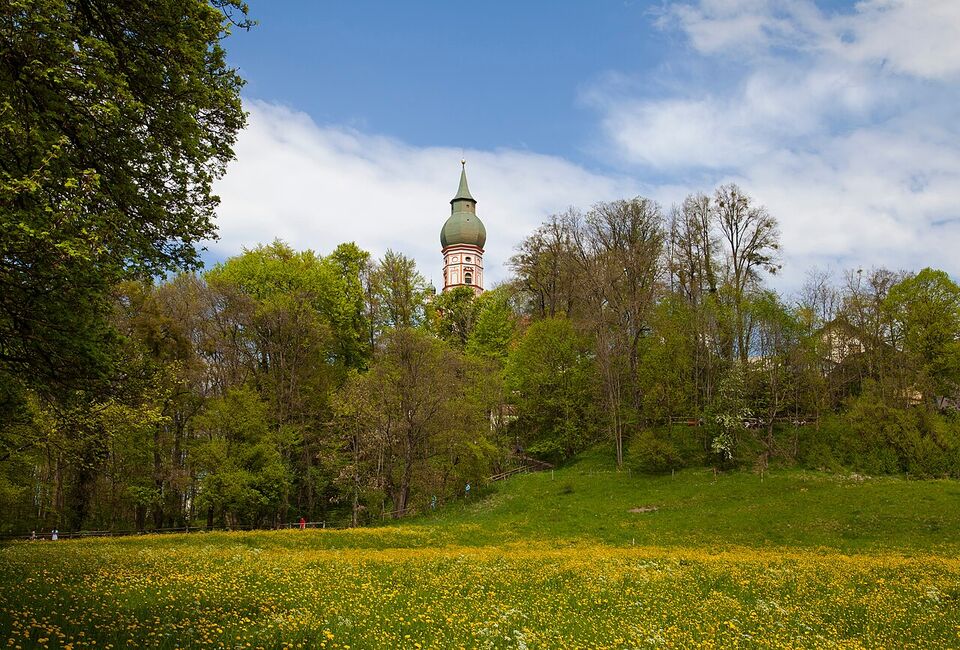
Andechs
The monastery sits on a hill above the Ammersee, a short trip southwest of Munich by S-Bahn followed by a bus or a hike, and brews its own lagers, wheat beers and strong dark Doppelbock. The Bräustüberl restaurant serves beer and Bavarian food at long tables, with terraces. We could not confirm the Bräustüberl's current hours, which can differ by weekday and season, so check andechs.de before you go.
Weltenburg Abbey
On a bend of the Danube near Kelheim, southwest of Regensburg, the abbey says it has brewed since 1050, which would make it the oldest monastery brewery in the world. It is best known for its dark beers, and you can reach it on foot from the road or on a boat through the river gorge in the season. Check the boat and garden times at the abbey's own website.
You can reach both without a car: Andechs by public transport from Munich, and Weltenburg by train to Kelheim or Regensburg and then a boat or local bus. For the biggest beer festival of all, see our Oktoberfest guide.
Wine regions
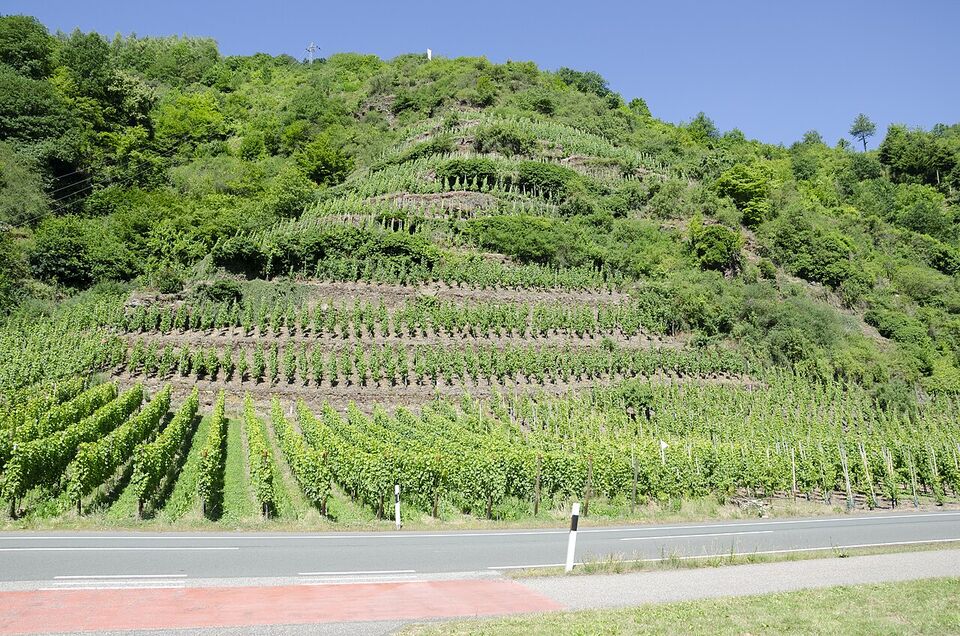
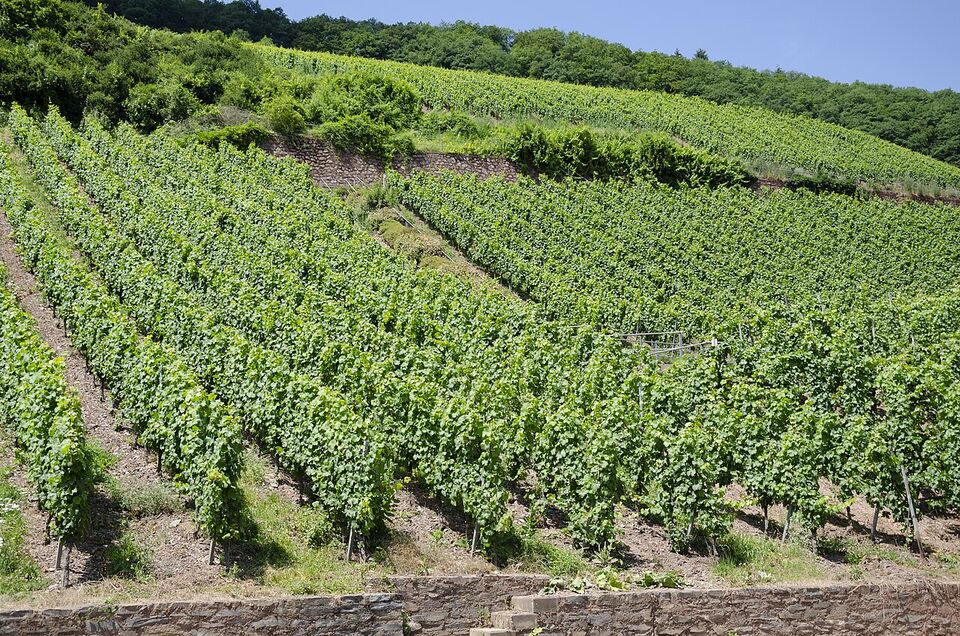
Germany has 13 official wine-growing regions, most in the southwest, and white wine dominates. Riesling is the signature grape, though the red grape Spätburgunder (Pinot Noir) is also grown widely. Wine is cheaper to drink in the region where it is made, and the best way to taste it is in a village Weinstube (wine tavern) or a seasonal winery pub (a Straußwirtschaft or Besenwirtschaft), where growers pour their own wine and sell simple food, usually open a few weeks at a time. A glass (typically 0.2 liter) of local wine usually costs roughly €5 to €9 (about $5.60 to $10) in a restaurant. These prices vary a lot.
Mosel
Light, fruity and mineral Rieslings from vineyards on some of Europe's steepest slopes. Many are fruity or off-dry and low in alcohol. Villages such as Cochem and Bernkastel suit a visit; our Rhine and Moselle guide has the details.
Rheingau
A small region around Rüdesheim and Eltville with full-bodied Rieslings, many of them dry, and a history of high-end estates and wine festivals.
Pfalz
A warm region with a wine route, a mild climate and a relaxed wine-festival culture. Good for dry whites and for reds.
Franconia
Dry, earthy white wines, especially Silvaner, often sold in a squat, flat-sided bottle called a Bocksbeutel. Würzburg is the main base; see our Romantic Road guide.
Baden
Germany's warmest wine area, with Pinot Noir (Spätburgunder), Pinot Gris (Grauburgunder) and Pinot Blanc. It meets the Black Forest and Freiburg; see our Heidelberg and Black Forest guide.
Rheinhessen, between Mainz and Worms, is the largest region by area, and Württemberg around Stuttgart is another major one, known for its red wines such as Trollinger. Both are well suited to a day trip from Frankfurt or Stuttgart.
How to read a German wine label
Sweetness is the biggest surprise. Trocken means dry, halbtrocken means off-dry, lieblich means medium-sweet and süß means sweet. A grower may also write feinherb, a looser term that usually means off-dry. If you want a dry white, look for trocken; if you ask for "Riesling" with no further words, you may get a sweeter style than you expect.
Terms such as Kabinett, Spätlese and Auslese describe how ripe the grapes were when picked, not how sweet the finished wine is. A Mosel Kabinett is often delicate and slightly sweet, while a Rheingau Spätlese trocken can be full and dry. A bottle marked VDP.Grosse Lage or Grosses Gewächs comes from a top vineyard of a quality association and is dry. When unsure, ask the server "Ist der Wein trocken?"
Insider tip
Ask for a Schorle (wine mixed with sparkling water) on a warm day. A Weißweinschorle in a wine village is a normal order and usually costs less than a glass of wine.
Seasonal and local drinks
Federweisser
Federweisser is new wine in the middle of fermentation, sold in September and October during the harvest. It is cloudy, sweet and bubbly, and is usually served with Zwiebelkuchen (onion tart). Regional names include Rauscher, Sauser and Brauser. It tastes like juice, but the alcohol rises as it ferments, so a glass can be stronger than expected. If you buy a bottle, keep it upright and do not close the lid tightly, since the pressure from fermentation can build up, and do not pack it in luggage.
Apple wine in Frankfurt
Frankfurt and Hesse drink Apfelwein (also called Ebbelwoi), a tart, dry cider-like drink of roughly 5.5 to 7% alcohol, served in a gray stoneware pitcher (a Bembel) and poured into ribbed glasses. It is the traditional drink of the taverns in the Sachsenhausen district, where it goes with Handkäs mit Musik (sour cheese with onions) and green sauce (Grüne Soße). See our Frankfurt guide.
Glühwein and winter drinks
Glühwein is hot mulled red or white wine, sold at Christmas markets, usually from mid-November through December. It is served in a mug with a deposit of a few euros (Pfand) that is refunded when you return the mug (some markets let you keep it as a souvenir). Look for Feuerzangenbowle (mulled wine with a flaming sugar loaf), Eierpunsch (egg liqueur punch) and Kinderpunsch for children. Prices vary by market and city; our Christmas markets guide lists dates and what each market is known for.
Schnapps and digestifs
Schnaps means a clear spirit, often a fruit brandy (Obstbrand), such as Kirschwasser (cherry) from the Black Forest and Williams (pear), or a grain spirit, Korn. After a heavy meal, many Germans order a small Verdauungsschnaps (digestive schnapps) or an herbal bitter. A small glass usually costs roughly €3 to €5 (about $3.40 to $5.60).
Rules: age, public drinking and driving
Germany's youth protection law sets the minimum age at 16 for beer, wine and sparkling wine, and 18 for spirits and drinks containing them. Teenagers aged 14 and 15 may be served beer and wine when a parent or guardian is with them. Servers may ask for ID if you look young. This means a 19-year-old American can legally order a beer in Germany, though US rules apply again at home.
Adults can drink alcohol in public in most of Germany, and nobody will mind a beer on a park bench or a Wegbier (a "road beer") on a walk. Some cities, however, ban alcohol on certain squares, at certain hours, or at events, and many local transit systems and station areas have house rules, so watch for signs reading Alkoholverbot or Glasverbot (glass ban). Do not assume it is allowed at a Christmas market or a festival. Public drunkenness and loud behavior can still bring a police warning. Our safety guide and etiquette guide have more.
Watch out
The drink-driving limit is 0.05% blood alcohol (0.5 per mille), lower than most US states, and it is 0.0 for drivers under 21 and in the first two years after getting a license. Cannabis and alcohol together is banned entirely. A beer or two can put you over the limit, so use a train, taxi or a designated driver. Our driving guide explains the rules.
The bottle deposit (Pfand)
Bottles and cans carry a deposit. Single-use plastic bottles and cans have a 25-cent deposit, marked "Einwegpfand 0,25 Euro" on the label. Reusable bottles usually carry 15 cents, and beer bottles about 8 cents; swing-top and special bottles can be more. Return them to the machine at any large supermarket, take the printed receipt (Pfandbon) to the register and it comes off your bill. If you are leaving and do not want to bother, leave the bottle next to a public bin: collectors will pick it up. Our money guide covers deposits too.
Finally, a note on the plastic: a plastic bottle that carries the PET-CYCLE symbol is still single-use, not reusable. For a wider picture of food and drink festivals around the year, including the beer festivals and wine festivals that run from spring to fall, see our festivals guide.
Add it to a route in the trip builder, or ask us to plan the hotels, trains and guides for you.