How to use this calendar
Germany's festival year has four big peaks: carnival in February, wine and beer festivals from late summer, St. Martin's Day on November 11, and the Christmas markets. Between those come film and music festivals, spring fairs and river fireworks. If you can only fit one into your trip, we suggest the one that matches your interests and the weather you can accept: carnival is loud and cold, Oktoberfest is crowded and expensive, wine festivals are slower and cheaper, and Christmas markets are the most reliable and the easiest for first-time visitors.
This page lists 2026 and 2027 dates where we could confirm them. Dates for many 2027 events are not announced until the middle of 2026 or 2027, so we say when a date is unconfirmed. Always check the organizer's site before booking non-refundable travel. For month-by-month weather and crowds, see our when to go guide.
| Event | 2026 | 2027 | Where |
|---|---|---|---|
| Carnival (Weiberfastnacht to Ash Wednesday) | Session opens Nov 11, 2026 | Feb 4-10 (Rosenmontag Feb 8) | Cologne, Düsseldorf, Mainz |
| Berlinale film festival | Past | Feb 10-21 (77th edition) | Berlin |
| Hamburg DOM | Winterdom Nov 6-Dec 6 | Spring Mar 19-Apr 18; Summer Jul 23-Aug 29; Winter Nov 5-Dec 5 | Hamburg |
| Munich Frühlingsfest | Apr 17-May 10 (past) | Dates to be announced | Theresienwiese, Munich |
| Kieler Woche | Jun 20-28 (past) | Jun 19-27 (likely) | Kiel |
| Rhine in Flames | Bonn May 2 (past) | Jul 3, Aug 14, Sep 11, Sep 18 | Middle Rhine |
| Bayreuth Festival | Past | Jul 25-Aug 24 (Lohengrin opens) | Bayreuth |
| Oktoberfest | Sep 19-Oct 4 (past) | Sep 18-Oct 3 | Munich |
| Cannstatter Volksfest | Sep 25-Oct 11 (past) | Sep 24-Oct 10 | Stuttgart |
| Christmas markets | Mid-Nov to Dec 23 (see page) | Dates announced in 2027 | Nationwide |
Carnival: Cologne, Düsseldorf and Mainz
Carnival (Karneval in the Rhineland, Fasching in Bavaria, Fastnacht or Fasnet in the southwest) is the biggest street party in Germany. The Rhineland cities Cologne, Düsseldorf and Mainz are the main stages. The "fifth season" opens on November 11 at 11:11 a.m., which is why you will see costumed people in Cologne on that date every year, but the main days are in February.
The 2027 dates, according to the Cologne city portal, are: Weiberfastnacht on Thursday, February 4 (the "women's carnival", when women traditionally cut off men's ties and the street party starts in the morning); Rosenmontag (Rose Monday) on Monday, February 8, the day of the largest parades; and Ash Wednesday on February 10, when it ends. Veilchendienstag (Tuesday, February 9) is the quieter day before the end. Düsseldorf and Mainz celebrate on the same dates, but we could not confirm their parade routes.
What it is like
Expect crowds in costume, music in every bar, and lots of beer or Kölsch. Locals shout the city's greeting (Alaaf in Cologne, Helau in Düsseldorf and Mainz). Parades throw candy (Kamelle) and flowers, and you hold up a bag and shout "Kamelle!" to catch some. Public transport is packed, many shops close, and trains are full on Weiberfastnacht and Rosenmontag. If you do not like crowds, spend the days in a different city or choose a quieter indoor session in January; see our January guide.
Planning
- Book a hotel well ahead, not in the new year: beds in Cologne, Düsseldorf and Mainz fill and cost more over the carnival weekend. Stay in a nearby town and take the train if rooms are scarce.
- Wear a costume or at least a hat or a scarf; it is not required but makes you part of the crowd.
- Carry only cash and a phone, because pickpockets work crowds.
- Bavarian Fasching is calmer; In Munich the market women's dance at the Viktualienmarkt is traditionally held on Shrove Tuesday. The southwest's Fasnet, with wooden masks and parades, centers on the Black Forest towns and Lake Constance.
Different from home
Carnival is not Mardi Gras in New Orleans. It is organized by neighborhood carnival clubs that run sessions of satire, music and costume all winter, and it grew out of the Catholic calendar before Lent. Parades are a family event by day; in the evening, street drinking is normal.
For other February events, the Berlinale film festival runs February 10-21, 2027, its 77th edition, with the first audience days on February 20 and 21. About 350,000 tickets were sold in 2026. Tickets go on sale shortly before the festival and sell out for popular screenings, so check the program when it is published.
Spring: Easter, fairs and blossom
Easter Sunday in 2027 is March 28, and Good Friday (March 26) and Easter Monday (March 29) are public holidays in all states. Many towns hold Easter markets with painted eggs and bonfires, but we did not confirm 2027 dates. Hamburg's Frühlingsdom (spring DOM) runs March 19 to April 18, 2027. Munich's Frühlingsfest on the Theresienwiese, a smaller version of Oktoberfest, ran April 17 to May 10 in 2026 for its 60th anniversary; the 2027 dates are not yet announced. Stuttgart also holds a spring fair, but its 2027 dates were not found.
In Bonn, the cherry-blossom avenue in the old town draws visitors in spring, but the city says it cannot predict when the trees will bloom. The typical window is late March to mid-April. Check the city's site as you travel. May 1 is a holiday, with maypoles (Maibaum) in Bavarian villages and festivals in many towns. Ascension (May 6, 2027) and Whit Monday (May 17, 2027) are both public holidays, and trains and roads are busy.
Summer: music, boats and fireworks
Rhine in Flames
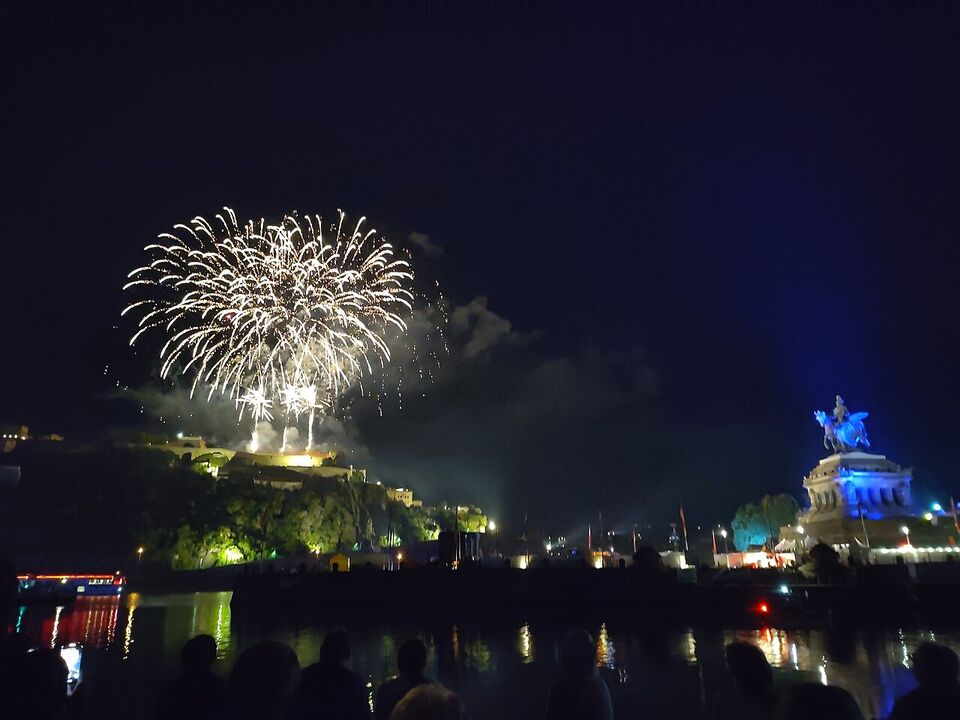
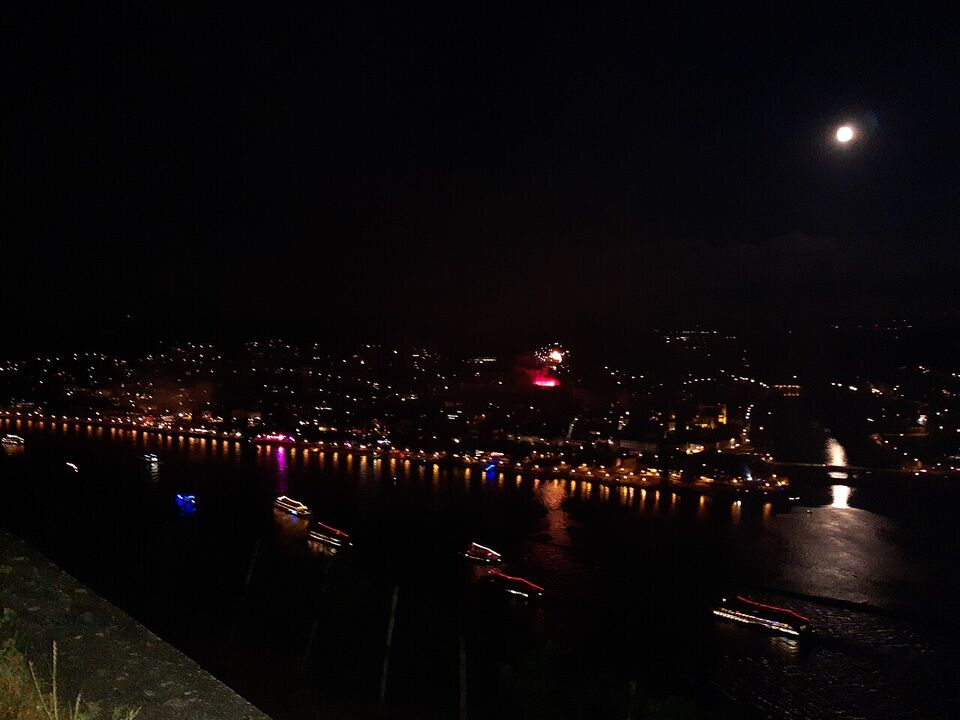
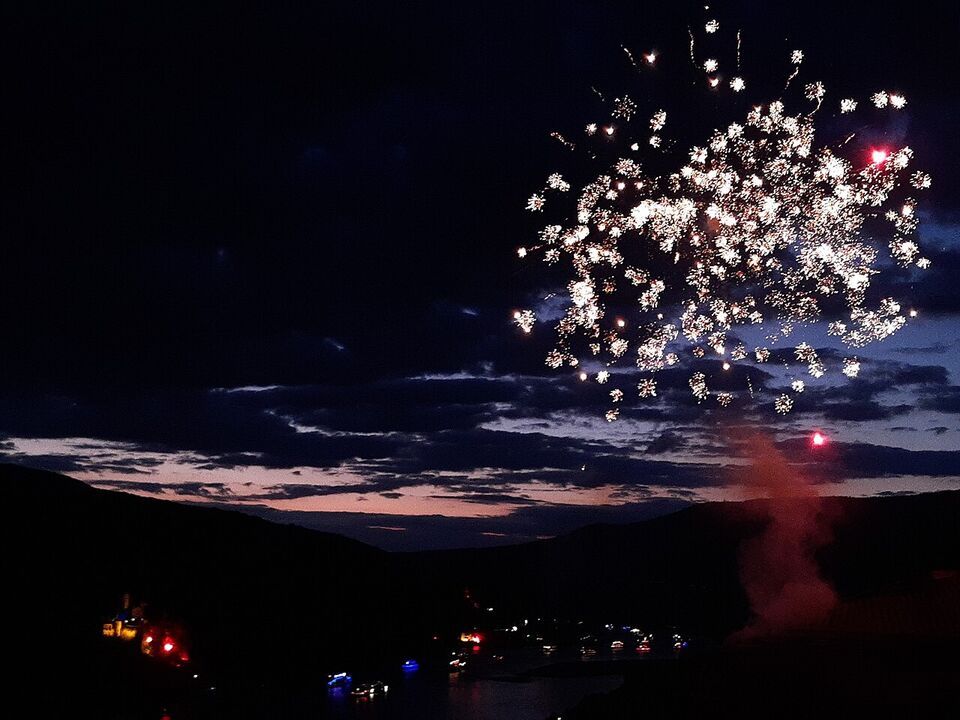
The Rhine in Flames (Rhein in Flammen) is a series of fireworks events along the river, from Rüdesheim to Bonn, with illuminated riverbanks and a convoy of lit boats. The 2027 dates are July 3 (Bingen-Rüdesheim), August 14 (Spay-Koblenz), September 11 (Oberwesel) and September 18 (St. Goar-St. Goarshausen); Bonn's and Linz's dates were not listed. You can watch from the shore for free or buy a boat ticket from the organizers. Book the boat early, because it sells out.
Check conditions. In 2026 Oberwesel was cancelled because the Rhine was historically low, and Koblenz's boat convoy was dropped. Our Rhine and Moselle guide explains the area and the river-level risk.
Bayreuth, Kiel and the DOM
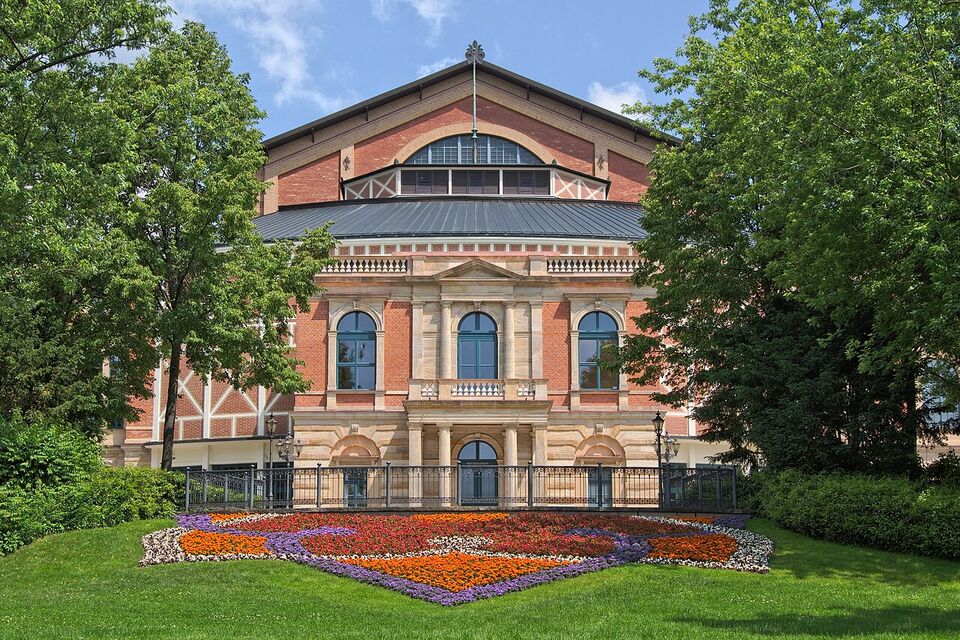
The Bayreuth Festival presents Wagner's operas in a theater built for them. Its 2027 season opens on Sunday, July 25 with a new Lohengrin and runs to August 24; a new Parsifal follows on July 26, and Tannhäuser and Die Meistersinger return. These dates and the casts come from the festival's magazine published in July 2025, so confirm them on the festival's site. Tickets are the challenge, not the date.
Kieler Woche, the sailing and street festival in Kiel, ran June 20-28, 2026, and is expected to run June 19-27, 2027 (from a secondary source). Hamburg's DOM funfair takes place three times a year; in 2027 the summer DOM runs July 23 to August 29 and the winter DOM November 5 to December 5. Other music events, such as the big rock festivals, usually fall between June and August; we do not list dates we have not confirmed.
Wine festivals
Wine festivals (Weinfeste) run from late summer to October in the Rhine, Moselle, Palatinate and Franconian wine regions, and they fit well with a river or road trip. A typical festival has a wine tent or village square, glasses of local wine, and simple food such as Flammkuchen or sausage. Expect to pay for each glass; ask what is included before you order. In autumn, look for Federweißer, young partly fermented wine, which is sold only for a few weeks in September and October.
Well-known ones include the Bad Dürkheimer Wurstmarkt in the Palatinate in mid-September and the Stuttgart Weindorf in late summer; we have not confirmed their 2026 or 2027 dates. Because dates vary each year and village festivals change by week, use a regional tourism site and see our drinks guide for wine regions and terms. For a harvest-season trip, combine them with the Rhine and Moselle.
Oktoberfest and the beer festivals
Oktoberfest, or the Wiesn, is held on the Theresienwiese in Munich. In 2026 it ran 16 days, from September 19 to October 4, and the city's provisional report counted about 7.4 million guests, a record, and about 6.7 million liters of beer served. The 2026 beer price was €14.80 to €15.90 per Maß (one-liter mug), averaging €15.61 (about $17.50), up about 2.4% from 2025.
The 192nd Oktoberfest will run Saturday, September 18 to Sunday, October 3, 2027, with the tapping at noon on opening day. Grounds hours are 10 a.m. to 11:30 p.m. Monday to Thursday, 10 a.m. to midnight Friday, 9 a.m. to midnight Saturday and 9 a.m. to 11:30 p.m. Sunday; the large tents serve their last beer at 10:30 p.m. and the small ones at 11 p.m. Reserve a table in a tent months ahead or arrive early on a weekday. Our Oktoberfest guide covers tents, reservations, tickets, costs and etiquette.
Stuttgart's Cannstatter Volksfest, a close second, ran September 25 to October 11, 2026 (17 days) and will run September 24 to October 10, 2027 according to the festival's site. It is generally easier to get a table than at Oktoberfest, and the setting is a local fairground. Similar fairs take place across Bavaria and Franconia in summer and autumn. Check the town's tourism site for dates. If you plan to visit both, fly into Munich and take the train to Stuttgart, about 2 hours 15 minutes.
Watch out
Hotels for Oktoberfest and Volksfest sell out and prices rise sharply. Book as soon as dates are confirmed, and avoid third-party sellers offering "guaranteed tent seats" at high prices. Tent reservations come from the tent or festival itself.
St. Martin's Day and the quiet days of November
St. Martin's Day (Martinstag) falls on November 11. It is not a public holiday, but in the Rhineland and the south, children carry paper lanterns in an evening procession, often led by a rider on a horse, and sing songs. Restaurants offer roast goose (Martinsgans) with red cabbage and dumplings around that date, usually with a reservation advisable. In Cologne it is also the start of the carnival session at 11:11 a.m.
Two quiet days follow in November: Volkstrauertag (Sunday, November 15, 2026), the national day of mourning, and Totensonntag (Sunday, November 22, 2026), when some places limit public entertainment and markets may close. In 2026, Munich's Marienplatz market stays closed on November 22, and Aachen opens only in the evening. Saxony also has a state holiday, Repentance Day, on Wednesday, November 18, 2026, and Wednesday, November 17, 2027.
Christmas markets
The Christmas markets are Germany's most visited seasonal event for Americans, with dates from mid-November to about December 23. Nuremberg's Christkindlesmarkt in 2026 runs November 27 to December 24, Munich's Marienplatz market November 20 to December 24 and Dresden's Striezelmarkt November 25 to December 24. Our Christmas markets guide has the dates and hours for 13 markets, a seven-day train route, food, mug deposits and safety. Hamburg's Winterdom funfair also runs from November 6 to December 6, 2026.
New Year's Eve (Silvester)
New Year's Eve is Silvester in Germany. In 2026 it falls on Thursday, December 31, and January 1, 2027 is a Friday. Berlin's Senate plans another free party at the Brandenburg Gate with DJs and fireworks, but details, ticketing and capacity were not announced as of September 2026. The previous edition used free online tickets for about 20,000 guests. Check berlin.de in December.
Germans set off their own fireworks, and sales are allowed only for a short window: December 29-31, 2026. Category F2 fireworks (the common ones) are for people 18 and over and may be fired only on December 31 and January 1; they are banned near churches, hospitals and children's or elderly homes. Cities add bans. For the 2025/26 turn of the year Munich banned firing and carrying fireworks in the pedestrian zone from 9 p.m. on December 31 to 2 a.m. on January 1, and some Berlin districts banned some bangers. Orders for 2026-27 are usually published in December.
- Shops: closing times on December 31 vary by state, from 2 p.m. to 10 p.m. or no legal limit, according to a secondary source; many supermarkets close early anyway, and January 1 is closed everywhere.
- Sights: the Reichstag dome closes at 4 p.m. on December 31 and the Elbphilharmonie Plaza at 6 p.m.; Neuschwanstein is closed on December 31 and January 1.
- Tradition: many Germans watch the short British sketch Dinner for One on television, and some melt lead (Bleigießen) or eat doughnuts (Berliner) at midnight.
- Safety: crowds and fireworks make the center loud and unpredictable. Keep distance from bangers, and see our safety guide.
Insider tip
Book New Year's Eve dinner early; many restaurants run a fixed menu, and prices rise. If you want a quieter evening, choose a hotel with a rooftop or a lake view away from the center, and watch the fireworks from a distance.
Dates still to come, and where to check
Several 2027 dates were not published when we checked in November 2026: Munich's Frühlingsfest, Stuttgart's Frühlingsfest, the Bonn and Linz Rhine in Flames events, Easter markets, and the exact dates of most wine festivals. The 2027 Christmas market dates are normally published in the autumn of 2027. Rather than rely on a list, go to the organizer: the city's tourism office, the festival's own site, or the regional tourist board. The German National Tourist Board (germany.travel) also lists events by date.
Two habits help. First, check the date a page was last updated, because many listings repeat last year's dates. Second, compare two sources for any event that is more than six months away. If they differ, wait to book a non-refundable hotel. For events with free cancellation, book early and confirm later.
Costs, etiquette and crowd tips
At most festivals, entry to the grounds is free, and you pay for food, drinks and rides. Beer and wine are served in deposit glasses or mugs at many events, so ask. Tipping works as in restaurants: round up or add about 5 to 10%, and tell the server the total you want to pay when the card machine arrives. Many festival stalls are cash-only, so bring euros in small bills; see our money guide.
Dress for the weather and for walking on grass or cobbles. In Bavaria, people wear Tracht (dirndl and Lederhosen) at Oktoberfest, but you do not have to. Public transport is the best way to arrive: festival days are the worst days to drive, and taxis are scarce late at night. If someone offers you a ticket outside a venue, buy only from the official seller.
Choosing and booking
Decide by season first, then by crowd tolerance. Carnival (February 4-10) and Oktoberfest (September 18 to October 3) need the earliest hotel booking. Wine festivals and the Rhine in Flames need a flexible schedule and depend on river conditions. Christmas markets have the broadest choice and are best planned around weekdays. For overall costs, our budget guide shows what to expect, and the trip builder helps you fit a festival into a route.
- Choose the festival and check its official dates, not a blog or aggregator.
- Book your hotel first, and look at refund terms.
- Book tickets or tent seats directly with the festival, the tent or the city.
- Check the quiet days, public holidays and Sunday closings.
- Carry cash and keep valuables close in crowds.
Add it to a route in the trip builder, or ask us to plan the hotels, trains and guides for you.