Overview
Berlin sits in the middle of Brandenburg, a flat state of lakes, forests, palaces and small towns, and several of Germany's best day trips are within an hour of the center. The easy ones are Potsdam, with its palaces and gardens, the Sachsenhausen memorial in Oranienburg, the Wannsee lakes, and the Spreewald canals. Leipzig and Dresden are farther away and need a fast train, so they work best as an overnight stay or a very long day.
This page gives each trip's travel time, ticket and what to expect, then explains what the AB and ABC tickets and the Deutschlandticket cover. For the city itself, see the Berlin guide and Berlin Sights. If you want trains and fares across the country, Getting Around Germany and German Train Tickets and Passes cover the details.
Which tickets cover which trips
Berlin's three fare zones (A, B and C) matter most for day trips. An AB ticket covers the city, while an ABC ticket also covers zone C, which includes Potsdam, Oranienburg (for Sachsenhausen) and BER airport. A single ABC ticket costs €5.00 (about $5.60) and is valid two hours in one direction; the 24-hour ABC ticket is €12.90 (about $14.50), which we could not fully confirm, so check the BVG app. For a day trip with several rides, the 24-hour ABC ticket usually beats buying singles.
The Deutschlandticket, at €63 a month (about $71) in 2026 and €66.80 (about $75) from January 1, 2027 (Deutsche Bahn confirms the increase), covers regional trains in second class, the S-Bahn, U-Bahn, trams and buses across Germany, but not ICE, IC or EC trains. It is a subscription, and Deutsche Bahn says you cancel by the 10th of a month to end it at the end of that month. If you will be in Berlin for most of a month, it covers Potsdam, Oranienburg and the Spreewald without separate tickets. For a short visit, an ABC day ticket is simpler. Details are in the Berlin guide.
| Trip | Ticket | Time from Berlin |
|---|---|---|
| Potsdam | ABC, or Deutschlandticket | About 25 min (regional train); longer on the S-Bahn |
| Sachsenhausen (Oranienburg) | ABC, or Deutschlandticket | About 45 min on the S1 |
| Wannsee | AB (inside Berlin) | About 25-30 min on the S-Bahn |
| Spreewald (Lübbenau) | Regional ticket, or Deutschlandticket | About 1 hr (check bahn.de) |
| Leipzig, Dresden | Fast-train ticket (Sparpreis or Flexpreis) | Roughly 1 hr 15 min and 2 hr (check bahn.de) |
Potsdam and Sanssouci
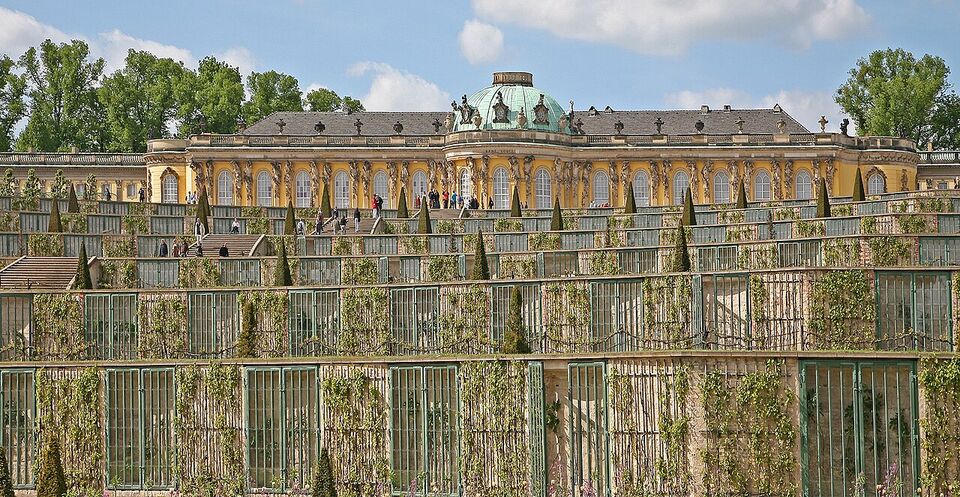
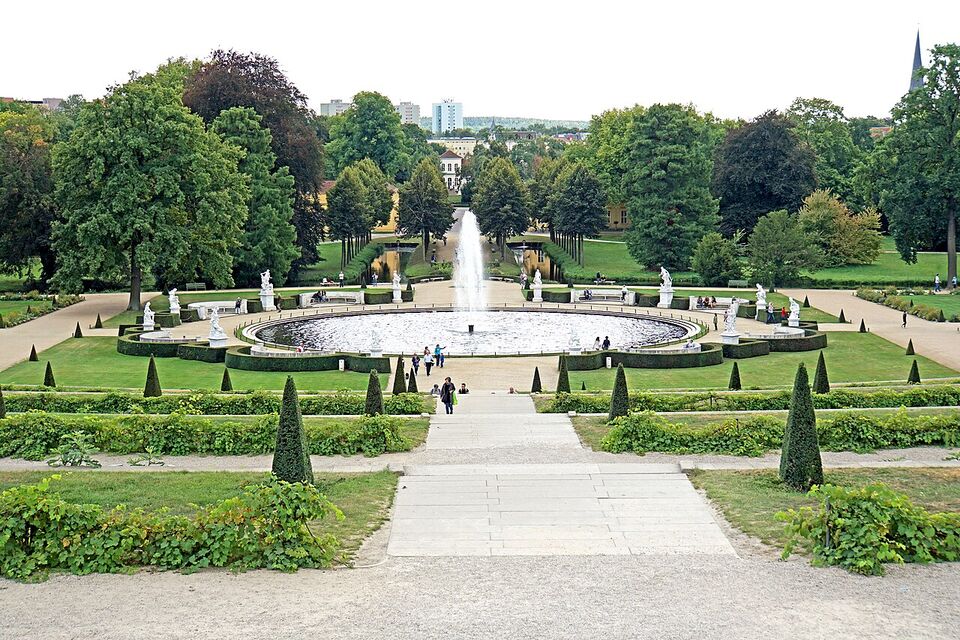
Potsdam, the capital of Brandenburg, is a UNESCO World Heritage city of palaces, parks and lakes on the Havel river. It was the summer seat of the Prussian kings, and its centerpiece is Sanssouci, Frederick the Great's small rococo palace on a terraced hill. It is the most popular day trip from Berlin, and it works at any time of year.
Getting there
The regional train (the RE1) from Berlin Hauptbahnhof to Potsdam Hauptbahnhof takes about 25 minutes, and the S7 takes longer. Because Potsdam is in zone C, you need an ABC ticket (€5.00, about $5.60) or a Deutschlandticket. From Potsdam station, buses and trams reach the park, or you can walk through the old town in about 40 minutes. We could not confirm the exact bus numbers, so check the local operator or a transit app.
Sanssouci tickets and timed entry
The Prussian Palaces and Gardens Foundation (SPSG) runs the palaces. A day ticket, "sanssouci+", is sold from €22 (about $25) through the city's booking page, and the foundation lists a family version at €49 (about $55) for up to two adults and four children for one day. The ticket covers a single visit to each open palace in Potsdam that day, including Sanssouci, the Historic Windmill, the Chinese House, Charlottenhof Villa, the Flatow Tower and the Marble House. The New Palace needs a separate guided-tour ticket from its own visitor center. SPSG also sells a Combined Ticket Potsdam at €18 (about $20), reduced €14 (about $16), but it does not include Sanssouci Palace and is sold only from April 1 to October 31, so it is not an option in winter.
The key rule: your ticket fixes a time slot for Sanssouci Palace, chosen when you book, and entry is only at that time. Last admission is 30 minutes before closing. In November and December most palaces, including Sanssouci, are open Tuesday to Sunday from 10 a.m. to 4:30 p.m. and closed on Mondays; the New Palace is the exception, closed on Tuesdays instead (open Wednesday to Monday). Book ahead in busy periods and arrive at the park early. Palaces are closed on December 24 and 25; on December 31 Sanssouci and the New Palace close at 2:30 p.m., and on January 1 they open at 11 a.m.
The park and the rest of Potsdam
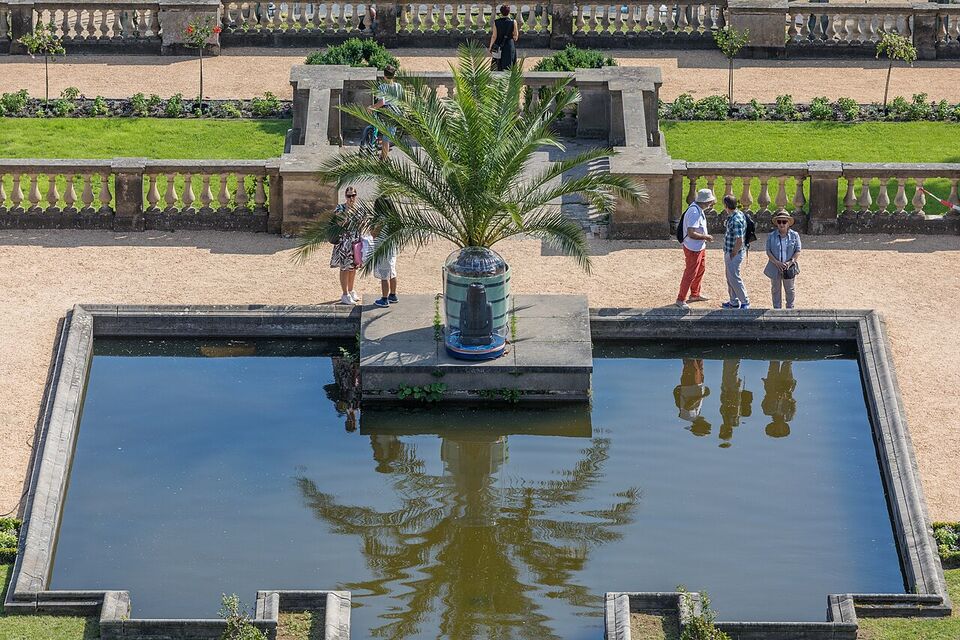
Sanssouci Park is large, and the palaces are far apart, so plan two to three hours for the park and a palace, plus time for the old town. Walk the terraces, then continue to the New Palace and Charlottenhof. In the old town, the Dutch Quarter has brick houses, cafes and shops, and the Brandenburg Gate of Potsdam stands in the center. The park is a place for walking and cycling; the foundation warns that after drought, branches may fall, so stay on marked paths and avoid walking in strong wind.
Insider tip
Book the earliest slot you can for Sanssouci Palace, then walk the park and have lunch in the old town. In winter, the light fades by about 4 p.m., so palaces first and gardens second. If you only have a half day, choose Sanssouci and the park and skip the other buildings.
Sachsenhausen Memorial
Sachsenhausen was a Nazi concentration camp in Oranienburg, just north of Berlin, from 1936 to 1945, and is now a memorial and museum. It is a serious place, and an afternoon visit needs time and care. Admission to the memorial and museums is free.
How to get there
Take the S1 (direction Oranienburg) to its terminus, Oranienburg; it takes about 45 minutes from Friedrichstrasse, with trains every 20 minutes. Regional trains also run: the RE5 from Berlin Hauptbahnhof, and the RB12 and RB32 from other stations. Get off at Oranienburg, not at the smaller Sachsenhausen station. Buy a Berlin ABC ticket (or BC from Lichtenberg). From the station, the memorial is a walk of about 20 minutes, or you can take bus 804 (hourly, last departure 17:19) or bus 821 to the "Gedenkstätte" stop. The same ABC ticket is valid on the local buses.
Hours, tours and audio guides
From October 27, 2026, to March 30, 2027, the outdoor areas and exhibitions are open from 8:30 a.m. to 4:30 p.m. and the Visitor Information Center from 8:30 a.m. to 5 p.m. In summer, the outdoor areas stay open until 6 p.m. Because winter daylight is short, arrive in the morning. Allow three to four hours.
Guided tours are offered for groups and must be booked well ahead: the memorial asks groups to register at least four months in advance, and the booking system is unavailable until November 13, 2026. Fees listed are €90 for a German-language tour and €110 for a foreign-language tour, for a group. For most visitors, the audio guide is the practical option: €3.50 (about $3.90) per device, in English and several other languages, with no reservation needed. Independent companies run guided tours from Berlin; we do not rate them, but check that the guide is licensed and what the price includes.
Respect applies: do not take smiling photos, do not walk on the memorial surfaces beyond marked paths, and keep your voice low. The memorial warns visitors not to leave valuables in parked cars. For the wider context of memorial visits, see History Sites in Germany. Dachau, near Munich, is covered in our Munich Sights guide.
Wannsee and the House of the Wannsee Conference
The Wannsee is a lake on Berlin's southwest edge, with beaches, boat rentals and villas, and it lies inside the AB zone, so a regular Berlin ticket covers it. The S-Bahn (S1 or S7) to Wannsee station takes about 25 to 30 minutes from the center. In summer, Berliners swim at the Strandbad Wannsee and sail on the lake. In winter, it is a quiet walk by the water.
On the lakeshore stands the villa where, on January 20, 1942, senior Nazi officials met to coordinate the "Final Solution". It is now the House of the Wannsee Conference memorial and education site. The exhibition and garden are open daily from 10 a.m. to 6 p.m. (last admission 15 minutes before closing) and entry is free. The memorial is closed on a list of days that includes January 1 to 4, March 8, Good Friday, May 1, Ascension Day, October 3 and December 24 to 31. The page gives no directions, but a local bus from Wannsee station serves the stop; check the memorial's contact page for the line. Plan 60 to 90 minutes.
You can add a ferry: the BVG's line F10 crosses the Wannsee between Wannsee and Kladow and is valid with an ordinary Berlin AB ticket, as far as we know (check the BVG app for the timetable, which is reduced in winter). Peacock Island (Pfaueninsel), with a palace, is reached by a separate small ferry that SPSG says continues to operate when the palaces close at Christmas.
The Spreewald
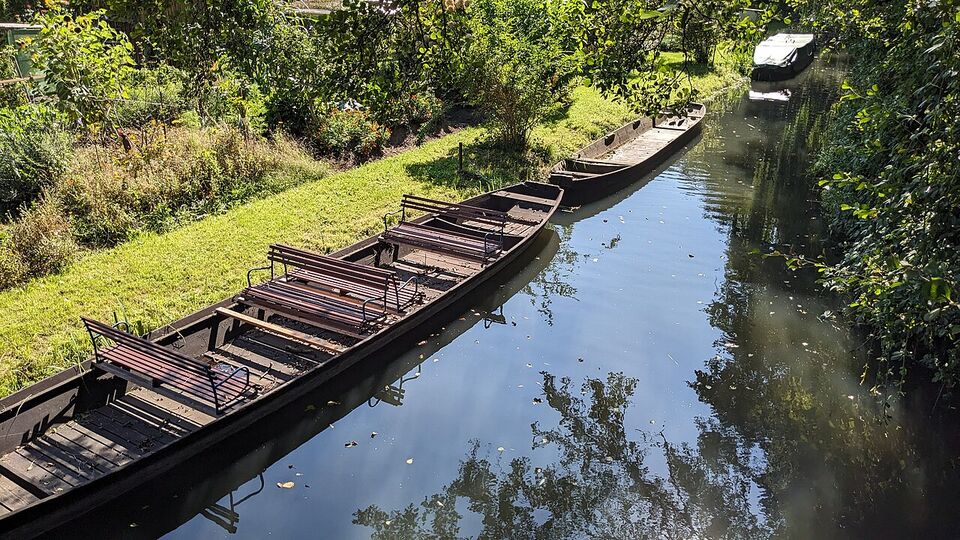
The Spreewald is a network of small canals where the Spree river fans out south-east of Berlin, a UNESCO biosphere reserve with meadows, alder woods and villages. The traditional way to see it is in a flat-bottomed wooden punt (Kahn) poled by a boatman. The region is also known for pickled gherkins (Spreewaldgurken), which you can try at markets and restaurants.
Getting there
The usual starting point is Lübbenau. A regional train from Berlin takes roughly an hour; check bahn.de for your departure. Lübbenau lies outside the ABC zones, so you need a regional ticket or a Deutschlandticket, which covers it. From the station it is a short walk or bus ride to the harbor.
Punt trips
Punt trips run from harbors in Lübbenau, Lehde, Lübben and Burg. The main season is spring to autumn. In winter, boat trips continue from November to March, including mulled-wine trips of one to two hours that start at €15 (about $17) per person, according to the regional tourism site; they are weather-dependent and may be cancelled when the canals ice over, and departures are fewer on weekdays. We could not confirm summer prices or exact season dates, so check at the harbor or the tourism office. Book ahead for weekends in summer. Beyond punts, you can rent a canoe or bicycle, or walk the village of Lehde.
Watch out
Winter service is limited. Before you go for a punt trip between November and March, confirm that a boat will run that day, and bring warm layers, because the canals are open to the wind. Trains to Lübbenau are frequent, but the last return train matters.
Leipzig and Dresden by train
Both Saxon cities are reachable by fast train from Berlin. Leipzig is a trade-fair and music city (Bach and the Thomaskirche) with a lively center and a rich political history. Dresden is the Baroque capital of Saxony, with the rebuilt Frauenkirche, the Zwinger and the Green Vault. Each is about one to two hours from Berlin, so a day trip is possible but leaves time for little more than a walk and a few hours of sights.
Fast trains from Berlin to Leipzig take roughly an hour and a quarter, and to Dresden roughly two hours; check bahn.de for exact times, as timetables change on December 13, 2026. These are long-distance trains, so the Deutschlandticket does not cover them. You need a point-to-point ticket. Saver fares (Sparpreis) can be low when you book ahead, with DB advertising prices from €6.99 (about $7.80), but we could not confirm the fare for these routes. A seat reservation, about €5.50 (about $6) in second class, is optional. See German Train Tickets and Passes.
Our advice: pick one city, not both, and consider staying overnight in Dresden, whose Historic Green Vault needs a timed ticket and whose Frauenkirche is free to visit. For a day trip to Leipzig, plan the Thomaskirche, the old town, a coffeehouse and a museum. Dresden and Leipzig each get a fuller treatment on Dresden and Saxony. In late November and December, Leipzig's Christmas market opens on November 24 and Dresden's Striezelmarkt on November 25; see Christmas Markets in Germany.
Different from home
German long-distance train fares work like airline fares: cheap and fixed if you book early, expensive and flexible on the day. A regional-only pass such as the Deutschlandticket will not get you onto the fast train, and boarding an ICE with the wrong ticket can bring a fine. Decide before you leave the city.
Choosing and planning your day trip
Match the trip to your interest and your day length. For palaces and a gentle day, choose Potsdam. For history, choose Sachsenhausen in the morning and keep the afternoon free. For nature, choose the Spreewald between spring and autumn, or the Wannsee on a warm day. For a different city, choose Dresden or Leipzig and stay overnight if you can.
- Check the weekday: many palaces close on Mondays, and the Neues Museum and others in Berlin do too.
- Check the zone: ABC for Potsdam and Oranienburg, and a regional ticket for the Spreewald.
- Book a time slot for Sanssouci, and register early for guided tours at Sachsenhausen.
- Check daylight in winter: it is dark by about 4 p.m. in December.
- Carry your passport or ID, and some cash for small cafes and boat trips.
- Check bahn.de for construction work, since delays on regional lines are common.
A combined day also works: Potsdam in the morning and the Wannsee in the afternoon, since the S-Bahn links them. Do not pair Sachsenhausen with anything cheerful on the same day. With a week, a typical pattern is three days in Berlin, one for Potsdam, one for Sachsenhausen or the Spreewald, and a final day in Dresden or Leipzig. Our trip planning guide shows how Berlin fits into longer routes.
Add it to a route in the trip builder, or ask us to plan the hotels, trains and guides for you.