The 2026 season at a glance
Germany's Christmas markets (Weihnachtsmärkte or Christkindlmärkte) run from mid-November to about December 23. If you have one trip to plan, aim for the first three weeks of December, when every major market is open, stalls are fully stocked and daylight ends around 4 p.m., so the lights are on by late afternoon. The cities that attract Americans most are Nuremberg, Munich, Cologne, Dresden, Berlin, Stuttgart and Rothenburg. We suggest combining two or three by train; a route is below.
The first markets open in mid-November. Hotels in the best-known towns are the main thing to book early, especially for weekends. This page lists dates and hours from official sources where we could find them, explains how each city feels, and covers food, mug deposits, crowds, safety and shopping. For the rest of the season, see our December guide and the November guide.
First Advent is Sunday, November 29, 2026, then December 6, 13 and 20. December 24 is a Thursday, and December 25 and 26 are a Friday and Saturday, so shops and markets are mostly closed for several days in a row.
2026 dates and hours
All dates below are for 2026. Hours are what the city or market lists; stalls, especially food, may stay open or close at their own discretion. Check the market's official page the week you go. Sources were official city sites where noted in the footer; Frankfurt, Heidelberg, Leipzig, Rothenburg and Esslingen come from secondary listings and are marked.
| Market | 2026 dates | Hours | Notes |
|---|---|---|---|
| Nuremberg Christkindlesmarkt | November 27-December 24 | Daily 10 a.m.-9 p.m.; Dec 24 10 a.m.-2 p.m. | Opening prologue Nov 27 at 5:30 p.m.; open until 10 p.m. that night (Long Night), per the city page |
| Munich Marienplatz | November 20-December 24 | Mon-Sat 10 a.m.-9 p.m.; Sun 10 a.m.-8 p.m.; Dec 24 10 a.m.-2 p.m. | Closed Sunday, Nov 22; some stands to 10 p.m. on Nov 27 and Dec 12 |
| Cologne cathedral market | November 16-December 23 | Sun-Wed 11 a.m.-9 p.m.; Thu-Fri 11 a.m.-10 p.m.; Sat 10 a.m.-10 p.m. | Closed Sunday, Nov 22 (Totensonntag); Neumarkt also Nov 16-Dec 23; Altstadt Nov 23-Jan 10, 2027 |
| Dresden Striezelmarkt | November 25-December 24 | Daily 10 a.m.-9 p.m.; Dec 24 10 a.m.-2 p.m. | 592nd edition; opening day Nov 25 from 4:30 p.m. |
| Berlin (main markets) | Gendarmenmarkt Nov 23-Dec 31; Alexanderplatz Nov 23-Dec 26; Charlottenburg Nov 23-Dec 27; Breitscheidplatz Nov 13-Jan 3, 2027 | Gendarmenmarkt: Sun-Thu 11 a.m.-10 p.m.; Fri-Sat 11 a.m.-11 p.m.; Dec 24 noon-6 p.m. Others not on the pages we checked | Gendarmenmarkt charges €2 entry (free for children under 12, and free for all Mon-Fri 11 a.m.-2 p.m. except Dec 24-26 and 31); other Dec 24-25 hours unconfirmed; Rotes Rathaus and Humboldt Forum also run to Jan 3 |
| Stuttgart | November 25-December 23 | Sun-Thu 11 a.m.-9 p.m.; Fri-Sat 11 a.m.-10 p.m. | Opening day Nov 25, 5-9 p.m.; last day to 9 p.m. |
| Frankfurt | November 23-December 22 | Mon-Sat 10 a.m.-9 p.m.; Sun 11 a.m.-9 p.m. | From a secondary listing; official page showed the 2025 edition |
| Rothenburg ob der Tauber (Reiterlesmarkt) | November 20-December 23 | Sun-Thu 11 a.m.-7 p.m.; Fri-Sat 11 a.m.-8 p.m. | Secondary listing; unclear whether it opens on Nov 22 |
| Aachen | November 20-December 23 | Daily 11 a.m.-9 p.m. | Nov 22: 6-9 p.m.; Sat Dec 12 to 10 p.m.; Dec 23 to 8 p.m. |
| Leipzig | November 24-December 23 | Sun-Thu 11 a.m.-9 p.m.; Fri-Sat 11 a.m.-10 p.m. | Opening ceremony Nov 24 at 5 p.m.; Dec 22 to 8 p.m.; Dec 23 stalls only, to 8 p.m. |
| Hamburg Rathausmarkt | November 23-December 23 | Daily 11 a.m.-9 p.m. | The city page also showed "closed" in a contact box, which looks like an error |
| Heidelberg | November 23-December 22 | Daily 11 a.m.-9 p.m. | Six squares in the old town; local news listing |
| Esslingen medieval and Christmas market | November 24-December 22 | Sun-Thu 11 a.m.-8:30 p.m.; Fri-Sat 11 a.m.-9:30 p.m. | Stalls open at 4 p.m. on Nov 24; official opening Nov 25 at 5 p.m.; local newspaper listing, so check the city's page |
Pattern to remember: Nuremberg, Munich's Marienplatz and Dresden are open on Christmas Eve morning; Stuttgart, Hamburg, Aachen, Leipzig, Rothenburg and Cologne's cathedral and Neumarkt markets end on December 23; Heidelberg, Frankfurt and Berlin's Spandau market end on December 22. Several Berlin and Cologne markets run past Christmas, and a few into early January.
Watch out
Sunday, November 22, 2026 is Totensonntag, a quiet day of remembrance. Munich's Marienplatz market is closed that day and Aachen opens only in the evening. If you plan an early-opening visit, avoid that Sunday.
The cities, one by one
Nuremberg
The Christkindlesmarkt is the classic one, with red-and-white stalls, a golden "Christkind" who opens the market, and a Kinderweihnacht area for families. The Markt der Partnerstädte (sister-city market) runs November 27-December 23. Nuremberg is small enough to walk; see our Nuremberg guide.
Munich
The Marienplatz market sits beneath the New Town Hall, with other markets at the Residenz, Viktualienmarkt, Schwabing and in Haidhausen. Tollwood runs November 24-December 23. The city has no hotel tax in 2026. Our Munich guide has the city plan.
Cologne
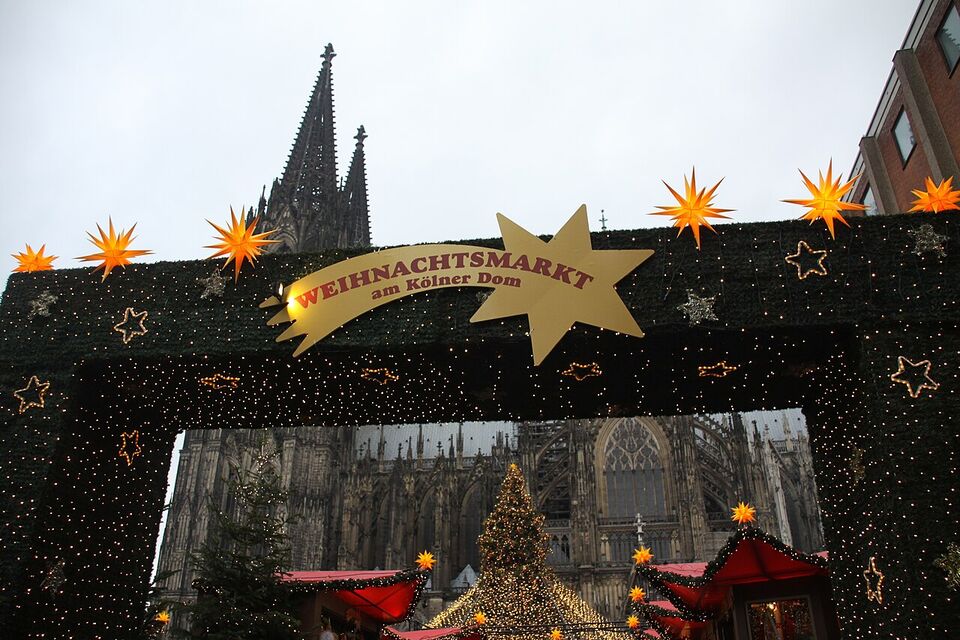
Several markets in one walkable center, with the cathedral as the backdrop. The cathedral has charged €12 (about $13) for tourist entry since July 1, 2026; worshippers and service attendees are free. See the Cologne guide.
Dresden
The Striezelmarkt dates from the 15th century (this is the 592nd) and is known for its Stollen, the big Christmas pyramid and a Stollen festival in early December (check the date). See Dresden and Saxony.
Berlin
Berlin's markets are spread across the city, with different characters: the elegant Gendarmenmarkt (€2 entry in 2026), Charlottenburg Palace, and the Breitscheidplatz market beside the Memorial Church. The Hauptbahnhof "Wintertraum" is not held in 2026. See Berlin.
Stuttgart
One of the larger markets, around the Old Castle and Market Square. It makes an easy base for Esslingen's medieval-themed market, which is a short regional train ride away.
Rothenburg ob der Tauber
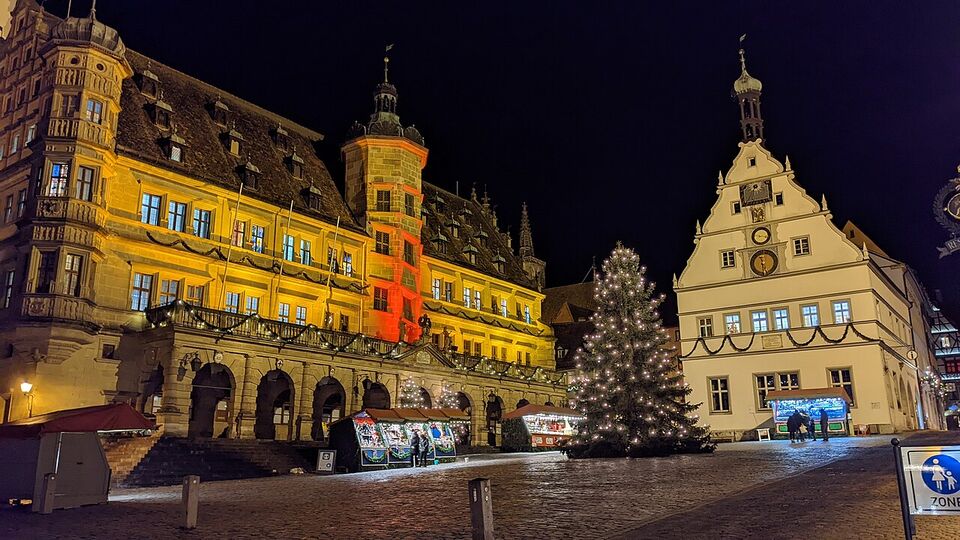
The Reiterlesmarkt is small, in a medieval walled town that gets busy with day trippers. Stay overnight to see it quietly after dark. See the Romantic Road guide.
Aachen, Leipzig, Hamburg and Esslingen
Aachen has a market between the cathedral and the city hall. Leipzig's is in a handsome old market square. Hamburg's Rathausmarkt is next to the city hall; the Winterdom funfair (November 6-December 6, 2026) is on the Heiligengeistfeld. Esslingen's is built around a medieval theme. See Hamburg.
A seven-day train route
This route runs from the Rhine to Bavaria and fits any week between November 27 and December 22, when all of these markets are open. It uses fast trains between cities, so book advance fares early. Times are typical; confirm them for your date on bahn.de. See our train tickets guide for how fares and reservations work.
- Day 1
Arrive in Cologne
Fly into Frankfurt and take the ICE to Cologne (about an hour), or fly directly into Cologne/Bonn. Evening at the cathedral market and the Altstadt market.
- Day 2
Aachen and back
Take a regional train to Aachen (about an hour). Walk the cathedral area and the market, then return for dinner in Cologne.
- Day 3
To Stuttgart and Esslingen
The ICE from Cologne to Stuttgart takes roughly 2 hours 45 minutes to 3 hours. Stay in Stuttgart; in the evening take the S-Bahn to Esslingen (about 15 minutes) for its market, which runs November 24-December 22, 2026.
- Day 4
Nuremberg
Stuttgart to Nuremberg takes about 2 hours 10 minutes. Spend the afternoon at the Christkindlesmarkt and the evening in the old town.
- Day 5
Rothenburg
A regional trip with a change takes about 1.5 hours each way. Arrive early, walk the town wall and return to Nuremberg, or stay overnight and move on in the morning.
- Day 6
To Munich
Nuremberg to Munich is about 1 hour 10 minutes by ICE. Marienplatz, the Residenz and the Viktualienmarkt.
- Day 7
Munich: other markets
Tollwood, the Schwabing and Haidhausen markets and the Englischer Garten if the weather suits. Fly home from Munich.
For an eastern alternative, link Berlin (about two hours by train to Dresden) with Dresden and Leipzig; Dresden to Leipzig takes about 1 hour 10 minutes. See regions for how to combine them.
Save money
The Sparpreis fares are the lowest, but they bind you to one train. If you have a fixed six-night route, book each leg as soon as sales open. Hotels near the station cost less than hotels beside the market, and many markets are free to enter.
Food and drink
The market menu is part of the trip. Start with Glühwein, hot spiced red or white wine, served in a mug. At many markets in 2025, a mug cost about €4 to €5 (about $4.50 to $5.60): Stuttgart stands charged €3.80 to €5 (about $4.25 to $5.60), and Heidelberg averaged about €4, according to the Stuttgarter Zeitung. Central stalls in big cities can charge more; reports in recent seasons cite up to €7 (about $8) in central Munich. Other drinks include Feuerzangenbowle (mulled wine poured over a flamed, rum-soaked sugar cone), Eierpunsch (egg liqueur punch) and Kinderpunsch, an alcohol-free fruit punch for children.
The mug deposit
Most mugs carry a deposit (Pfand) of a few euros, which you get back when you return the mug. We could not confirm a 2026 figure for any city, and it differs from market to market, so ask at the stand. The deposit is on top of the drink's price. Many markets have a special design each year; if you want a souvenir, you simply keep it and forgo the deposit. Return mugs to a stand of the same market, not to another.
What to eat
- Bratwurst: Nuremberg's thin Rostbratwürste come in threes in a bread roll. Elsewhere, a long grilled sausage in a bun is standard.
- Reibekuchen: crisp potato pancakes, the Rhineland name (elsewhere Kartoffelpuffer), often served with apple sauce.
- Lebkuchen: soft spiced gingerbread, a Nuremberg specialty. Look for Elisenlebkuchen for the higher-quality kind.
- Stollen: a dense, fruit-and-marzipan loaf dusted with sugar; Dresden is the home of the Christstollen.
- Others: gebrannte Mandeln (candied almonds), roasted chestnuts, Flammkuchen (thin-crust tarte) and, in Rothenburg, Schneeballen (fried pastry balls).
Our food guide and drinks guide explain the rest. Most stalls are cash-friendly; carry some coins and small notes, because not every stall takes foreign cards.
Different from home
In the US, a holiday market usually means shopping with a coffee in hand. In Germany, people stand at a table or by the stall to drink Glühwein, return the mug, and then browse. The drinks are as much the point as the crafts.
Crowds and when to go
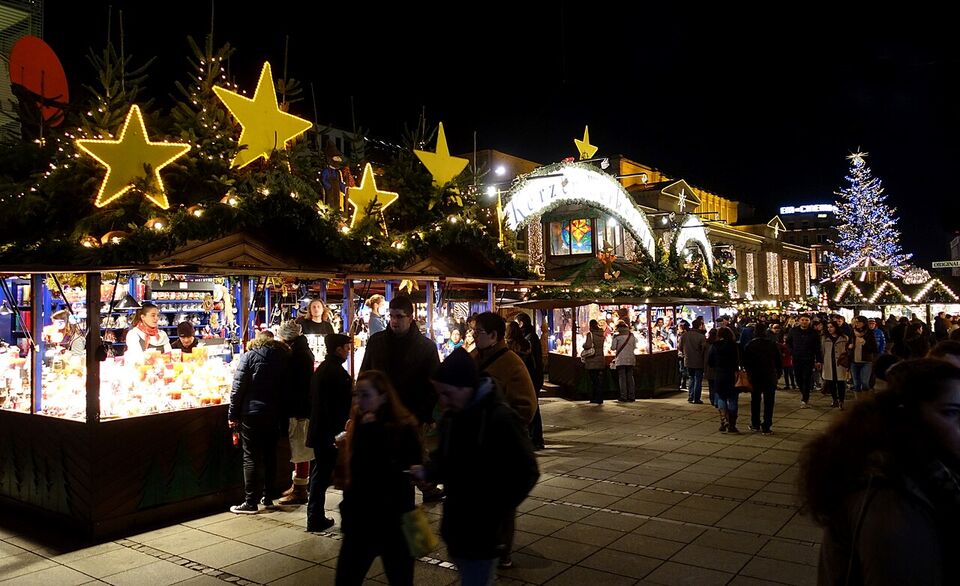
Weekday afternoons are the best time: about 2 p.m. to 5 p.m., Monday to Thursday, in the first three weeks of December. The markets are open and lit, but locals are at work. Evenings after 6 p.m. and Friday and Saturday are the busiest, with after-work crowds, school groups and coach tours. The first Advent weekend (November 28-29) and the weekends before Christmas are the peak. Nuremberg and Munich are the most crowded because they are the best known; Dresden, Leipzig and Stuttgart can feel easier. Rothenburg is small, so crowds feel larger there.
If you travel before November 27, you will miss Nuremberg, Dresden and Stuttgart but still find Cologne, Munich, Rothenburg and Aachen open. In the last days before Christmas the weekends are packed, stalls start to close and nearly all markets end by December 23 or 24. A trip in the second and third weeks of December is a good compromise. See our where to stay guide for choosing a base: a central hotel on a quiet street beats one on the market square.
Dress warmly: December highs in German cities are about 39-44°F (4-7°C) with lows near freezing, and standing outdoors is colder than walking. Waterproof shoes help with wet cobblestones. See the packing guide.
Safety, barriers and bag checks
Markets are crowded, so pickpockets are the everyday risk. Keep wallets and phones in zipped inside pockets, carry a cross-body bag in front, and be careful around the Glühwein stands and the entrances. Thieves often work in teams and use distraction. For general advice, see our safety guide.
Because the US State Department lists Germany at Level 2 (increased caution) and names markets as places that can be targets, many cities now use concrete barriers and vehicle blocks at market entrances. In Nuremberg, access roads are closed with barriers and police vehicles, and officers make random bag checks. Many markets restrict knives, and security rules can change by city and by day, so allow a few minutes at entrances and keep bags small. We could not confirm the 2026 rules for every city, so check the market's page.
The Breitscheidplatz market in Berlin sits beside the memorial to the December 2016 attack; the concrete barriers and the memorial are part of the square. Treat them respectfully. If you need help, call 112 (fire and ambulance) or 110 (police).
Shopping: ornaments and gifts
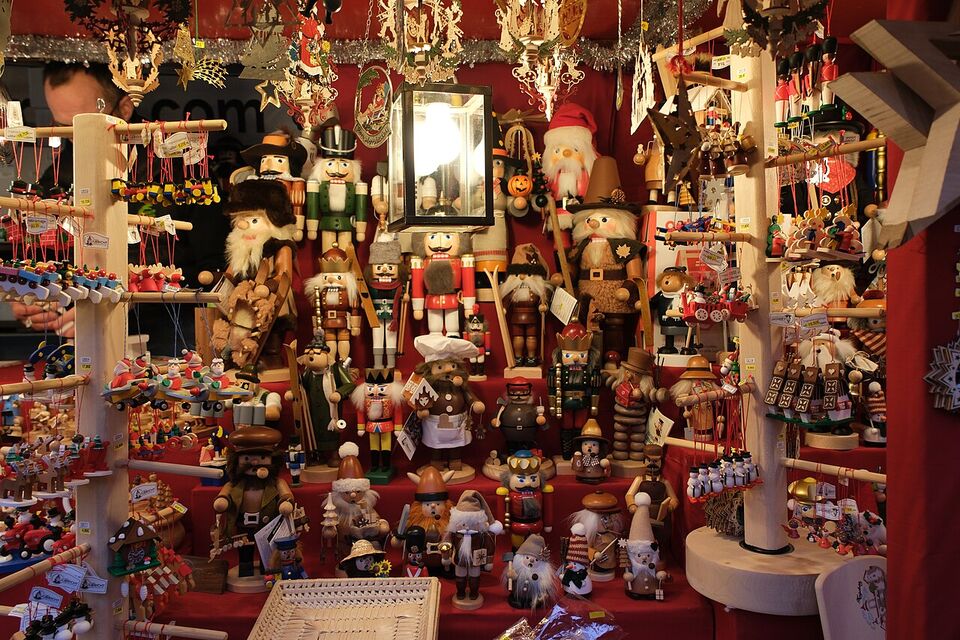
The wooden stalls sell hand-carved wooden items from the Ore Mountains (Erzgebirge) near Dresden, including nutcrackers, incense smokers (Räuchermänner), candle arches and Christmas pyramids, along with blown-glass ornaments, candles, sheepskin slippers and Nuremberg's Zwetschgenmännle, small figures made of dried plums. Prices vary widely: buy from a stall with the maker's name and a clear price, and look for "handgemacht" (handmade). Factory pieces cost less.
In Rothenburg, Käthe Wohlfahrt's Christmas Village store and the nearby Christmas Museum sell ornaments year-round; check their hours for your date. If you spend more than €50 (about $56) in one shop, you can claim back VAT as a non-EU visitor; see our shopping guide for the paperwork. Market stalls rarely issue the export form, so for bigger purchases use a shop that does. Wrap breakables in your clothes and keep Lebkuchen and sweets in the carry-on.
Insider tip
Visit twice if you can: once in the afternoon to look and buy, and once after dark to see the lights. In busy cities, eat before 6 p.m., when the lines for Glühwein and bratwurst are shortest.
Practical details
Entry to nearly all markets is free; Berlin's Gendarmenmarkt is the exception, with a €2 entrance fee in 2026 (free for children under 12 and for everyone on weekdays 11 a.m.-2 p.m., except Dec 24-26 and 31). Opening ceremonies are worth a look if the timing works: Nuremberg opens with a prologue by the Christkind on Friday, November 27 at 5:30 p.m., and Dresden and Stuttgart open on Wednesday, November 25 in the late afternoon. These are crowded, so arrive early or skip them for a quieter visit the next day.
Weather decides how long you stay. A dry day at 41°F (5°C) is pleasant; rain or wind at the same temperature is not. Markets stay open in rain, and many have covered areas, but cobblestones get slippery. Families should know that many markets have children's areas, carousels and a Santa-style figure (the Nikolaus on December 6, Christkind in Bavaria). Strollers are hard to push when crowds are thick, so go in the afternoon.
Plan transport as well. Public transport in each city is the easiest way to move between markets; most are in pedestrian zones that are a short walk from the main station. In Cologne, Nuremberg, Munich and Dresden, the center is compact enough to cover on foot. Our getting around guide explains tickets and local transit.
Planning checklist
- Book hotels for Nuremberg, Munich, Cologne and Rothenburg as early as you can, especially for weekends.
- Choose weekdays for the busiest markets, and plan travel days when a market is less busy.
- Book advance train fares as soon as sales open for your dates, and check the work lists.
- Bring cash, a cross-body bag, waterproof shoes and gloves.
- Check the market's own page for hours the week you go, and for Dec 24 closing if you are there then.
- Remember that most shops close around 2 p.m. on December 24 and are closed on December 25, 26 and 27.
Add it to a route in the trip builder, or ask us to plan the hotels, trains and guides for you.