Overview: Germany is a good hub
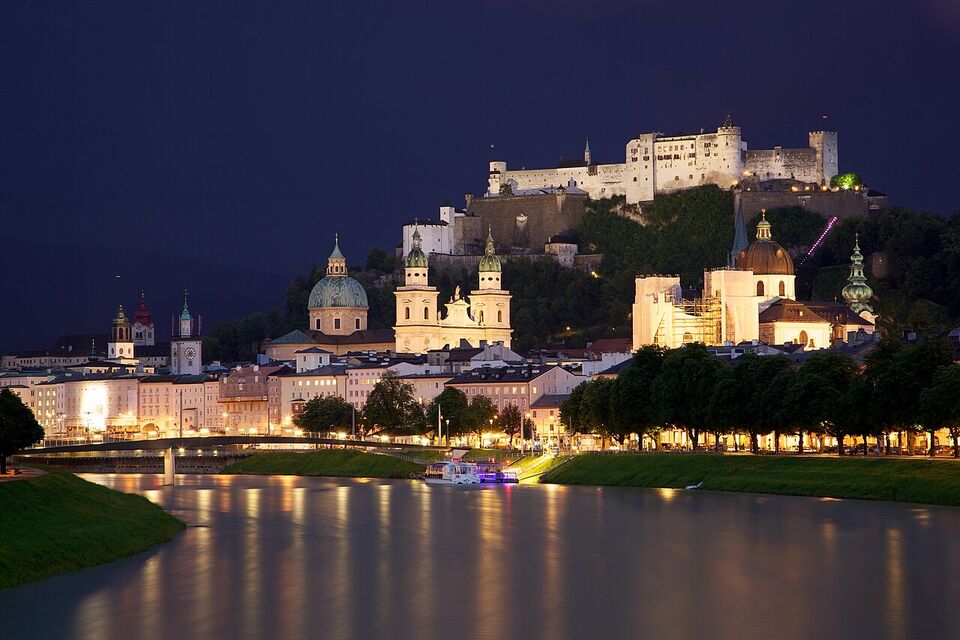
Yes, you can combine Germany with its neighbors easily, and most Americans should. Nine countries share a border with Germany, the trains between them are frequent, and most of the neighbors use the euro and the same Schengen entry rules. A day or two in Salzburg, Prague, Amsterdam or Strasbourg adds a different language and cuisine for the cost of a train ticket.
This page covers the practical side: typical train times and fares to eleven neighboring cities, how the 90-day Schengen clock works, what border checks look like in 2026, four classic combinations, and what to know if you drive or rent a car. For the German side of train booking (reservations, passes, the Sparpreis system), see our guide to German train tickets.
One rule of thumb: keep each leg under about five hours and you lose little of a day. Beyond that, an overnight train or a cheap flight can make more sense. Check the timetable for your exact date, because several German and Austrian rail lines have works in 2026-27 (listed below).
Trains from Germany to eleven neighboring cities
The table gives typical times and, where we found them, advance fares as reported by secondary sources such as Seat61 and DB's own advertising (not a live bahn.de search). "Sparpreis" is the cheaper, train-specific ticket you buy ahead; "Flexpreis" is the any-train fare. Fares move like airfares, so treat them as the low end of a range and check bahn.de or the DB Navigator app for your date. A rough reference is a seat reservation at €5.50 (about $6) in second class, which is included in most international fares.
| Route | Typical time | Frequency | Fare notes (second class) |
|---|---|---|---|
| Munich to Salzburg | 1 hr 30 min to 1 hr 42 min | Hourly | Sparpreis from €17.99 (about $20); Flexpreis about €42-46 (about $47-52) |
| Munich to Vienna | About 4 to 4 hr 30 min | Roughly every two hours, plus Westbahn | ÖBB Sparschiene from about €19.99 (about $22); flexible fares much higher |
| Frankfurt to Vienna | About 6 to 7 hr | Several direct trains a day | Check bahn.de; advance fares are far below flexible ones |
| Frankfurt to Basel | About 3 hr | Hourly ICE | Check bahn.de |
| Munich to Zurich | About 3 hr 30 min to 4 hr | Every two hours or so | Check bahn.de or sbb.ch |
| Cologne to Amsterdam | About 2 hr 40 min | Roughly every two hours | Check bahn.de; Berlin to Amsterdam (about 5 hr 52 min) starts at €37.99 (about $43) |
| Cologne to Brussels | About 1 hr 50 min | Several a day | Check bahn.de |
| Stuttgart to Paris | About 3 hr 10 min | 12 trains a day (from Dec 13, 2026) | Check bahn.de or sncf-connect.com; Frankfurt to Paris is about 4 hr |
| Stuttgart to Strasbourg | About 1 hr 45 min | Several a day | Regional connections from Karlsruhe and Offenburg are shorter and cheaper |
| Berlin to Prague | Just under 4 hr | About every two hours | Sparpreis from €18.99 (about $21); Flexpreis about €80-95 (about $90-106) |
| Dresden to Prague | About 2 hr 15 min | Several a day | Sparpreis from the high teens in euros; a Dresden stopover on a Berlin-Prague ticket is free for up to 48 hr |
| Berlin to Warsaw | About 5 hr 30 min | About every two hours | Sparpreis from €27.99 (about $31); Flexpreis about €80-90 (about $90-101) |
| Hamburg to Copenhagen | About 4 hr 40 min | Six to seven a day (seven from March 2027) | Sparpreis from €28.99 (about $32); Flexpreis about €110 (about $123) |
Times for the rows without a confirmed fare are rounded typical values, not timetable promises. The sections below explain the routes that need extra care.
Different from home
Amtrak rarely offers a choice of hourly high-speed trains across an international border. In Europe you can leave Munich after breakfast, be in Salzburg for lunch and be back by dinner. The catch is that advance fares are tied to one specific train: miss it and the ticket is usually worthless, so leave a buffer on any connection.
Austria: Salzburg and Vienna
Munich to Salzburg is the easiest border crossing in the guide: express trains (railjet, EC, ICE) take about 1 hour 30 minutes to 1 hour 42 minutes, and the regional RE5 takes about 1 hour 47 minutes. A Bavaria Ticket (listed at €34, about $38, for the first traveler plus about €10 for each extra person, up to five, in the source we used; confirm the price on bahn.de) covers regional trains to Salzburg and is the cheapest choice for a same-day round trip or a small group. On weekdays it is valid from 9 a.m.
Plan around the works on the Rosenheim-Salzburg line, which DB says will be closed from early February to July 9, 2027. In that period the Munich-Vienna railjets are diverted via Passau and skip Salzburg, many journeys are partly replaced by buses, and three EuroCity train pairs a day run Munich-Mühldorf-Salzburg in about 1 hour 55 minutes. If your trip falls between February and early July 2027, check bahn.de before you book anything non-refundable. Our Munich guide covers the city side.
From Salzburg, trains to Vienna take about 2.5 hours in normal service. The private Westbahn competes with the ÖBB railjet on the Munich-Salzburg-Vienna corridor and sometimes has the lower advance fare.
Switzerland: Basel and Zurich
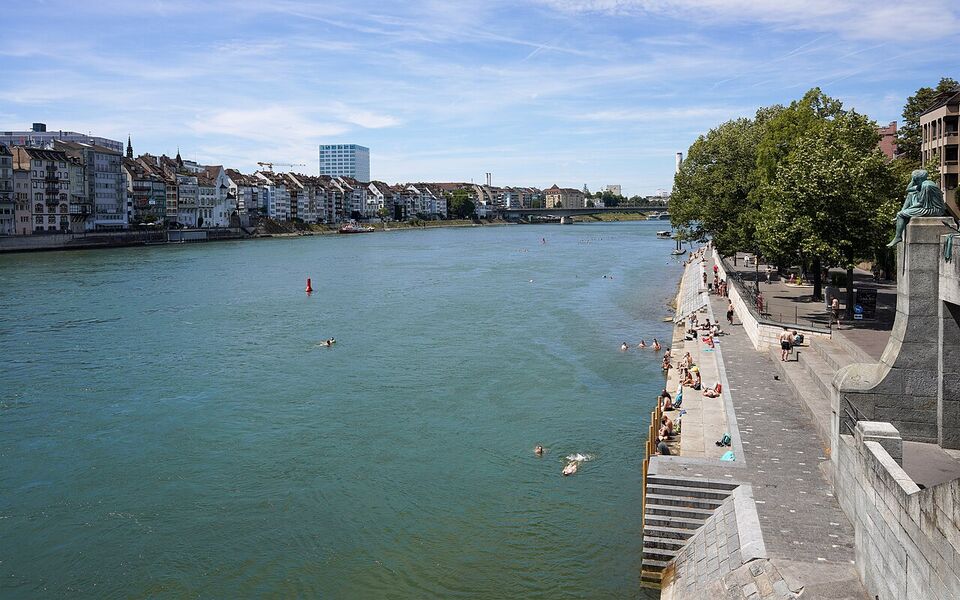
The quickest entry is Frankfurt to Basel by ICE (about 3 hours), then a Swiss train to Zurich (under an hour). From Munich, direct EuroCity trains reach Zurich via Lindau on Lake Constance. Our Lake Constance guide shows how to break the trip there. Swiss trains are expensive and run on the Swiss franc, not the euro. Book German-Swiss through-tickets on bahn.de or sbb.ch.
Switzerland is in Schengen, so its days count toward your 90, but it is not in the EU, so a customs check is possible even though there is no routine passport control.
Netherlands, Belgium and France
The Cologne-Amsterdam ICE crosses the border near Emmerich and takes about 2 hours 40 minutes. Cologne to Brussels is about 1 hour 50 minutes by ICE; high-speed Eurostar trains continue from Brussels to Paris. For Paris, the most direct German route is from Stuttgart (twelve trains a day from the December 13, 2026 timetable change, two more than before), with the French operator running part of the service. Frankfurt, Karlsruhe and Mannheim also have Paris trains.
DB sells tickets for ÖBB, SBB, SNCF, Eurostar and others through bahn.de and the DB Navigator app, which means one booking can cover a German and a foreign leg. Eurostar-branded trains ask for reservations and have their own luggage rules, so read the booking page.
Czechia, Poland and Denmark
Berlin to Prague takes just under four hours via Dresden and the Elbe valley. There is a catch for 2026-27: until October 16, 2027, and on a few Mondays after that, most Berlin-Prague trains are cancelled on Mondays for track work, leaving only a few runs (06:23, 17:28 and 19:28 southbound from Berlin as of our source). Plan a Monday around that, or go by another day. A seat reservation is compulsory on this route from mid-June to late August.
Berlin to Warsaw takes about 5 hours 30 minutes. Until December 12, 2026, some trains use Berlin-Gesundbrunnen instead of the Hauptbahnhof because of track work, so check the departure station.
Hamburg to Copenhagen runs via Flensburg and the Great Belt bridge, about 4 hours 40 minutes. Trains no longer use the old Puttgarden-Rødby ferry, and the Fehmarnbelt tunnel is not yet open for rail, so the route will stay as it is for now.
Insider tip
Use the station-name spellings in the foreign language when you buy tickets: Praha hlavní nádraží, Wien Hauptbahnhof, Zürich HB. Searching for the English "Prague" or "Vienna" is fine, but check that the departure station is the one you can reach, especially in Berlin, where long-distance trains use several stations.
The Schengen clock for Americans
Germany belongs to the Schengen area, a group of European countries that treat the combined area as one for the 90-day rule. Americans can stay up to 90 days in any rolling 180-day period, and every day in any Schengen country counts toward the same 90. Austria, Switzerland, the Netherlands, Belgium, France, Czechia, Poland and Denmark are all in it. The United Kingdom, Ireland, Albania and Serbia are not, so days there do not count and do not pause the clock.
A two-week trip never comes near the limit, but a long trip can. Example: 30 days in Germany, 20 in Italy, 25 in Spain and 15 in Greece uses 90 days, and you cannot return to Schengen until enough older days fall out of the 180-day window. Our entry rules guide covers passports (valid at least three months past your departure from Schengen and issued within 10 years) and the details.
The new Entry/Exit System (EES) has been fully operating since April 10, 2026. It registers your photo and fingerprints on the first entry and then records every entry and exit automatically, so border staff can see exactly how many days you have used. ETIAS, the travel authorization that will come later, is not required yet; no start date has been announced, and the EU says it will give several months' notice. It will cost €20 (about $22) for travelers aged 18 to 70 once it starts. Check travel-europe.europa.eu before you go.
Watch out
If you plan more than a month in Europe, count your days before you book. Overstaying even by a day is recorded by EES and can lead to fines or an entry ban. Anything over 90 days needs a national long-stay visa, not a tourist stay; see our long stays guide.
Border checks on trains and roads
Inside Schengen there are normally no passport checks when you cross. Germany, however, has had temporary controls on all its land borders since September 2024, and has reported extending them in six-month steps, with the latest extension reported to run to about March 2027 (we could not find the official notice). These are spot checks, not queues. Federal police may walk through a train, stop a car on a motorway slip road or check a bus at a rest stop.
What to do: keep your passport with you, not in a checked bag or the hotel safe. Americans are usually waved through quickly. Border officers may ask where you are going and how long you will stay. Other countries, such as Denmark and Poland, also run checks at times, so the same advice applies in both directions.
Airports are different: flights between Schengen countries have no passport control on arrival, but airlines may ask for ID at check-in. For safety in stations and on night trains, see our safety guide.
Classic combinations
Munich, Salzburg and Vienna
- Days 1-3
Munich
Marienplatz, the Residenz and a day trip. See the Munich sights guide.
- Day 4
Train to Salzburg
About 1.5 hours. Leave your bags at the station lockers and walk the old town. Stay one night so you can see it after the day groups leave.
- Days 5-7
On to Vienna
About 2.5 hours from Salzburg. Allow three nights: it is a big city with museums, palaces and coffee houses.
This route works year-round. If you travel between February and early July 2027, check the Rosenheim-Salzburg works first and expect bus replacements.
Berlin and Prague
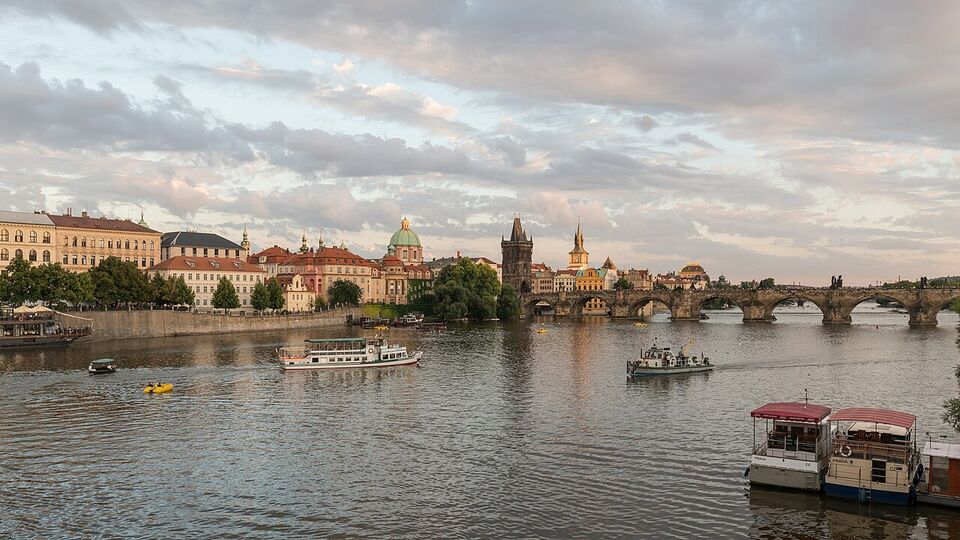
Spend three or four days in Berlin, take the morning train south through the Elbe sandstone region (with an optional stop in Dresden, see the Dresden and Saxony guide), and reach Prague in about four hours. Remember the Czech koruna: Prague shops and many restaurants take cards, but cash is useful at markets.
Because of the Monday cancellations through October 16, 2027, schedule the transfer on a Tuesday to Sunday. In Prague, three nights is enough for the old town, the castle and a river walk.
The Rhine and Amsterdam
Start in Cologne, add a Rhine day (see the Rhine and Moselle guide), and finish in Amsterdam, about 2 hours 40 minutes by ICE. If you plan a Rhine boat trip, note that in August 2026 the Rhine at Kaub fell to a record low gauge reading and many cruise itineraries were rerouted, and the Kaub gauge still read only 22 cm on the evening of November 6, 2026. Check water levels and sailings close to your date rather than relying on a schedule. The same river is the basis of the Amsterdam-to-Basel cruise itineraries, which are also affected when levels are low.
The Black Forest, Strasbourg and Switzerland
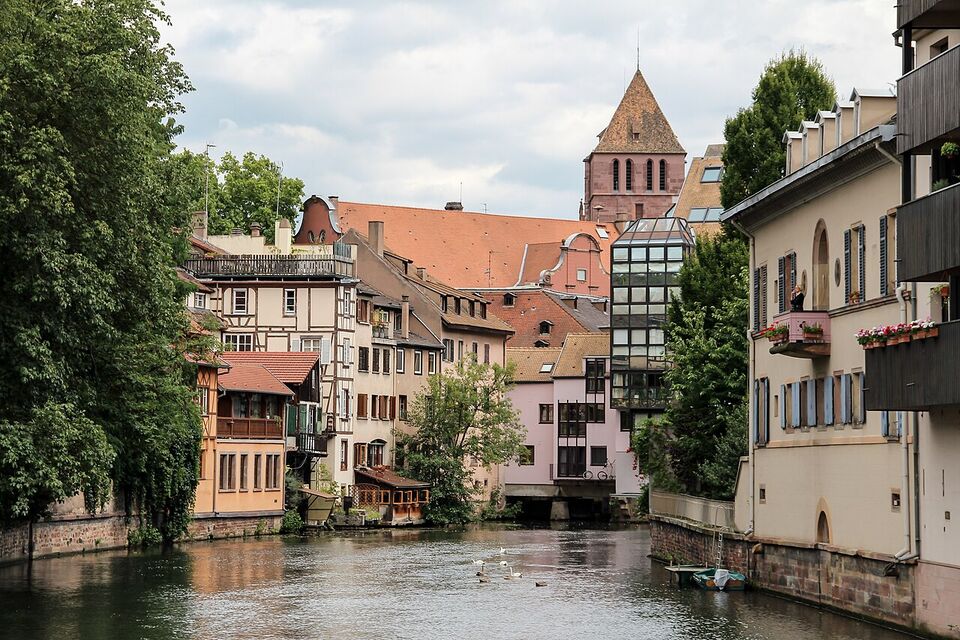
Base yourself in Freiburg or Baden-Baden (see the Heidelberg and Black Forest guide), take a regional train or the tram line that runs from Kehl across the Rhine into Strasbourg, spend a night in the Alsatian capital, and continue south to Basel and Zurich. This route skips the main express lines and suits a slow trip. Regional trains between Freiburg and Basel are frequent and short. Our regions overview helps you choose between the Black Forest and the Bavarian side.
Save money
Build the trip around cheap advance fares first, then choose your dates. A Berlin-Prague Sparpreis (from €18.99, about $21) can cost a fraction of the Flexpreis (about €80-95, about $90-106) on the same train. Child discounts also help: children under 6 travel free on DB, and children under 15 ride free with a parent or grandparent on a Sparpreis booking.
If you are driving
Austria and other vignettes
Austrian motorways and expressways require a vignette (a toll sticker or a digital equivalent) for cars. In 2026 the digital prices for a car were €9.60 (about $11) for one day, €12.80 (about $14) for 10 days, €32.00 (about $36) for two months and €106.80 (about $120) for a year, according to ASFINAG's 2026 rate table. ASFINAG says the toll sticker is sold for the last time in 2026 and only the digital vignette will be available from 2027. 2027 prices were not confirmed when we checked, so use the ASFINAG site for the current figure. Buy before you enter the motorway, because enforcement is by camera and penalties are steep.
Switzerland requires a vignette of about 40 Swiss francs, sold at the border and online. Czechia requires an electronic vignette, bought online before you drive. Check each country's official page before you go. Germany itself has no toll for passenger cars on its motorways, though driving in cities with an environmental zone needs a sticker, which rental cars normally have. See our driving in Germany guide.
Rental cars and one-way fees
Renting in Germany and dropping in another country usually costs a one-way or international fee. We could not find a reliable current figure, but it is often from about €100 to several hundred euros, and sometimes more for eastern Europe, so get a written quote for your specific pick-up and drop-off cities. Also check whether the company allows cross-border travel at all, whether it charges extra for it, and whether the car comes with a vignette. A one-way fee can erase the saving over the train, so compare before committing.
Insider tip
Cars from Germany are well suited to places the trains reach poorly, such as the Bavarian Alps or the Romantic Road. For city-to-city travel, trains win: parking in Vienna, Prague or Strasbourg is slow and costly. Drive for the countryside, train for the capitals.
Buses and other options
Long-distance buses connect almost every pair of cities in the table, usually for less than the train and sometimes for much less. They take longer, can be delayed by border traffic or motorway works, and may call at a bus station outside the center. We suggest a bus when a train fare is high or the schedule does not fit, and the train otherwise. Budget flights cover long legs such as Berlin to Zurich or Munich to Copenhagen, but airport transfers and baggage fees often narrow the gap. Plan overall costs with our budget guide.
Money, phones and small differences
The euro is used in Austria, the Netherlands, Belgium and France. Czechia, Poland, Denmark and Switzerland use their own currencies, and you will often pay by card; see our money guide for ATM tips and why you should choose local currency on card terminals. Germany and its neighbors share the Central European time zone, except the UK. Switzerland uses its own plug type, so bring an adapter if you cross into it.
US phone plans do not get EU roaming. Check your carrier's international day pass, or use a data eSIM that covers several countries.
Before you book
- Count your Schengen days, including any earlier trip in the past 180 days.
- Check that your passport is valid at least three months past your departure from Schengen.
- Look at the works lists: Rosenheim-Salzburg (early February to July 9, 2027) and the Monday cuts on Berlin-Prague (to October 16, 2027).
- Book advance fares when sales open, up to six months ahead.
- Carry your passport on every cross-border journey.
- For a car, buy any vignette first and ask the rental firm about cross-border permission and one-way fees.
Add it to a route in the trip builder, or ask us to plan the hotels, trains and guides for you.