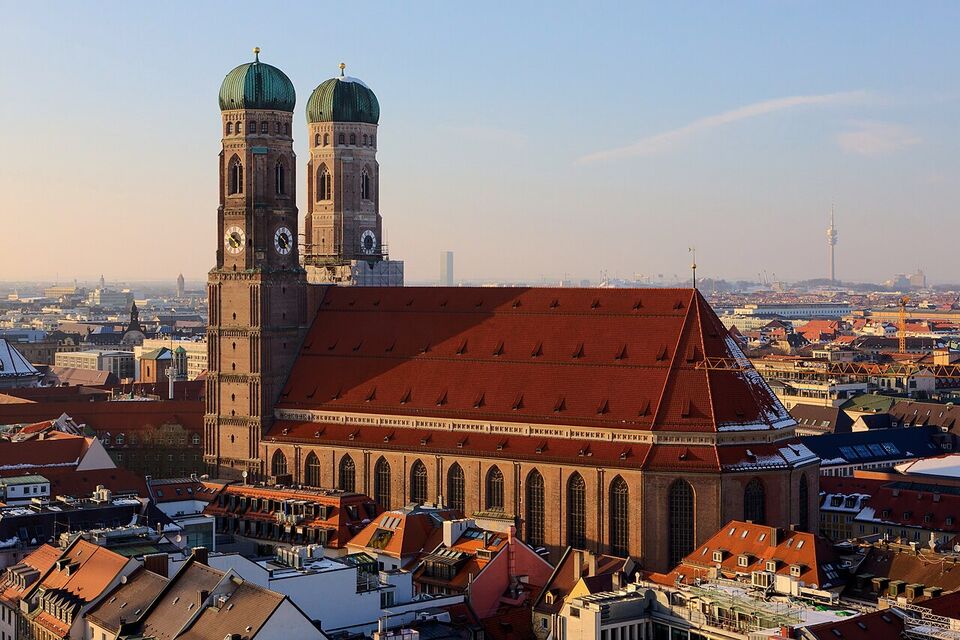
Overview: is Munich worth a stop?
Yes. Munich is the easiest German city to enjoy on a first trip: a compact old town you can cross on foot in 20 minutes, a clean and fast transit system, big museums, and beer gardens where bringing your own picnic is part of the tradition. It is also the best base for the Bavarian Alps, Neuschwanstein and Salzburg. Most visitors need two to three days in the city and then add day trips.
The city is the capital of Bavaria (Bayern), a state with its own accent, its own food and a strong sense of tradition. Expect Lederhosen and Dirndl mostly in September and at festivals, but also a relaxed everyday mix of old churches, modern offices and people cycling to work. Munich is wealthy, safe by big-city standards and quiet on Sundays, when almost every shop is closed.
This page is the planning hub: where to stay, how to get in from the airport, how the tickets work, where to drink beer, how many days to give it and what to do around it. For sights in detail, see Munich Sights. For the castle, see Neuschwanstein Castle. If you are still choosing between cities, read Berlin vs Munich.
Where to stay: Munich neighborhoods
Munich's center is small, and the U-Bahn and S-Bahn connect everything, so no neighborhood is far from the sights. The choice comes down to mood and price. Hotel tiers below are rough guides for a double room outside Oktoberfest and trade-fair dates, when prices jump (see the money tip further down).
Altstadt (old town)
Best for a short first visit: you can walk to nearly everything, and the pedestrian streets are lively until about 10 p.m. before quieting down. Rooms are small and pricey, and the area is touristy. Good for two or three nights if sightseeing is the priority.
Maxvorstadt
A grid of leafy streets north of the Hauptbahnhof, home to the Pinakotheks and other museums and to the university, so cafes and bookshops are everywhere. Good for art lovers and for anyone who wants a local feel within a 15-minute walk of Marienplatz.
Schwabing
Once Munich's artists' quarter, now a polished residential area with restaurants, boutiques and quick access to the English Garden. Good for visitors who want to stay near the park and don't mind a short U-Bahn ride (U3 or U6) to the center.
Glockenbach
The Gärtnerplatz and Glockenbach area south of the old town has the city's densest cluster of bars, cafes and small restaurants, plus a large LGBTQ+ scene. Good for nightlife and for travelers who want the evening to start after sightseeing ends. Expect more noise on weekends.
Haidhausen
A village-like quarter with small squares, bakeries and restaurants, 10 to 15 minutes from Marienplatz by S-Bahn or on foot via the river. Good for couples and for longer stays. It is close to Ostbahnhof, which has direct trains and S-Bahn links.
Au
A quiet, mostly residential district beside the Isar with a few traditional inns, the Auer Dult, a traditional flea and craft market held three times a year on the Mariahilfplatz and low-key restaurants. Good if you want calm and slightly lower prices; the trade-off is fewer places to eat late.
Near the Hauptbahnhof
Pros: the widest choice of hotels, usually the lowest prices in the center, and the airport S-Bahn, long-distance trains and the Füssen train all leave from here. It is a 10-minute walk to the old town. Cons: the streets south and west of the station have late-night bars and sex shops, and the area can feel rough after dark. Choose a hotel on the north or east side (toward the museums) rather than directly south of the tracks, and read recent reviews.
For general advice on choosing a hotel, taxes and booking tips across the country, see Where to Stay in Germany. Munich currently has no overnight visitor tax (the city voted for one in 2023, but Bavaria blocked it and the state's constitutional court upheld that ban in November 2025, so the price you see is the price you pay).
Save money
Hotel prices in Munich can double or triple during Oktoberfest (September 18 to October 3, 2027) and during big trade fairs. If your dates are flexible, avoid those weeks, or stay in a town on the S-Bahn network and commute in. See Oktoberfest for how to plan the festival itself.
Getting in from Munich Airport
Munich Airport (Flughafen München, MUC) is about 28 miles (45 km) northeast of the city. Most visitors take the S-Bahn, which is cheap and reliable. The airport also has a bus and taxis. Check the fare at the machine, because the airport is in an outer ticket zone and costs more than a city ticket.
| Option | Time | Cost | Notes |
|---|---|---|---|
| S-Bahn S1 or S8 | About 35 minutes to Marienplatz or the Hauptbahnhof | An airport-zone ticket (not the €4.20 city ticket); price at the machine, we could not confirm it | Each line runs about every 20 minutes, so together about every 10 minutes. Both stop at the Hauptbahnhof and Marienplatz. |
| Lufthansa Airport Bus | About 45 minutes to the Hauptbahnhof (traffic dependent) | A fare of around €12 to €15 has been typical; confirm on the airport website | Runs to the Hauptbahnhof area and is less frequent than the S-Bahn. Check that it is still operating. |
| Taxi | About 35 to 50 minutes | Often €70 to €90 to the center, as a rough guide (not confirmed) | Ask for the fare estimate first, or use the taxi stand; ride-hailing apps may cost less. |
The S1 and S8 both leave from the airport train station under the terminals. Follow the S-Bahn signs. If you arrive tired, an S-Bahn ticket from a machine (they have an English menu) is far less stressful than hunting for a taxi. Day-tickets that include the airport zone may be a good deal if you plan to ride a lot on the first day; the zone M to 5 group day ticket costs €32.60 (about $37) and covers up to five adults, so a family or small group often saves money.
Insider tip
If you arrive on a long-haul flight and your hotel is near the Hauptbahnhof or Marienplatz, the S-Bahn is faster than a taxi at rush hour, and door to door it is usually under an hour. Keep your ticket handy for the validator (see the next section) and have a small amount of cash for kiosks and bakeries.
The MVV network: zones and tickets
Munich's public transport is run by the MVV (Münchner Verkehrs- und Tarifverbund) and includes the U-Bahn (subway), S-Bahn (suburban rail), trams and buses. One ticket works across all of them. The city is zone M, surrounded by numbered rings; the airport is in the outer ring, which is why airport tickets cost more. Ticket machines at stations have an English option and accept cards. The MVV app and the DB Navigator app sell the same tickets.
Prices below are the 2026 fares, in effect since January 1, 2026. MVV will raise prices by an average of 4.9% on January 1, 2027, so a single day ticket for zone M will cost €10.80 (about $12) and the group day ticket for zones M to 5 will cost €33.90 (about $38).
| Ticket | 2026 price | US$ | Notes |
|---|---|---|---|
| Short trip (Kurzstrecke) | €2.10 | About $2.35 | A few stops only; check the posted limit |
| Single (Einzelfahrkarte), zone M | €4.20 | About $4.70 | One trip in the city, one direction, with transfers |
| Single day ticket, zone M | €10.10 | About $11 | Pays off from the third ride |
| Group day ticket, zones M-5 | €32.60 | About $37 | Up to five adults; covers the airport |
| Strip ticket (Streifenkarte) | €18.70 | About $21 | Several trips on one ticket; must be stamped |
| Children's day ticket | €3.80 | About $4.25 | Check the age rules at the machine |
Different from home
Germany uses an honor system on transit: there are no turnstiles, but inspectors in plain clothes check tickets, and the fine for riding without a valid one is €60 (check the current amount). Paper tickets must be validated (stamped) at the blue machines before boarding, unless the ticket says it is already valid. Tickets bought in the app are valid at once. Nobody will warn you before fining you.
The Deutschlandticket is valid on all MVV services. It costs €63 a month in 2026 (about $71) and €66.80 (about $75) from January 1, 2027. For a short visit it is usually not worth it, but if you will be in Germany for a month or more and plan to take regional trains, it can be. See Getting Around Germany and German Train Tickets and Passes for how it fits with long-distance rail.
The S-Bahn trunk line and construction
All S-Bahn lines through the center use one tunnel, the Stammstrecke (trunk line), between the Hauptbahnhof and Ostbahnhof. That is why one fault there delays most of the network at once. The city is building a second trunk line to add capacity, but the city says it will not open before 2035, according to new Deutsche Bahn calculations.
In the meantime, the existing tunnel is occasionally closed for construction, usually on weekends and sometimes on a series of weekends, and then the S-Bahn runs a replacement service. We could not find a published list of closures for winter 2026-27. Before you travel on a weekend, check the S-Bahn München site or the DB Navigator app for the date you need, and add 20 to 30 minutes if you must connect to a train or flight. The U-Bahn, trams and buses keep running during these closures and are often an alternative.
Beer halls and beer gardens
Munich beer comes from six big breweries that supply the Oktoberfest tents. The classic order is a Helles (a pale, malty lager) in a liter glass called a Maß (pronounced "mahss"), or a half-liter. Weißbier (wheat beer) is also popular. The Oktoberfest price for a Maß in 2026 ranged from €14.80 to €15.90 (about $17 to $18), with an average of €15.61. Outside the festival, beer is usually cheaper.
Beer halls
The Hofbräuhaus near Marienplatz is the best-known beer hall and is open every day from 11 a.m. to midnight, with the kitchen closing at 10 p.m. and last call at 11:30 p.m. The main ground-floor hall (Schwemme) has free seating, so you can walk in and sit anywhere, and the hall has live brass music most days. The Hofbräuhaus is touristy and loud, but it is also easy and fun, and it is a good first evening. The hall says reservations are only needed for groups of four or more.
For a more local experience, look for halls and restaurants serving Augustiner, the oldest independent brewery in Munich, which pours its beer from wooden barrels at several traditional spots. Beyond the Hofbräuhaus there are dozens of Wirtshäuser (traditional taverns) in every district. Order a Bavarian dish such as a pork roast (Schweinebraten) with a bread dumpling, or a Weißwurst breakfast (white sausage with sweet mustard and a pretzel, traditionally eaten before noon). For a food overview, see German Food, and for beer and other drinks, Beer and Wine in Germany.
Beer gardens (Biergärten)
A beer garden is an outdoor space under chestnut trees, with long benches, where Munich residents spend long summer evenings. Beer gardens usually open when the weather is good, from about April or May to September, and may close early in the rain. In summer, the best gardens are busy by 5 p.m., especially on weekends.
- The bring-your-own-food rule: Bavaria's tradition lets you bring a picnic to the self-service area, where the tables have no cloths. You must buy your drinks from the garden. Do not bring your own drinks.
- Table service: if the table has a tablecloth, it is for waiter service, and you order from the menu there. Do not bring food to those tables. Ask if you are unsure.
- Mug deposit: you pay a deposit (Pfand) of a few euros on the Maß and get it back when you return the mug.
- Pretzels: a pretzel (Brezn) brought to your table by a waiter is not free. You pay for those you take.
- Prices: expect a Maß in a beer garden to cost somewhere around €10 to €14 (about $11 to $16); check the board at each place.
- Cash: some stands accept only cash, so carry some. See Money in Germany.
Watch out
A Maß is a full liter, so one is about 34 ounces and holds more than two US pints. Bavarian beer is also stronger than it feels (most Helles is around 5% alcohol). Drink water too, particularly in sun. Tipping is by rounding up or adding 5 to 10%; tell the server the total you want to pay when you pay by card.
Oktoberfest is a separate subject: see Oktoberfest for dates, reservations and what it really costs. It runs September 18 to October 3, 2027.
How many days do you need?
Munich rewards a slow pace, but you can see its highlights quickly. Our rule of thumb:
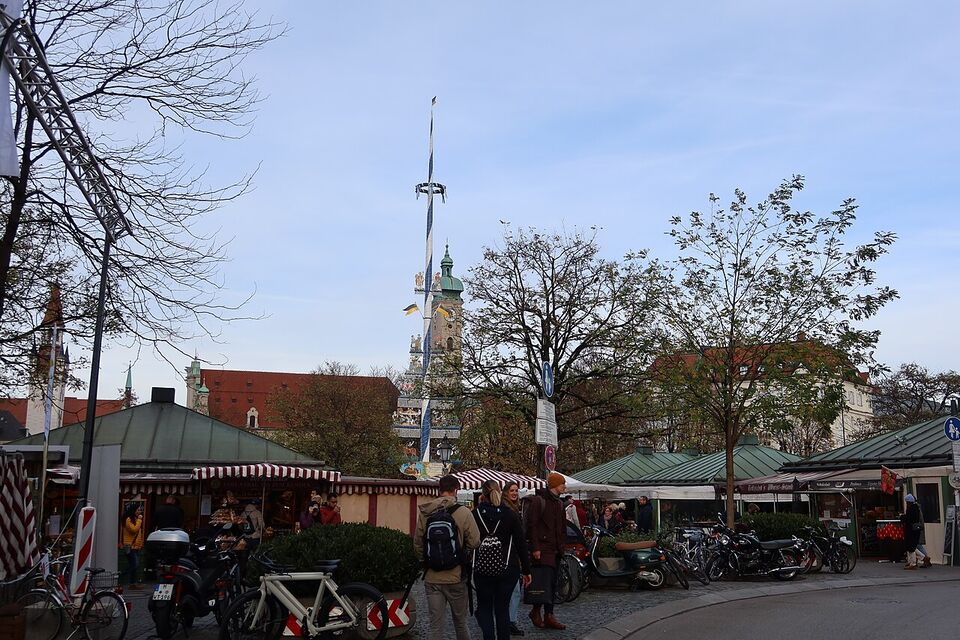
- One day: possible if you only have a layover, but you will only see the old town: Marienplatz, a church tower, Viktualienmarkt and a beer hall.
- Two days: the old town, the Residenz and one museum, plus an evening in a beer hall or garden. This is the minimum for a first visit.
- Three days: add Nymphenburg Palace, the English Garden and either a second museum or a half-day at the Dachau memorial. This is the best fit for most travelers.
- Four to five days: add one or two day trips (see below). The city itself does not need more than three days for most people.
The sights section of the guide (Munich Sights) has a day-by-day plan, prices and hours. A good rule: pair one indoor day (museums) with an outdoor day (park, palace) so a rainy forecast does not ruin your trip. Munich has frequent rain from May to August, and winters are cold; see When to Go to Germany for the weather by month.
Munich as a base for day trips
Munich sits in the middle of southern Germany's rail network. These trips are the best ones, and none requires a car. Train times are approximate; check the DB Navigator app for your date.
| Trip | Train time | Notes |
|---|---|---|
| Neuschwanstein and Hohenschwangau | About 2 hours to Füssen, then a bus of about 10 minutes | Book castle tickets ahead: see Neuschwanstein Castle. A long day (10 to 11 hours). |
| Salzburg, Austria | About 1 hour 30 to 1 hour 45 minutes | A full day. Rosenheim-Salzburg is closed for works from February 7 to July 9, 2027, with a reduced service via Mühldorf (three trains a day), so allow extra time then. |
| Nuremberg | About 1 hour 10 minutes by ICE | Old town, castle, Documentation Center. See Nuremberg. |
| Garmisch-Partenkirchen and the Zugspitze | About 1 hour 20 minutes by regional train | The summer round trip to Germany's highest peak was €78 (about $87) through November 22, 2026. From November 27, 2026 the winter day price is €70.50 online or €78 at the office. See The Bavarian Alps. |
| Lake Starnberg, Augsburg, Regensburg | 30 minutes to about 1 hour 30 minutes | Easy half-day trips; Augsburg and Regensburg have historic centers. |
| Dachau memorial | About 25 minutes by S2, plus a bus | Free. See Munich Sights. |
The Bavarian Alps and Lake Königssee are best visited with an overnight stay. The Romantic Road, a string of historic towns from Würzburg to Füssen, is covered in The Romantic Road, and more rail-trip ideas, mostly from Berlin, are in Day Trips from Berlin.
The famous Eagle's Nest (Kehlsteinhaus) near Berchtesgaden was severely damaged by a fire on October 23-24, 2026. It is closed and the area, including hiking routes, is closed too. A rebuild has been announced but there is no reopening date. The Documentation Obersalzberg history exhibition nearby is a separate site and is open daily from 9 a.m. to 5 p.m.
Insider tip
For regional trains within Bavaria, ask for a Bayern-Ticket (a day pass for regional trains, valid in Bavaria and some border regions). Group tickets usually beat buying separate fares for two or more people. Weekdays, it is valid only after a morning cutoff, so check the start time on the DB site before you plan an early train. The Deutschlandticket also covers regional trains.
Practical tips for Munich
- Shops close on Sundays and public holidays in all of Germany; in Bavaria, most shops also close by 8 p.m. on weekdays. Plan groceries and souvenirs for Saturday. Restaurants, museums and beer gardens remain open.
- Carry a card and some cash. Some bakeries, market stalls and beer-garden kiosks are cash only.
- Look both ways in bike lanes. Cyclists have their own marked paths, often at the edge of the sidewalk, and they ride fast.
- Greet people with "Grüß Gott" in Bavaria (a local "hello") or "Servus"; "Hallo" is fine too.
- Tap water is safe to drink. A free glass of water is not standard in restaurants; you pay for bottled water or ask for tap water (Leitungswasser).
- On New Year's Eve, firecrackers and fireworks are restricted in the pedestrian zone around Marienplatz in recent years. Check the city's current order in December.
For other basics, see German Etiquette, Is Germany Safe?, and Flights to Germany for the best way to get to Munich from the US. If you are still comparing cities, Berlin vs Munich makes the case for each.
Add it to a route in the trip builder, or ask us to plan the hotels, trains and guides for you.