Overview
Berlin is a big, spread-out city made of several centers rather than one, and that shapes everything about a visit: where you sleep, how you get around and how many days you need. Plan on three full days for the headline sights and the Wall history, and four or five if you add a day trip. Unlike Munich or the Rhine towns, Berlin is not postcard-pretty in one frame. Its appeal is history you can walk through, museums, parks, food from everywhere and a nightlife culture of its own.
This page is the base guide for planning the city: neighborhoods, where to stay, transit, tickets, bikes, Sunday closings and nightlife basics. For the sights themselves, with hours and prices, see Berlin Sights. For what to eat, see Food and Drink in Berlin. For Potsdam, Sachsenhausen and the other easy escapes, see Day Trips from Berlin. If you are still choosing between cities, our Berlin vs Munich comparison lays out the differences.
Two things surprise most Americans. First, distances: Berlin covers roughly 345 square miles (890 sq km), far more than most European capitals, so a "short walk" between neighborhoods can be an S-Bahn ride. Second, the city is quieter on Sundays than a world capital should be, because shops close by law (more on that below).
Berlin's neighborhoods
Berlin's districts (Bezirke) each have a distinct feel, and the names you will see on maps are often smaller neighborhoods (Kieze) inside them. The seven below cover nearly every visitor's needs. All of them are inside fare zones A and B, so one AB ticket covers them.
Mitte
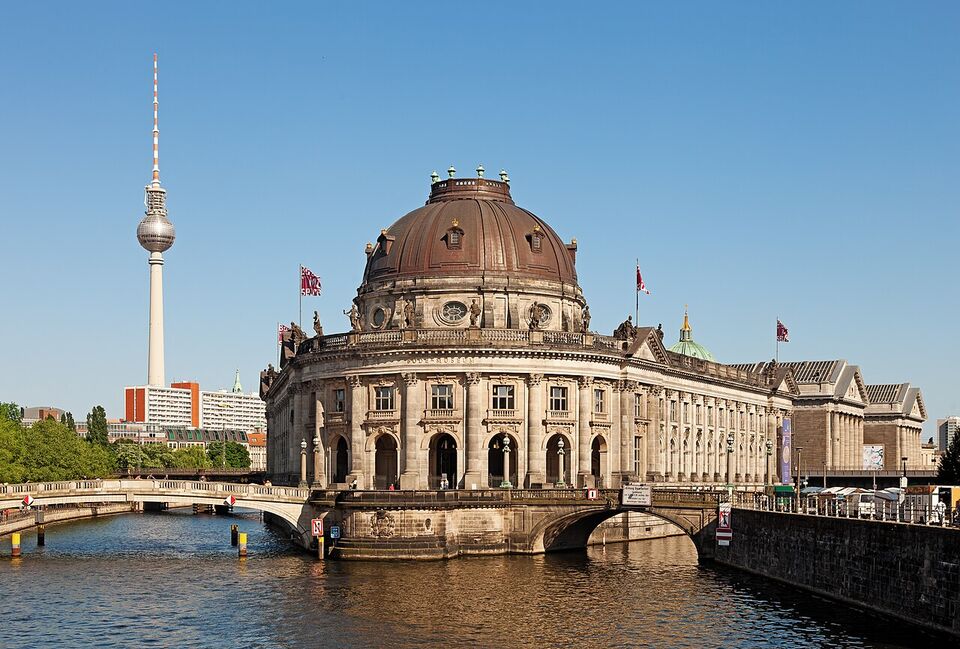
The historic center holds Museum Island, the Brandenburg Gate, Unter den Linden and Hackescher Markt, and Hauptbahnhof sits at its edge. It is the most convenient base for a first visit and also the most expensive and touristy. Good for short stays and arrivals by train.
Prenzlauer Berg
Tree-lined streets of renovated 19th-century apartment buildings, brunch cafes and parks. It is calm at night and family-friendly. Tram and U-Bahn lines reach Mitte in 10 to 15 minutes. A good fit for travelers who want a neighborhood feel and sleep.
Kreuzberg
Home to Berlin's large Turkish community, street markets, the Markthalle Neun food hall and a busy bar scene around Oranienstrasse and Bergmannstrasse. It is lively at night and varies block by block. Choose it if food and evenings out matter more than quiet.
Friedrichshain
Young, loud and affordable, with clubs, bars and the East Side Gallery on its edge. The streets around Warschauer Strasse are busy late into the night. Fine for nightlife; light sleepers should ask for a courtyard room.
Charlottenburg
The old West Berlin center: Kurfürstendamm, Charlottenburg Palace, department stores and calm, grand streets. It feels more traditional and polished. Good for shoppers and anyone who wants a quieter, more classic stay, with S-Bahn links to Mitte in about 15 minutes.
Neukölln
Once rough, now a busy mix of students, long-time Turkish and Arab families and a creative crowd, with bars along the Landwehrkanal and Weserstrasse. Cheaper than the center, and a good place to eat. Late-night noise is common.
Schöneberg
A residential district with a long LGBTQ history around Nollendorfplatz, plus markets and cafes. It is quieter than Kreuzberg yet only a short U-Bahn ride from Mitte and the Zoo area. A middle path between lively and peaceful.
If you only remember one rule: Mitte for convenience, Prenzlauer Berg or Charlottenburg for calm, Kreuzberg or Friedrichshain for nightlife. Reading street-level reviews for noise matters more than the neighborhood name, since Berlin's bars and clubs stay open all night.
Where to stay by trip type
Berlin hotels are generally cheaper than in Munich, Hamburg or Frankfurt, and the supply is large. Room prices vary by season and by event: trade fairs, the Berlin Marathon in September and New Year's Eve all push rates up. For this guide, $ means under $120 a night for a double, $$ means $120 to $300 and $$$ means over $300. Most good central hotels fall in the $$ range, and hostels and simple guesthouses sit at $. For a country-wide view, see Where to Stay in Germany.
- First visit, three or four days: Mitte or the streets around Hauptbahnhof, $$. You can walk to many sights and reach every transit line. Choose a hotel near an S-Bahn or U-Bahn stop rather than for the street address alone.
- Families with children: Prenzlauer Berg or Charlottenburg, $$. Look for apartments with a kitchen, since breakfast is often not included and Sunday shops are closed. Parks and playgrounds are common in both.
- Nightlife and short stays: Kreuzberg or Friedrichshain, $ to $$. Ask about soundproofing, and avoid street-facing rooms on weekends.
- Budget and solo travelers: hostels and simple hotels in Friedrichshain, Neukölln or near Ostbahnhof, $. Private rooms in hostels are an easy middle option.
- Short airport stay: a hotel near BER or along the FEX line, $ to $$, only for a very early flight. The airport express makes it simple to sleep in the city instead.
- Special occasion: grand hotels around Gendarmenmarkt and Unter den Linden are $$$, often with a spa or a view of the Brandenburg Gate.
Different from home
German hotel rates are quoted per room, and a hotel stay in Berlin carries a city tax (Übernachtungsteuer) of 7.5% of the net room price. It is often charged at the hotel, even for business travel, and may be listed separately from the headline price. Check whether your booking site includes it.
Getting from BER airport to the city
Berlin Brandenburg Airport (BER) is about 11 miles (18 km) southeast of Hauptbahnhof, and the airport station sits under the terminals. The old trains-to-nowhere era is over: since December 2025, upgraded tracks on the Dresdner Bahn have made the airport express faster. For flight options into Berlin, see Flights to Germany.
FEX (Flughafen-Express)
The FEX is the quickest option. It runs up to four times an hour (roughly every 15 minutes) and takes 23 minutes to Berlin Hauptbahnhof, 19 minutes to Potsdamer Platz and 14 minutes to Südkreuz. Older guidebooks that say 30 minutes are out of date. It counts as a regional train, so an ABC ticket works and no supplement is needed.
S-Bahn S9
The S9 is slower, about 40 minutes from Alexanderplatz and about 25 minutes from Schöneweide. It stops in neighborhoods the FEX skips, which helps if your hotel is in Friedrichshain, Treptow or Neukölln. The S45 no longer goes to BER.
Zones and the price
BER lies in zone C, so you need an ABC ticket. A single ABC ticket costs €5.00 (about $5.60); the AB single is €4.00 (about $4.50). Buy at a machine in the station, on the BVG app or at the ticket counter. A taxi is possible but not faster than the train at most hours, and we could not confirm current taxi fares. Check the airport's website for the latest on terminals, because Terminal 2 opening hours changed on November 2, 2026 (check-in now opens 2 to 2.5 hours before departures) and passengers with only hand luggage can use Terminal 1 security, which opens at 4 a.m.
Insider tip
Buy an ABC ticket for the airport run, not AB. An AB ticket is not valid beyond the city border, and a ticket inspector on the FEX can fine you for the shortfall. If you will make several trips, the 24-hour ABC ticket (about €12.90, or about $14.50; check the BVG app) covers the airport, the center and a Potsdam visit on the same day.
Zones, tickets and prices
Berlin's transit network (BVG for U-Bahn, trams and buses; S-Bahn Berlin for the S-Bahn) uses three fare zones. Zone A is the inner city up to and including the circular S-Bahn line (the Ring). Zone B is the rest of the city out to the boundary, and zone C is the greater area, including Potsdam, Oranienburg and BER. Most visitors stay in AB. These are the 2026 prices (they took effect on January 1, 2026; we could not confirm prices from January 2027, so check bvg.de before you travel).
| Ticket | Price | Notes |
|---|---|---|
| Single, AB | €4.00 (about $4.50) | Valid 2 hours, one direction, changes allowed |
| Single, ABC | €5.00 (about $5.60) | Needed for BER, Potsdam, Oranienburg |
| Short trip (Kurzstrecke) | €2.80 (about $3) | 3 S-/U-Bahn stops or 6 tram/bus stops |
| 4-trip card, AB | €12.40 (about $14) | About €3.10 a trip; each trip is one direction |
| 24-hour ticket, AB | €11.20 (about $12.50) | Pays for itself after three trips |
| 24-hour ticket, ABC | €12.90 (about $14.50) | Likely price; check the BVG app |
| Bicycle single | €2.70 (about $3) | Bike ticket in addition to the person ticket |
| Bicycle 24-hour | €5.90 (about $6.60) | For a day with the bike |
Each single ticket is a one-direction ticket, valid for two hours with transfers, and a round trip needs two. A "Kurzstrecke" (short trip) is worth knowing for a quick hop of three stops. For a day of sightseeing, the 24-hour ticket is usually cheapest once you plan three or more rides. For anything longer than a day or two, a Deutschlandticket (below) can beat paying per ride. Our Getting Around Germany guide covers the national picture.
Buy tickets at the yellow-and-white machines in stations (English menu, cards accepted), on the BVG app, or from a driver on buses and some trams. Check the zone before you pay: the same ticket that works across Berlin becomes invalid at the border of zone B.
Validating, inspectors and the fine
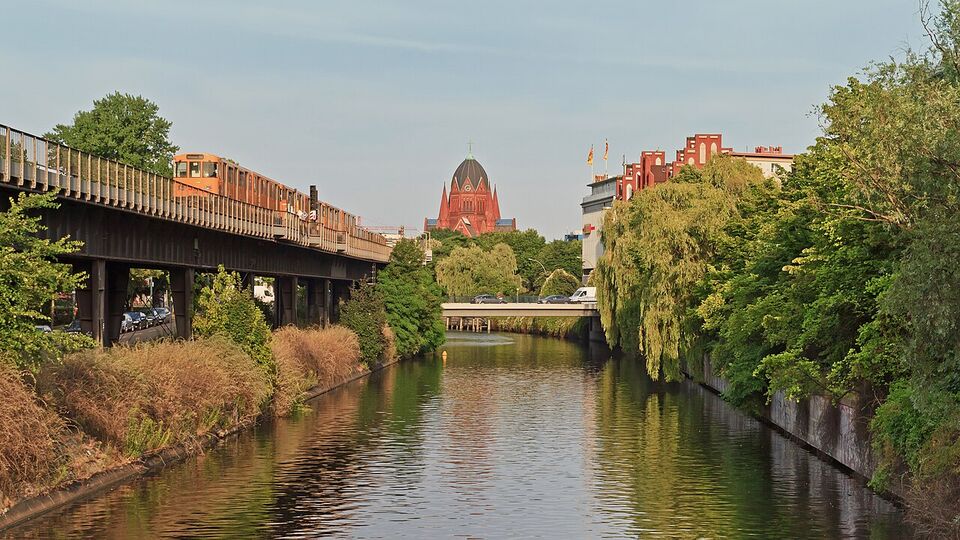
Berlin's transit works on an honor system. There are no turnstiles in most stations and no one checks your ticket as you board. Instead, inspectors (Kontrolleure) in plain clothes board trains, trams and buses and check tickets on the spot. If you cannot show a valid ticket, the penalty fare is about €60 (about $67) as of our latest check, and it is collected on the spot or by invoice. Claiming that you are a tourist does not cancel it.
Digital tickets bought through the BVG app are valid as soon as they are issued and carry a code the inspector scans. Paper tickets from a machine are generally printed ready to use. Multi-trip cards (the 4-trip card) are different: they must be stamped in the small validation machines (Entwerter) on station platforms or inside trams and buses before your first ride. A paper ticket without a stamp is treated like no ticket at all. If the instructions on your ticket seem unclear, ask at the BVG service point.
Watch out
Sleeve cards that are not stamped, tickets for the wrong zone and expired two-hour tickets are the three most common ways visitors get fined. Check the zone and the printed time when you board. Keep the ticket until you leave the station area, because inspectors also work at exits.
The Deutschlandticket in Berlin
The Deutschlandticket is a monthly pass for local and regional transport across Germany. It costs €63 a month in 2026 (about $71), and Deutsche Bahn confirms the price rises to €66.80 (about $75) on January 1, 2027. In Berlin it covers U-Bahn, S-Bahn, trams, buses, the BVG ferries and regional trains (RE and RB, second class), so it works on the FEX to BER and on trains to Potsdam. It does not cover ICE, IC or EC trains.
BVG says the ticket can be purchased by everyone and is sold as a subscription online. Deutsche Bahn says you cancel by the 10th of a month to end the subscription at the end of that month. The practical catch for visitors is that it is a subscription, not a one-day ticket, so you must cancel in time or it renews. Some sellers may require a German bank account (SEPA), so test your payment method before relying on it, and read the cancellation deadline in the terms.
Does it pay off? A typical week in Berlin with a few rides a day costs less on day tickets (about €11.20 a day in AB, or the 4-trip card for light use). The Deutschlandticket starts to make sense when you stay for most of a month, or when you plan several day trips beyond zone C (for example the Spreewald), where separate regional tickets add up. For a visit of one week or less, we would usually buy day tickets and keep the pass for longer stays. For the national view see German Train Tickets and Passes.
Bikes
Berlin is flat and has a big network of bike lanes, many of them protected, and bike rental and shared bikes are easy to find. Cycling is a good way to see Tiergarten, the Landwehrkanal and the Tempelhof field. Lanes on main streets are separated from traffic, but many cross tram tracks, so cross at a right angle to avoid a fall. Locals use bells and expect predictable riding: do not stop in the middle of a bike lane to take a photo.
Rules to know: bikes can ride in the lane marked in red; pedestrians must stay off it; helmets are advised but not required for adults. On the U-Bahn and S-Bahn you may take a bike if you also buy a bicycle ticket (single €2.70, or €5.90 for 24 hours). Space is limited at rush hour and bikes may be turned away. Trams and buses accept bikes at the driver's discretion. Lock your bike with a strong lock; bike theft is a regular problem.
Sundays and holidays
Germany's shop-closing law applies in Berlin, so on Sundays and public holidays most supermarkets, clothing shops and department stores are closed. Berlin allows up to eight special shopping Sundays a year. Shops inside main stations, including Hauptbahnhof, and at BER may open under special rules, and petrol stations sell basics. Many Spätis (late-night corner shops) open on Sundays too, but they are a legal gray area and hours vary.
The practical advice: buy groceries and anything you need by Saturday evening. Museums, restaurants, cafes, flea markets (Mauerpark is the best known) and the Reichstag dome are open on Sundays, so it is a good day for sightseeing and a long brunch. Public holidays in Berlin include the nationwide dates plus International Women's Day on March 8, which is a holiday in Berlin only. See Money in Germany for cash, cards and deposits.
Save money
If you want to see several museums, check the Berlin Museum Pass: €32 (about $36), or €16 for reduced fares, for about 30 museums over three days, per the Jewish Museum's own page. It only pays off if you plan roughly four or more paid museums in three days. Many of the biggest sights (Reichstag dome, Topography of Terror, Berlin Wall Memorial, Holocaust Memorial) are free.
How many days do you need?
Here is how we would size a trip, based on sights, travel times and the pace of a first visit.
- One day: only for a layover. Do the Brandenburg Gate, the Reichstag dome (if you registered), the Holocaust Memorial and the Berlin Wall Memorial, and stay in Mitte.
- Two days: adds Museum Island or the Topography of Terror and one neighborhood walk. It is rushed but workable.
- Three days: the sweet spot for a first trip. Day 1 for the central landmarks, Day 2 for the Wall and Cold War history, Day 3 for museums and a neighborhood. See the three-day plan in Berlin Sights.
- Four to five days: add Potsdam and Sachsenhausen, or the Wannsee lakes and Leipzig. Our day trips guide has train times and tickets.
- A week or more: slow travel, with time for the flea markets, the lakes, nightlife and food.
Berlin also pairs well with Dresden and Leipzig (see Dresden and Saxony) or with Hamburg and the north coast. Arriving from the west by train takes longer than usual until December 2027, because the Hannover to Berlin high-speed line is closed for rebuilding: Cologne to Berlin takes about 5.5 hours via Braunschweig and Magdeburg, roughly 80 minutes longer than normal. Hamburg to Berlin has reopened after its own closure in 2025 and 2026. Check bahn.de for your date.
Nightlife basics
Berlin's nightlife is its own world: clubs open late (often after midnight on weekends), run until Monday morning at the biggest venues, and do not stop at a set closing time. Bars close when the owner decides. Many venues take cash only at the door, and some have no sign. Think of it as a different rhythm rather than a different level of danger.
Door policy
Many clubs choose who enters (Türsteher, or door staff, decide), and a no is final. The policy is not published, so no outfit guarantees entry. In general, door staff favor guests who seem to have come for the music: arrive calmly, in small groups, sober, and without a camera or phone flash. Large groups, loud behavior, visible intoxication and tourists asking for selfies often fail. Pay no one outside to "get you in". Expect to be turned away at least once if you try the famous clubs, and have a plan B.
Berghain, without the hype
Berghain is a former power station in Friedrichshain and one of the best-known techno clubs in the world. It runs from late Friday night to Monday morning in long sessions. The queue can be long, the door is strict, and phones are covered with stickers inside, so there are no photos. The line is not a game to win; many people go home and try another club, which is a fine outcome. We could not confirm the 2026 entry price or payment methods, so bring cash and check the club's own site. If you are curious but not committed, other clubs and bars offer a similar night with less waiting. Our safety guide covers the usual precautions at night.
Insider tip
Bring a photo ID and enough cash for entry and coat check, and set a limit on the night. Take the night lines of the BVG (the U-Bahn runs all night on Fridays and Saturdays on most lines, and night buses run on other nights) instead of arguing with a taxi driver at 5 a.m.
City tax, costs and practical notes
The Übernachtungsteuer is 7.5% of the net room price, introduced in its current form on January 1, 2025, and it applies to business travelers as well. Menu prices include VAT, so the price on the menu is what you pay before any tip. Tipping is by rounding up or 5 to 10% (see the money page), and you state the total when paying by card.
Berlin is more cash-oriented than many travelers expect. Most restaurants take cards, but some small Imbiss stands, bakeries, flea markets and Spätis are cash-only or have a minimum for cards. Carry some euros. For safety, Berlin police have called pickpocketing a significant problem: be careful at stations, on crowded trains and at tourist sights, keep bags zipped in front and never hang a bag on a chair back. For etiquette tips such as waiting at red crosswalks, see German Etiquette.
Berlin's markets run late in the year. The Gendarmenmarkt market runs November 23 to December 31, and other Berlin markets open between November 12 and November 23, 2026; see Christmas Markets in Germany. A free New Year's Eve party at the Brandenburg Gate is planned again for 2026/27, but details are not yet announced, so check berlin.de in December.
Add it to a route in the trip builder, or ask us to plan the hotels, trains and guides for you.