Overview
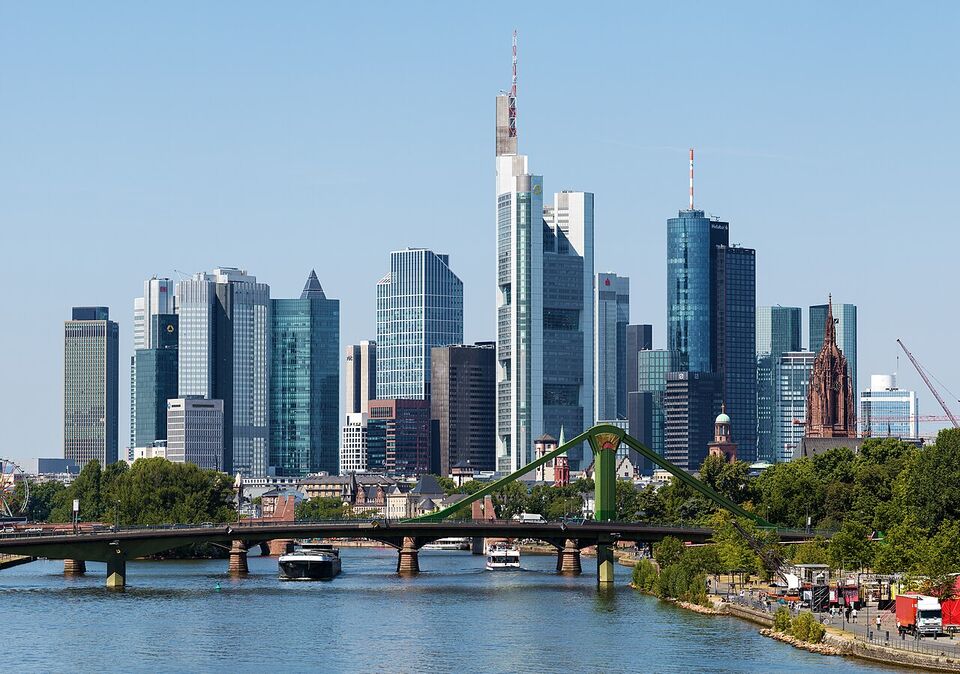
Frankfurt has a reputation as a banking city and an airport, and most visitors treat it as a place to change planes. That undersells it. A rebuilt old town, a row of top museums along the river, a skyline you can see from the Main, and a local drink and cuisine of its own add up to a satisfying day or two.
Frankfurt is also the practical entry point for many American trips. If you land here, our flights guide covers the nonstop routes, and the airport's train station connects directly to Cologne, Heidelberg, Nuremberg and the Rhine. This page covers what to see in the city, apple wine, a plan for long layovers, and short trips to Mainz, Wiesbaden and the Rheingau.
The center is small. The old town, the museum embankment, the shopping streets and the main station are all within about a mile (1.6 km) of each other, and the Sachsenhausen taverns are across the river. You can walk most of it.
The Old Town and the Römer
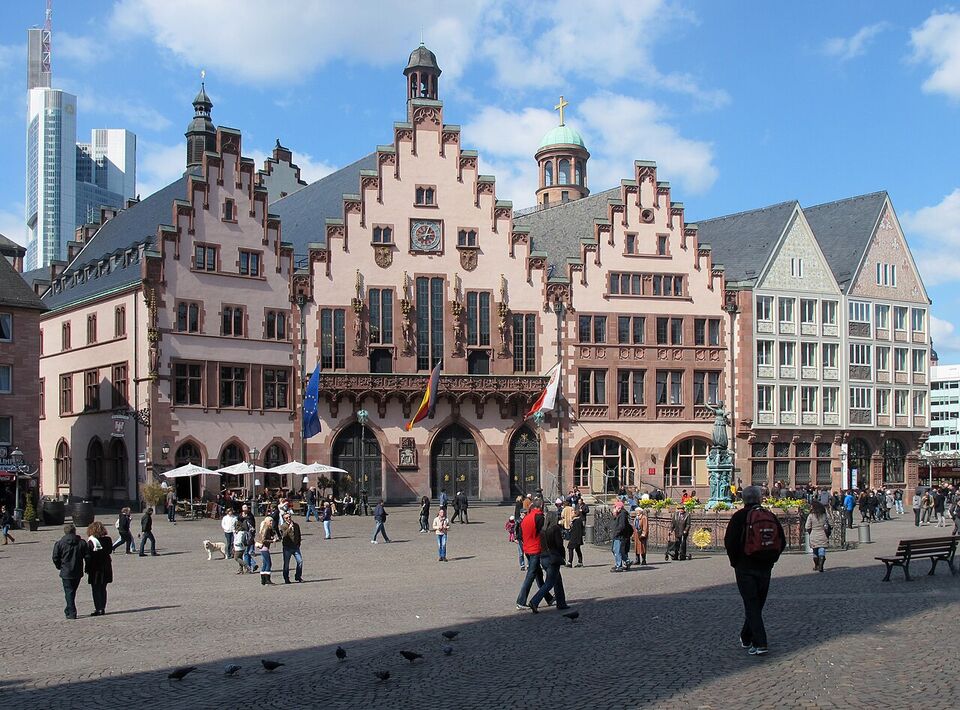
The Römerberg is the historic square, with the Römer, a group of gabled buildings that has been the city hall since 1405. It was rebuilt after World War II, like most of the old town, and it still looks like the postcard. The square is also where the Christmas market has its heart.
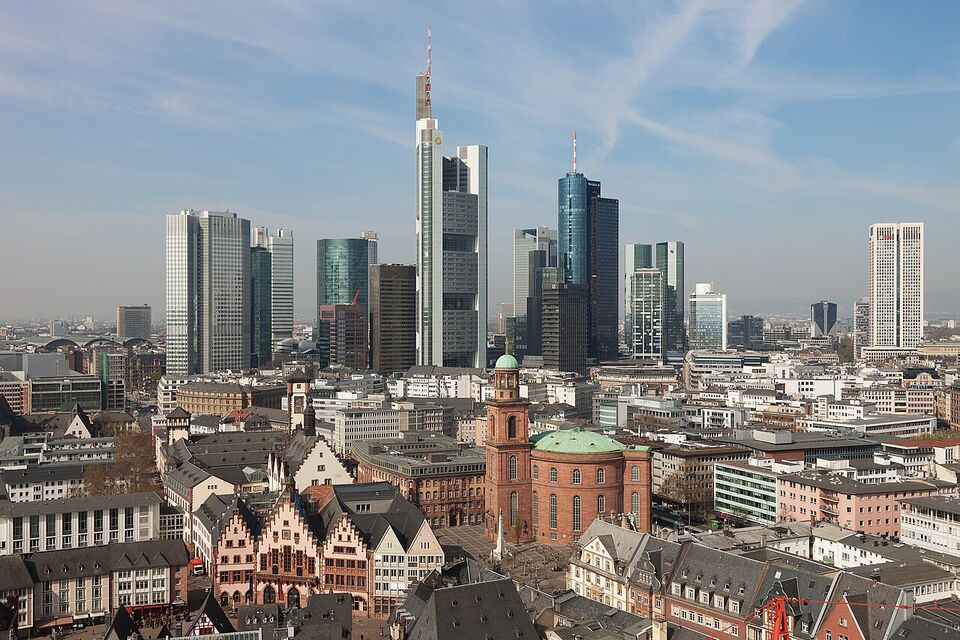
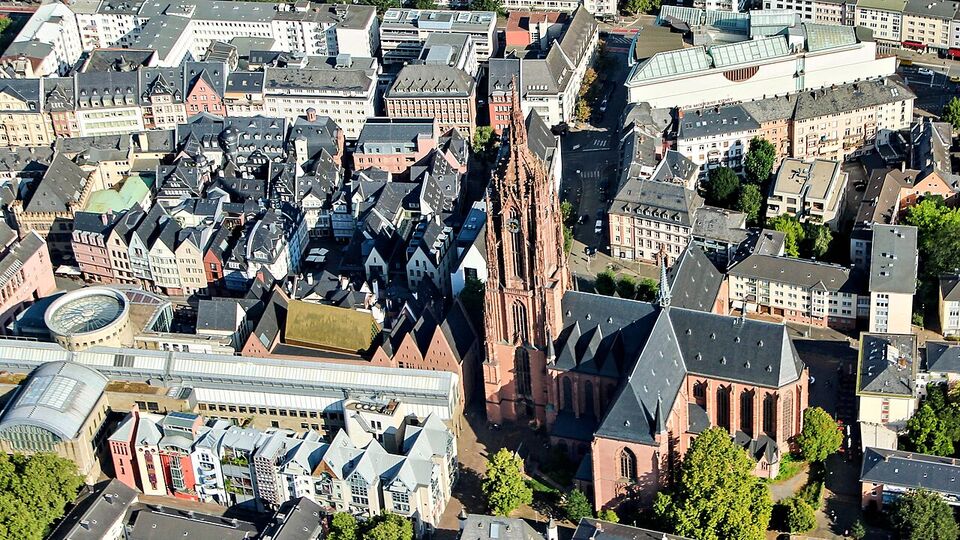
Between the Römerberg and the cathedral (Kaiserdom), the "new old town" (Neue Altstadt) opened in 2018. It rebuilt a block of historic half-timbered houses and added new buildings in a similar style, and its small lanes are good for coffee and a pause. The cathedral, where German emperors were crowned in the Middle Ages, has a tower you can climb; hours and prices change, so check the cathedral's page before planning around it.
A few minutes away is the Paulskirche, where Germany's first freely elected parliament met in 1848, and it is a quiet stop for anyone interested in democracy's German roots. For a wider look at history sites across the country, see our history guide.
The Museum Embankment
Along both banks of the Main, a cluster of museums forms the Museumsufer (museum embankment). It is easy to combine one or two with a riverside walk.
Städel Museum
The Städel has European paintings from the Middle Ages to the present. Adult tickets are €19 (about $21), reduced €17 (about $19) and a family ticket €30 (about $34); on Tuesdays from 3 to 6 p.m. entry is €10 (about $11). Hours are Tuesday, Wednesday and Friday to Sunday from 10 a.m. to 6 p.m., Thursday to 9 p.m., and closed Mondays. Children under 12 are free.
Other museums
The embankment also has museums for applied arts, film, communication and sculpture. Choose one that matches your interests rather than trying to see all of them, and check each museum's page for closing days and special exhibitions.
Eiserner Steg
The Iron Footbridge connects the old town and Sachsenhausen and gives the standard view of the skyline. It is a good place to be at sunset, and the riverbank paths on both sides are popular for walking and jogging.
Insider tip
Cross the Eiserner Steg on the way to dinner in Sachsenhausen. You get the skyline view on the walk over, and the lights come on while you eat.
The Skyline and the Main Tower
Frankfurt is one of the few German cities with a real skyline, and locals call it "Mainhattan". The Main Tower is the only skyscraper with a public viewing platform, about 656 ft (200 m) up. Adult tickets are €9 (about $10), reduced €6 (about $7), and online purchases add €0.50. Summer hours are Sunday to Thursday 10 a.m. to 9 p.m. and Friday and Saturday 10 a.m. to 11 p.m.; in winter, the platform closes at 7 p.m. (Sunday to Thursday) or 9 p.m. (Friday and Saturday). The last elevator ascent is 45 minutes before closing. The site notes that hours change when the clocks do.
Visibility matters more than the price: on a gray or foggy day, skip it and see the skyline from the river instead.
Apple Wine in Sachsenhausen
Sachsenhausen, south of the Main, is the traditional home of apple wine taverns. The drink is called Apfelwein, or Ebbelwoi in the local dialect, a dry, tart, still cider that is usually around 5 to 7% alcohol. It is served from a ceramic pitcher, a Bembel, which is gray with blue patterns, into ribbed glasses called Gerippte.
- What to order: A Gerippte of apple wine, then a classic from the menu: Handkäs mit Musik (a sour milk cheese marinated with onions, vinegar and oil; the "music" is the onions), Grüne Soße (a cold herb sauce served with boiled eggs and potatoes), or a Frankfurt sausage.
- Taverns: Look for the word Apfelweinwirtschaft. Many have long shared tables and a casual feel, and you can usually sit down without a reservation on weekdays; book for a weekend evening.
- Prices: A glass costs a few euros. Menus vary, so check the board and ask whether the tavern takes cards, since some small places prefer cash.
- Taste: The first sip is sharp for people used to sweet cider. Many locals mix it with sparkling water (sauer gespritzt) or with soda as a lighter option.
For more on German drinks, including the wine regions near Frankfurt, see our beer and wine guide; the German food guide covers regional dishes.
Eating in Frankfurt
Frankfurt's traditional food is plain and filling, and it pairs with apple wine. The dishes you will see most often are:
- Frankfurter Würstchen: thin pork sausages served in a pair with bread and mustard. They are the origin of what Americans call a frankfurter, though the local version is smaller and milder.
- Grüne Soße: the "green sauce" of seven herbs, mixed into sour cream or yogurt and served cold. It is a local specialty, often with potatoes and hard-boiled eggs, and it is a good vegetarian option.
- Rippchen mit Kraut: cured pork ribs with sauerkraut, a standard tavern main course.
- Frankfurter Kranz: a ring-shaped buttercream cake with a crunchy nut-and-sugar coating, found in bakeries and cafes.
For a casual lunch, the covered market hall near the Römerberg (the Kleinmarkthalle) has stalls selling sausages, cheese, bread and snacks; check its hours, because market halls in Germany usually close on Sundays. Many places in the center take cards, but small taverns and market stalls may not, so carry some euros. Our money guide explains tipping (round up or add 5 to 10%) and why you should tell the server the total you want to pay before the card machine comes out.
Save money
A day ticket (€7.75, about $9) beats three single tickets (€3.80 each, about $4). Walking is free and covers most of the center, and the Städel's Tuesday afternoon price of €10 (about $11) is half the regular €19 (about $21).
Frankfurt Airport and Long Layovers
Frankfurt Airport is one of Europe's busiest hubs, and its railway stations make a city visit realistic. The regional station (S-Bahn) sits at Terminal 1; a separate long-distance station (Fernbahnhof) is for ICE trains. The S-Bahn lines S8 and S9 take about 12 minutes to the Hauptbahnhof, with trains every few minutes during the day.
Can you leave the airport?
If you arrive from outside the Schengen area, you pass passport control on arrival, and the new Entry/Exit System registers your photo and fingerprints on your first entry, which can add time at busy hours. Our entry requirements guide explains it. If your bags are checked through to your final destination, you do not need to collect them. If they are not, find out where the left-luggage service is and what it costs before you leave the secure area, because we could not confirm current prices; the main station also has lockers.
| Layover | Suggested plan |
|---|---|
| Under 5 hours | Stay at the airport. The commute and immigration eat the time. |
| 6 to 8 hours | S-Bahn to the Hauptbahnhof, walk to the Römerberg, lunch, a river walk, return by 3 hours before departure. |
| 9 to 12 hours | Add the Städel or the Main Tower and dinner in Sachsenhausen. |
| Overnight | Sleep in the city near the Hauptbahnhof, or at an airport hotel if you have an early flight. |
As a rule of thumb, count 1.5 hours from landing to being in the city center (immigration, bags, the train) and be back at the airport at least 3 hours before an intercontinental flight. Do not cut it closer than that: security and check-in lines at a large hub can be long. Buy your ticket in the RMV app or at a ticket machine. The city single is €3.80 (about $4) and the day ticket €7.75 (about $9), but the airport is a separate fare area, so the airport trip costs more; check the machine for the price.
Watch out
The streets around the main station (Bahnhofsviertel) have a visible drug and street scene. Most visitors pass through in daylight without trouble, but keep your bag zipped, avoid the side streets at night and watch for pickpockets in the station. Our safety guide has the details and the emergency numbers (112 for ambulance and fire, 110 for police). The US Consulate General in Frankfurt can be reached at +49-69-7535-0 for passport emergencies.
Day Trips and Short Trips
Mainz
Mainz, on the Rhine, is about 35 minutes from Frankfurt by S-Bahn or regional train. It is the home of Johannes Gutenberg, and the Gutenberg Museum is the reason to go. The museum has been showing a permanent exhibition called "Gutenberg-Museum MOVED" while a new building is planned, and it is closed from November 23 to 27, 2026 for urgent maintenance. Check mainz.de for hours and tickets before you travel. Mainz also has a Romanesque cathedral, a lively market square and its own carnival, celebrated on the same February dates as Cologne's (Rosenmontag is February 8, 2027); see our festivals guide.
Wiesbaden
Wiesbaden, the state capital, is across the Rhine from Mainz and about 40 minutes from Frankfurt. It is a spa city with hot springs, a grand 19th-century casino and spa building (the Kurhaus), and parks. Combine it with Mainz for a day: the two cities are 15 minutes apart by train.
The Rheingau
The Rheingau is the wine region along the right bank of the Rhine between Wiesbaden and Rüdesheim, known for Riesling and a medieval Cistercian monastery, Kloster Eberbach. Trains normally run along the river, but the right-bank line is closed for rebuilding until December 12, 2026, so check bahn.de for replacement buses or use Mainz, Bingen and the ferry to Rüdesheim. Our Rhine and Moselle guide continues from there into the Rhine Gorge.
Further afield
Heidelberg is about an hour by train, a good pairing with Frankfurt on the way to the Black Forest (see our Heidelberg and Black Forest guide). Würzburg, at the start of the Romantic Road, is roughly an hour and a quarter away by ICE (see the Romantic Road guide), and Cologne is about an hour by ICE.
Rainy Days and Winter
Frankfurt's weather is often gray from November to February, and rain falls on about 14 to 16 days a month in the airport-station normals. The museums are the answer: the Städel and its neighbors are indoors and warm, and the old town can be seen in a morning even in drizzle. Daylight is short in December, so plan outdoor stops before about 4 p.m. and leave the evening for taverns and the Christmas market.
In a short winter stopover, put the Main Tower on the plan only if the forecast promises a clear sky; cloud hides the view. In summer the opposite holds: the riverbank is crowded on warm evenings, and the observation deck is busiest at sunset. Our when to go guide compares the months across Germany.
Christmas Market and Seasons
The Frankfurt Christmas market fills the Römerberg and runs from November 23 to December 22, 2026, Monday to Saturday 10 a.m. to 9 p.m. and Sunday 11 a.m. to 9 p.m., according to a secondary listing; check the city's tourism site for the official dates. Our Christmas markets guide compares it with larger markets elsewhere.
Frankfurt has a mild, rainy climate. In the 1991-2020 normals (airport station), July averages 79°F (26°C) for the high and 59°F (15°C) for the low, November 48°F (9°C) and 38°F (3°C), and December 42°F (5.5°C) and 33°F (0°C). Summer is best for the riverbank and the taverns' outdoor tables, and spring and autumn for the Rheingau.
Getting Around and Where to Stay
Frankfurt's U-Bahn, trams and S-Bahn are operated within the RMV system. A day ticket in the city is €7.75 (about $9), the single €3.80, and the Deutschlandticket works on local transport. The old town and museum embankment are walkable. Our getting around guide and train tickets guide cover longer rides.
For hotels, the area near the Hauptbahnhof is convenient but rougher at night; the old town and Sachsenhausen are livelier and more pleasant for an evening; the Westend is quieter. Frankfurt charges a tourism contribution of €2 per person per night. Trade fairs, including the book fair in October, fill hotels and raise prices, so check dates before you book. Most rooms fall in the $$ range ($120 to $300 a night), with $ options in the station district and outside the center. See our where to stay guide.
Different from home
Shops close on Sundays across Germany, but shops at the airport and the main station may open under special rules. If you need supplies on a Sunday layover, go to the station or the airport.
A One-Day Plan
- One day
Old town, river and apple wine
Start at the Römerberg and the new old town, then walk to the cathedral. Spend the late morning at the Städel, have lunch near the river, and cross the Eiserner Steg. Go up the Main Tower in the late afternoon if it is clear, and finish with dinner in a Sachsenhausen apple wine tavern.
- Day 2
Mainz and Wiesbaden
Take the S-Bahn to Mainz for the Gutenberg Museum (check the closure dates) and the market square, then continue to Wiesbaden for the Kurhaus and a spa town afternoon.
Add it to a route in the trip builder, or ask us to plan the hotels, trains and guides for you.