Overview: what a visitor needs to know
German health care is high quality, and hospitals, pharmacies and ambulances are easy to reach in cities and towns. The State Department describes medical care in Germany as generally good, with prescription and over-the-counter medicines widely available, though brand names often differ from those in the US.
What surprises Americans is the system, not the standard. Doctors' offices keep set hours and close early, pharmacies are the only place to buy many common medicines, and a US insurance card will not get you through the door. The plan that works is simple: buy travel insurance before you go, save the numbers below, and know that the on-call doctor line and the pharmacy rota exist.
For emergencies, crimes and other trouble, see Is Germany safe?. If you are moving for months, health insurance is a legal requirement for residents, and Long stays in Germany covers the next steps.
Travel insurance and paying for care
The State Department states that US Medicare does not apply overseas, that most foreign providers do not accept US health insurance, and that non-residents may be asked to pay in cash immediately; credit cards are not always accepted. It also strongly recommends supplemental medical evacuation coverage, and notes that the US government does not pay medical bills.
The European Health Insurance Card (EHIC) is for people insured in an EU or EEA country, and it does not cover Americans. A non-EU visitor is billed as a private patient, pays the bill first, and then claims the money back from their own insurer. That makes the paperwork as important as the policy.
- Buy travel medical insurance before you leave, with cover for hospital stays, emergency treatment and medical evacuation back to the US.
- Call your own insurer or credit card company to ask whether care abroad is covered, whether you must call them first, and how to claim.
- Keep a copy of your policy number and the insurer's 24-hour phone number in your phone.
- Save every bill and receipt, and ask the doctor for an itemized invoice (Rechnung) and a medical report you can submit.
- Check that your policy covers trip cancellation if you or a travel companion get sick before departure.
Different from home
Non-resident visitors are billed as private patients, so you pay first and claim later. Cards are not always accepted at small practices, so ask when you book, and carry a card with a limit high enough to cover an upfront bill.
How to see a doctor
The usual first stop for an ordinary illness is a general practitioner, a Hausarzt (also called an Allgemeinarzt). Look for the sign "Praxis" with the doctor's name. Opening hours are posted on the door, and many offices close in the early afternoon and on Wednesday or Friday afternoons. Call first, say you are a visitor and a self-paying patient (Selbstzahler), and ask whether they can see you the same day. Reception staff in cities often speak some English.
Bring your passport, your travel insurance details and a list of your medicines. For a specific problem, the doctor may refer you to a specialist (Facharzt). Dentists (Zahnarzt) work the same way. Some hotels keep a list of nearby English-speaking doctors, and that is often the fastest way to find one.
Outside office hours: 116117
For an urgent problem that is not life-threatening, such as a high fever, a bad ear infection or a sprain at night or on a weekend, call 116117. This is the on-call medical service, which runs 24 hours a day, 7 days a week. It sends you to a doctor in an on-call clinic (Bereitschaftspraxis) or arranges a home visit when needed. The service does not cover dentists, who have a separate emergency service, and we could not confirm whether the phone staff speak English, so be ready to give your location and symptoms slowly, or ask your hotel to call for you.
Emergencies: 112 and the Notaufnahme
For a life-threatening emergency, such as chest pain, stroke symptoms, heavy bleeding, a serious accident or unconsciousness, call 112 and ask for an ambulance (Rettungswagen). The call is free from any phone. Hospital emergency departments are called Notaufnahme. They treat real emergencies and use triage, meaning the most urgent patients are seen first. An ordinary illness or a mild injury may mean a long wait or a referral to the on-call practice, so use 116117 for those.
Watch out
Do not wait to see whether chest pain or a head injury passes. Call 112 first and ask about insurance afterward. The State Department notes that outside major cities ambulances may take longer to reach and stabilize a patient, so plan extra caution on remote hikes in the Alps and the Black Forest.
For an English-speaking doctor, check the US Embassy and consulates' website (de.usembassy.gov), where the US Citizen Services pages list resources for Americans in Germany, including medical and mental health information; we could not load the pages that carry the provider list, so please check it before you travel. Big-city private practices and international clinics in Berlin, Munich, Frankfurt and Hamburg often advertise English, and your travel insurer's assistance line can book one for you.
Pharmacies: Apotheke, the red A and the night rota
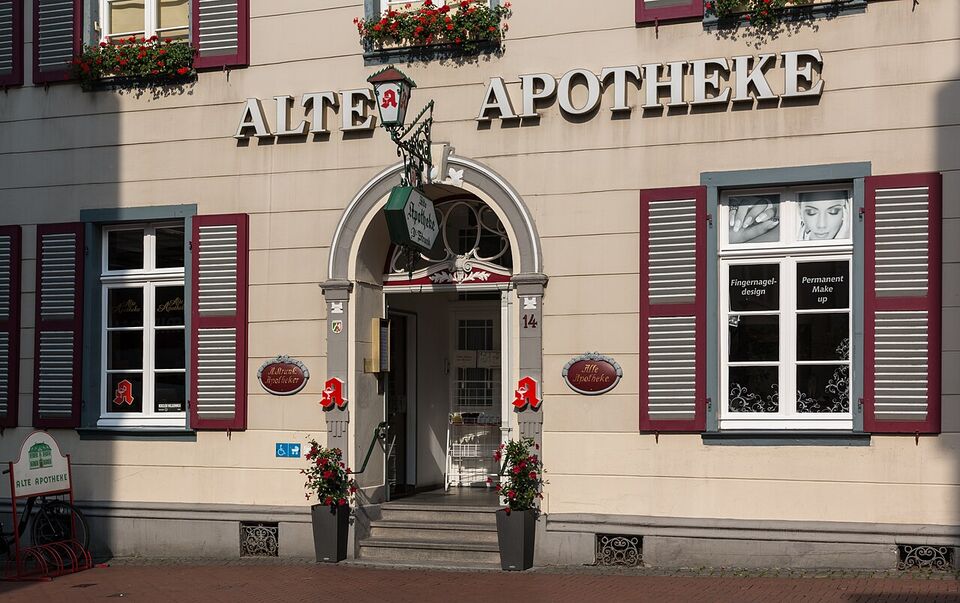
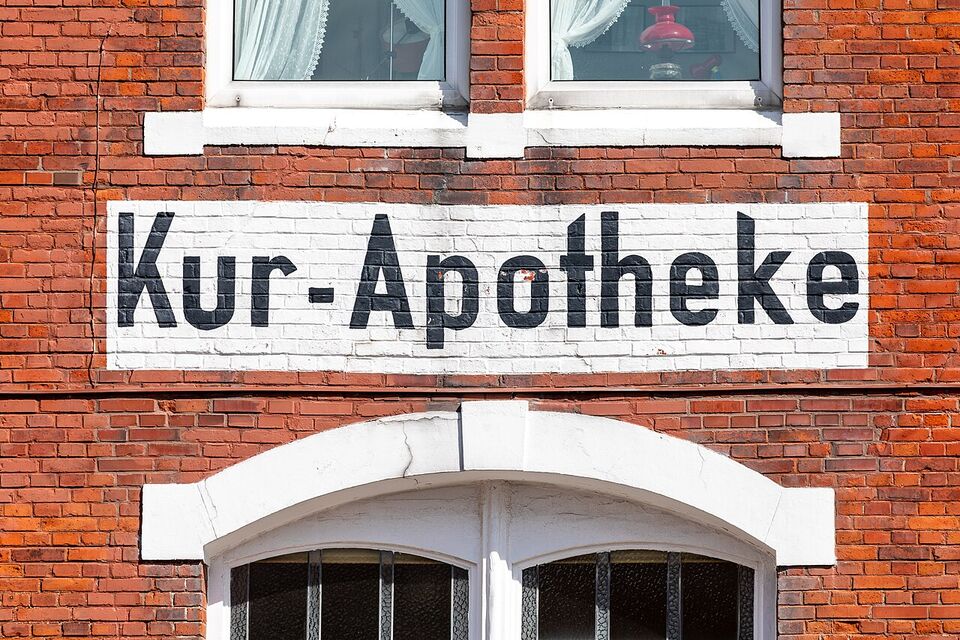
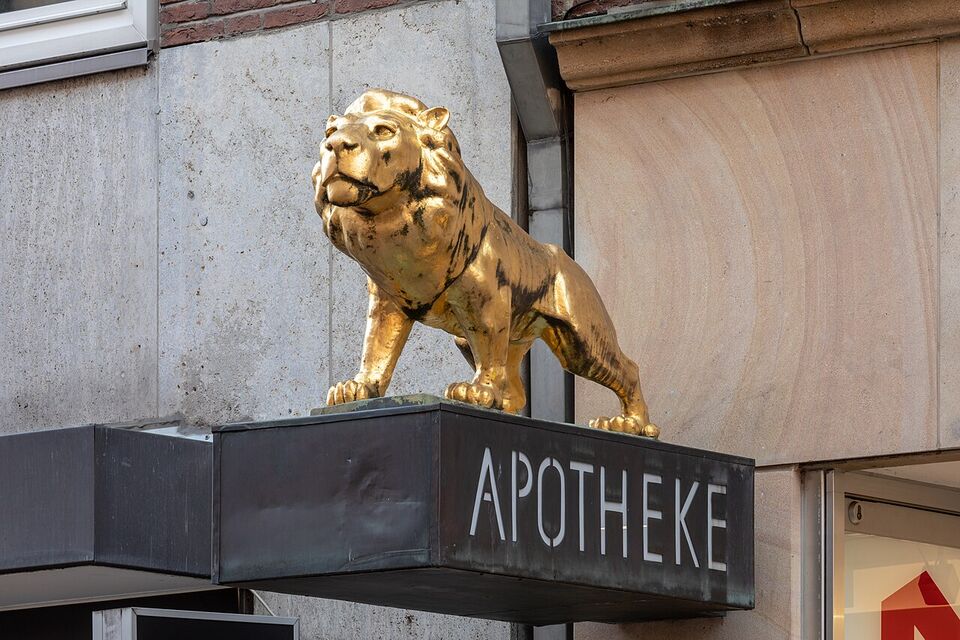
A German pharmacy is an Apotheke, marked with a large red letter A, usually in a sign above the door. Pharmacists give advice, and many medicines that you can grab off a shelf at a US drugstore are sold only behind the counter in Germany, in smaller packs. A pharmacy sells medicines, not snacks and souvenirs.
| You want | Ask for | Where |
|---|---|---|
| Acetaminophen (Tylenol) | Paracetamol | Pharmacy; small packs behind the counter |
| Ibuprofen (Advil) | Ibuprofen | Pharmacy; stronger doses need a prescription |
| Allergy tablets, cold and cough medicine, nasal spray | Antihistamine, Hustensaft, Nasenspray | Pharmacy; brands and formulas differ from US ones |
| Antibiotics, asthma inhalers, birth-control pills | A prescription (Rezept) | Pharmacy, after a doctor writes it |
| Toothpaste, sunscreen, shampoo, vitamins | Not medicine | Drugstores such as dm and Rossmann, or supermarkets |
Many drugs that are over the counter in the US need a prescription in Germany, and drugstores (Drogerie) do not sell real medicines. If you need something specific, give the generic name (the active ingredient) rather than a US brand name.
Opening hours and the emergency rota
Pharmacies keep ordinary shop hours and are generally closed on Sundays and holidays. At night and on weekends, one pharmacy per area stays open on a rota, known as the Notdienst (emergency service). Every pharmacy posts a sign in its window listing the nearest pharmacy on duty, and the online search at aponet.de finds the one near you. When you use the night service, you pay a flat fee of €2.50 (about $2.80) once per visit. It is charged on weekdays between 8 p.m. and 6 a.m., all day on Sundays and public holidays, and on December 24 until 6 a.m. and after 2 p.m.
Insider tip
Before a trip over a holiday weekend (Christmas, Easter, Whitsun), stock up on routine medicines and ask your hotel which pharmacy is on duty. A short list of days when most shops are closed is in Money in Germany, and holiday dates are in Germany in December.
Bringing prescriptions and medicines
You may bring medicines for personal use. Customs rules allow the quantity needed for personal needs, and German Foreign Office guidance says up to three months' supply of a product at the recommended dose can be carried in from outside the Schengen area. We suggest taking only what you need plus a small safety margin, and following these steps:
- Keep medicines in their original labeled packaging, in your carry-on bag, not in checked luggage.
- Carry a copy of each prescription, or a short letter from your doctor on letterhead that names the medicine (generic name), dose, daily amount and the reason you take it.
- Bring needles, insulin pens and injectors with a doctor's letter explaining why you need them.
- Do not plan to receive prescription medicines by mail. The State Department notes you generally cannot receive them by mail without special permission.
- If you run out, a German doctor can write a prescription (Rezept); as a self-pay visitor you will usually pay the full price at the pharmacy, then claim it from your insurer.
Watch out
Medicines that Germany classifies as narcotics get stricter treatment and need extra paperwork. That category includes stimulants for ADHD (methylphenidate, amphetamine) and some strong pain medicines. German guidance describes a multilingual certificate from the prescribing doctor, authenticated by an authority in your home country, but we could not confirm what a US traveler must carry. The 30-day Article 75 certificate is for travel between Schengen countries. Check with the German Embassy or customs before you go, carry only what you need, and do not post these medicines ahead of you. The cannabis rules in Entry requirements for Americans also apply: do not bring any.
The reverse rule matters too. Medicines you bring home to the US must be for personal use, comply with CBP and FDA rules and be approved for use in the US, so do not stock up on German-only drugs.
Ticks and tick-borne encephalitis (TBE)
Ticks live in forests, meadows and gardens across Germany from spring to fall, and in mild winters they can be active longer. Two diseases matter. Tick-borne encephalitis (TBE, FSME in German) is a viral infection of the brain and spinal cord that vaccine can prevent. Lyme disease is bacterial and treatable with antibiotics, occurs across the whole country, and is not covered by the TBE vaccine.
The Robert Koch Institute listed 185 districts and cities as TBE risk areas in 2026, with two new ones added that year (Nordsachsen and Halle). Bavaria and Baden-Württemberg have the most. Risk areas also include parts of Hesse, Thuringia, Brandenburg and Saxony-Anhalt, nearly all of Saxony except Leipzig, and individual districts in Lower Saxony, North Rhine-Westphalia, Rhineland-Palatinate and Saarland. The country recorded 693 cases in 2025, the third highest since 2001, and 98 percent of patients were unvaccinated or incompletely vaccinated.
For a city-and-museum trip, the risk is low, and the German vaccination committee (STIKO) recommends vaccination for people who live in risk areas or who are regularly outdoors there, such as hikers and campers. If your plans include forest or alpine hikes in Bavaria, the Black Forest or Saxon Switzerland (see Hiking, cycling and the outdoors and The Bavarian Alps), talk to a travel clinic or your doctor.
Different from home
A TBE vaccine called TICOVAC was approved by the FDA in August 2021 for ages 1 and up, so it is available in the US, though some practices do not stock it. The full course takes several weeks to months, so ask about it at least a few months before travel and ask about any faster schedule. Without a vaccine, prevention is what protects you.
- Wear long trousers tucked into socks and closed shoes on forest trails, and stay on paths.
- Use an insect repellent that works on ticks, and treat clothing if your doctor advises it.
- Check your skin, including behind the knees, in the groin, armpits and scalp, after each hike.
- Remove a tick promptly with fine tweezers or a card, pulling steadily and cleaning the bite. Do not use oil or heat.
- See a doctor if a spreading red rash appears, or if you have fever, headache or fatigue in the weeks after a bite. Mention the tick.
Tap water, food and everyday health
Tap water is safe to drink anywhere in Germany. The ADAC motoring club, citing the Federal Environment Agency, reports that its quality is consistently high and that drinking water is among the most closely checked foods. Refill a bottle at your hotel and skip the plastic. Restaurants rarely serve tap water free of charge, so the usual order is bottled water (see Useful German phrases for how to ask).
Food safety standards are high. Stomach upsets happen mostly from unfamiliar rich food and beer, not from hygiene. Many menus list allergens by number, and servers can tell you what is in a dish if you say "Ich bin allergisch gegen..." (I'm allergic to...). For help reading menus, see German food.
- Vaccines: the State Department advises being up to date on the vaccines the CDC recommends for travel. Check measles and routine boosters before any international trip.
- Hay fever: pollen seasons run from late winter to early fall, and pharmacies sell antihistamines without a prescription.
- Altitude and hiking: the Zugspitze summit is 9,718 ft (2,962 m), so people with heart or lung conditions should consider the altitude before riding up. Mountain rescue is reached through 112.
- Mental health: the US Embassy has a page on mental health services in Germany at de.usembassy.gov.
Heat, air conditioning and weather
Summers are warmer than they used to be, and August 2026 brought heat and record low water levels on the Rhine (see River cruises in Germany). Many German homes, small hotels, trams and some older trains and buses have no air conditioning. Newer ICE trains and large chain hotels generally do, but cooling can fail in a heat wave.
- Book a room with air conditioning (Klimaanlage) if you travel in July or August, and confirm it before booking, because a fan is not the same thing.
- Plan sightseeing early in the day, use shaded old-town streets, and visit museums and churches in the afternoon.
- Drink water, wear a hat and use sunscreen, which you can buy at a Drogerie such as dm or Rossmann.
- Check the German Weather Service (DWD) warnings for heat or storms, especially before alpine hikes. Thunderstorms build quickly in the mountains.
- In winter, wear layers and non-slip shoes. Pavements can be icy from December to February.
Month-by-month weather is in When to go to Germany.
What care costs a visitor
We could not find a published price list for visitors, and prices depend on the doctor, the tests and the hospital. As a rule of thumb, a short consultation with a general practitioner costs tens of euros, a visit to a specialist or hospital emergency department with scans and lab tests can run to hundreds of euros or more, and an ambulance trip, a hospital stay or an air ambulance can cost far more. These are our estimates, not quotes, so treat them as a reason to buy insurance and keep every receipt.
Billing for non-EU visitors follows the private-patient route: you receive an invoice under the German doctors' fee schedule, pay it, then claim from your insurer. Ask the clinic to itemize the bill in writing and to give a medical summary, which your insurer will want. For more on how costs fit your budget, see Money in Germany.
Save money
A short pharmacy consult is usually free, and pharmacists can often solve a cold, a mild stomach upset, a minor burn or an allergy without a doctor's visit. Use the night rota only when you need to, because of the €2.50 (about $2.80) fee, and use 116117 instead of an emergency room for non-urgent problems.
Add it to a route in the trip builder, or ask us to plan the hotels, trains and guides for you.