Overview: what to see in Munich
Munich's best sights fall into three groups: the old town (a square, two churches and a food market), the royal and art quarters (the Residenz, the Pinakotheks, Nymphenburg), and a few outings that need a train or tram (Dachau, the English Garden, the BMW and Olympic sites). Most of the old town is free and can be done in half a day. The palaces and big museums cost about €10 to €20 (about $11 to $22) each and take two to four hours.
This guide gives the prices, hours and travel times we could confirm for late 2026, plus a three-day plan at the end. For where to sleep, how the transit tickets work and where to drink beer, see the main Munich page, and for the castle day trip see Neuschwanstein Castle. All prices are in euros first, then dollars at €1 = US$1.12.
Insider tip
Many state-run museums, including the Pinakotheks, have in the past offered a very low Sunday price (about €1). That has changed over time, so check the museum's own site before you plan a Sunday around it. Sunday is also when everything else in the city is closed, which makes museums busy.
Marienplatz and the Glockenspiel
Marienplatz is the main square, with the neo-Gothic New Town Hall (Neues Rathaus) on one side. The square is free and always open. Its main attraction is the Glockenspiel, a mechanical clock in the Town Hall tower with life-size figures that dance and ring a set of bells. It performs at 11 a.m. and noon every day, and also at 5 p.m. in summer (generally March through October). Check the city's website for the exact season. Each show lasts roughly 10 to 15 minutes.
Stand in the square facing the tower from about 10 minutes before the show; by 11 a.m. it is crowded. If you don't want to wait, you can see it from the back of the crowd or from the pedestrian street, but the figures are small. A lift runs up the Town Hall tower for a city view; there is a charge of a few euros and hours vary by season, so check at the entrance.
Frauenkirche and St. Peter's tower
Frauenkirche
The Frauenkirche (Church of Our Lady), with its two onion-domed towers that rise about 325 feet (99 m), is the symbol of the city. Entry to the church is free. Look for the dark footprint-shaped mark in the entrance hall, called the Teufelstritt (devil's footprint). A lift goes up the south tower for a view, with a ticket sold on site. We could not confirm the current tower price or hours; expect a few euros and shorter hours in winter. Dress respectfully and keep voices low, as it is an active church.
St. Peter's (Alter Peter)
St. Peter's is the oldest parish church in the old town, and its tower is the best choice if you don't mind stairs: there are roughly 300 steps and no lift, and the open-air platform at the top gives views over the old town and, on clear days, the Alps. The climb is steep and narrow, so it is not for anyone with knee problems or a fear of heights. Tickets are sold at the tower; confirm hours and the price (a few euros) there, because the tower closes in bad weather.
Viktualienmarkt
The Viktualienmarkt is a daily food market a minute from Marienplatz, with stalls for fruit, cheese, sausages, flowers and prepared food, plus a small beer garden in the middle where you can bring food bought at the stalls. It is open Monday to Saturday, normally from the morning until the early evening, and closed on Sundays and public holidays. Hours change by stall and season, so check before you plan lunch here on a Saturday afternoon.
Come for a sandwich, a pretzel with obatzda (a soft cheese spread), or a Leberkäs roll, which is a baked meatloaf served warm in a bun. Prices are moderate, but stalls aimed at visitors can be pricey. Many only take cash, so carry some. For more on Bavarian food and how to order it, see German Food.
Residenz and the Treasury
The Residenz was the palace of Bavaria's rulers, the Wittelsbach family, for about 500 years, and it has rooms in many styles, from Renaissance to neoclassical. It is the best way to understand Bavarian royal history in the city center and the best bad-weather option. The complex has three parts that you can buy separately or together:
- Residenzmuseum: the palace rooms and their collections: €10 (about $11), reduced €9.
- Schatzkammer (Treasury): crowns, jeweled objects and religious art: €10 (about $11), reduced €9.
- Cuvilliés Theatre: a small rococo opera house: €5 (about $6), reduced €4.
- Combination tickets: Residenzmuseum plus Treasury is €15 (about $17), reduced €13. The all-in Gesamtkarte is €20 (about $22), reduced €16.
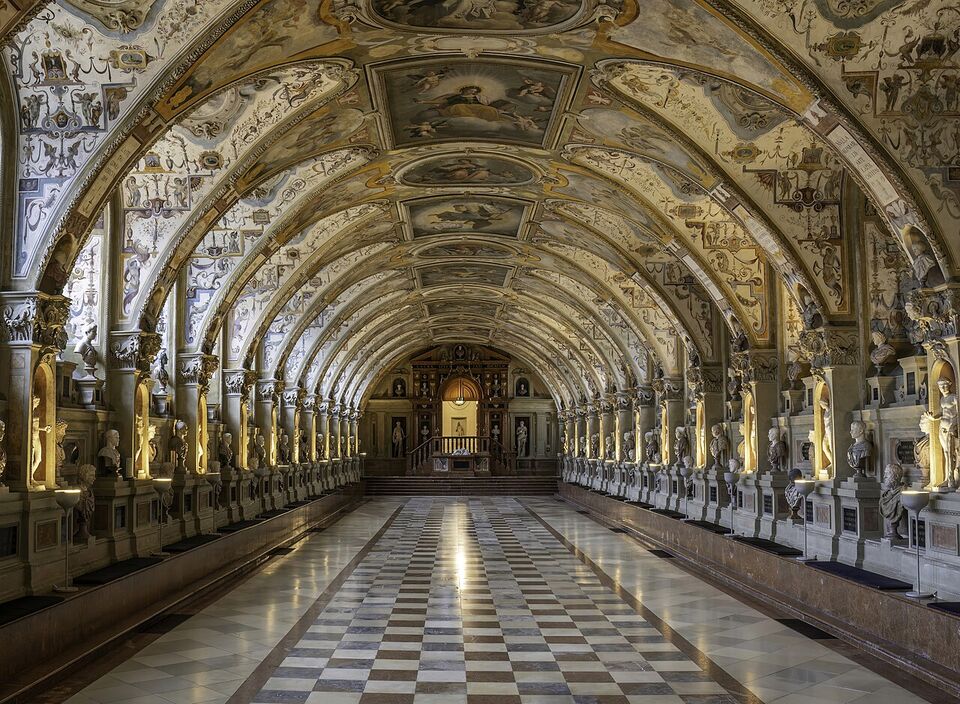
Children and teens under 18 are free, according to the Bavarian Palace Administration's 2026 price list. The reduced price applies to seniors 65 and over with ID. Hours change in winter, but the Residenz is usually open roughly 9 a.m. to 6 p.m. in summer and 10 a.m. to 5 p.m. in winter, with the last entry an hour before closing. Confirm on the palace site before you go. Allow 2 hours for the museum and 1 hour for the Treasury; if you can only do one, we suggest the Residenzmuseum. The adjoining Hofgarten (court garden) is free and a nice place to rest afterward.
Bavaria's palace sites also include Nymphenburg, covered next, and the Bavarian castles in the countryside, which you can compare in Castles and Palaces in Germany.
Nymphenburg Palace
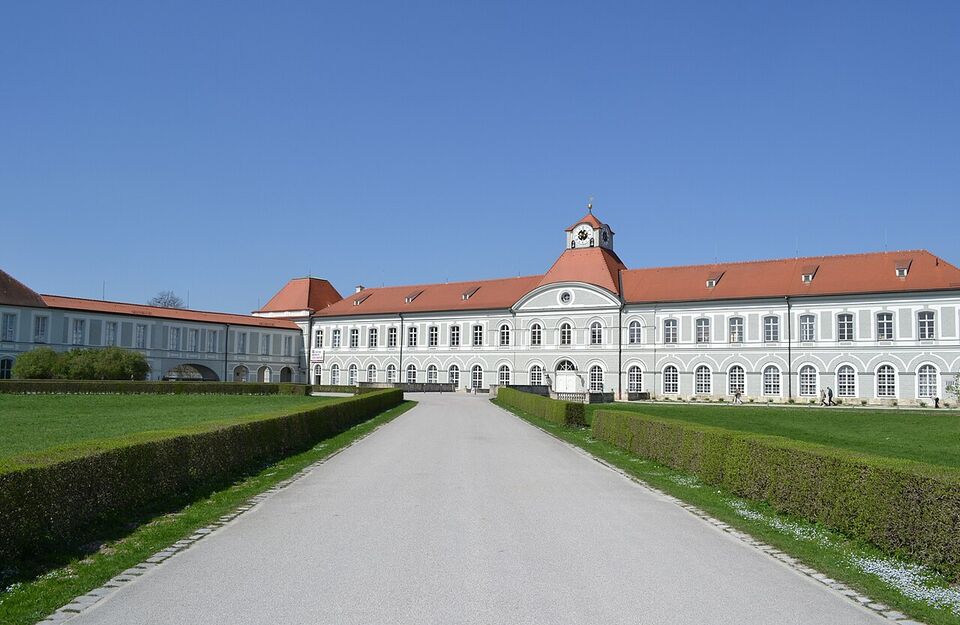
Schloss Nymphenburg was the summer residence of the Bavarian rulers. It sits in a large park about 20 minutes from the center by tram 17, and it is easy to combine with a walk in the park, which is free to enter. The palace has a grand hall, a gallery of beauties commissioned by King Ludwig I, and the Marstallmuseum, with royal carriages and sleighs. Inside the park are small pavilions (Amalienburg, Badenburg, Pagodenburg and Magdalenenklause).
| Ticket (2026) | Adult | Reduced |
|---|---|---|
| Palace | €10 (about $11) | €9 |
| Marstallmuseum | €8 (about $9) | €7 |
| Park pavilions (Parkburgen) | €6 (about $7) | €5 |
| Combined ticket, summer | €20 (about $22) | €18 |
| Combined ticket, winter | €16 (about $18) | €14 |
Allow 3 to 4 hours for the palace, the carriage museum and a walk in the park. In winter, the park pavilions are usually closed, which is why the winter combined ticket costs less. Confirm opening periods on the Bavarian Palace Administration site. Under-18s are free.
Museums: Deutsches Museum and the Pinakotheks
Deutsches Museum
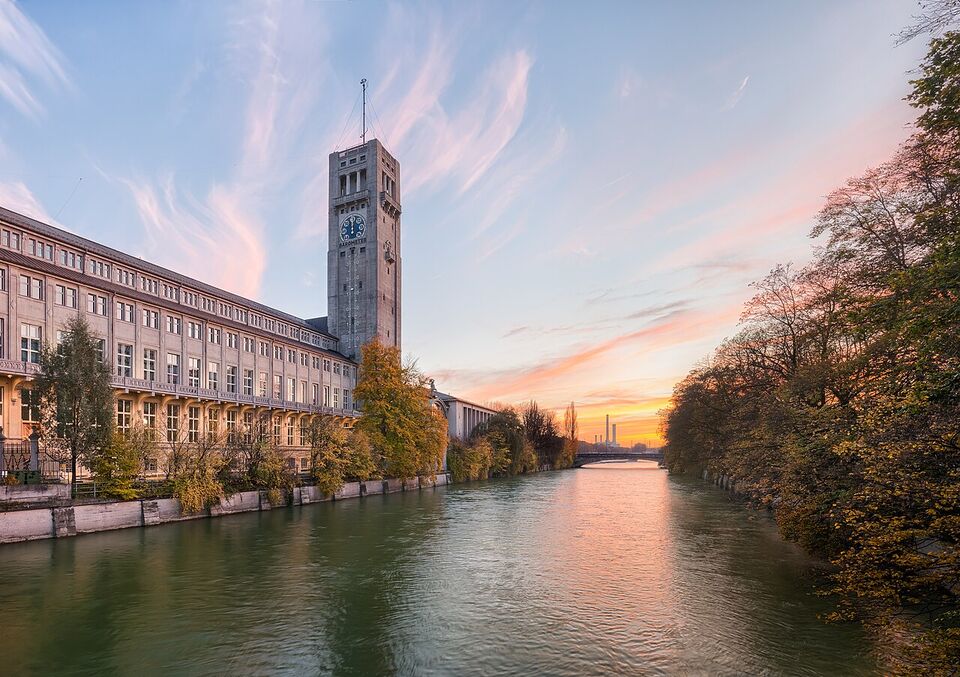
The Deutsches Museum on the Museumsinsel (an island in the Isar river) is one of the world's largest museums of science and technology, with aircraft, ships, mining tunnels, musical instruments and physics demonstrations. A day ticket is €18 (about $20); discounted is €11 (about $12), and a family ticket is €40 (about $45). Children under 6 are free. It is open daily 9 a.m. to 5 p.m., with the last admission at 4:30 p.m. Buy tickets online to skip the line.
The museum is in the middle of a long renovation program carried out in stages. The museum says that a further 25,000 square meters (about 270,000 sq ft) of exhibition space will open in the Collection Building in 2028. That means some sections may be closed or rearranged during your visit. We could not confirm which halls are open in November 2026, so check the museum's site or call the visitor service at +49 89 2179 333 before you plan the visit around a particular exhibit. Even so, there is more than a day's worth to see. Allow 3 to 4 hours and choose two or three areas.
The Pinakotheks and the Museum Brandhorst
The Kunstareal (art quarter) in Maxvorstadt has four major museums within a few minutes' walk of each other. The Alte Pinakothek holds European old masters, from Dürer to Rubens. The Pinakothek der Moderne covers 20th- and 21st-century art, design and architecture. The Museum Brandhorst, with works by Andy Warhol and Cy Twombly, is a short walk away.
The Neue Pinakothek, which covers the 19th century, is closed for a long renovation. Some of its highlights are shown at the Alte Pinakothek in an exhibition called "From Turner to van Gogh". The Pinakothek der Moderne has also announced an early closing at 1 p.m. on Saturday, November 21, 2026 for an event. We did not confirm current ticket prices, which have been in the range of about €7 to €10 per museum (about $8 to $11); most are closed on Mondays. The nearest stop is Theresienstraße on the U2, or the tram to Pinakotheken. Choose one or two museums rather than all three: the Alte Pinakothek is the best match for classic European painting.
English Garden and the Eisbach surfers
The Englischer Garten is one of the largest city parks in the world, bigger than New York's Central Park, and it runs from the center to the north of the city. It is free and always open. Highlights are the Chinese Tower (Chinesischer Turm), a wooden pagoda with one of Munich's best-known beer gardens, and the Monopteros, a small Greek-style temple on a hill with a view of the old town. Parts of the park are open to nude sunbathing (marked as FKK), which surprises many Americans: stay on the main paths, do not photograph people, and you will not have a problem.
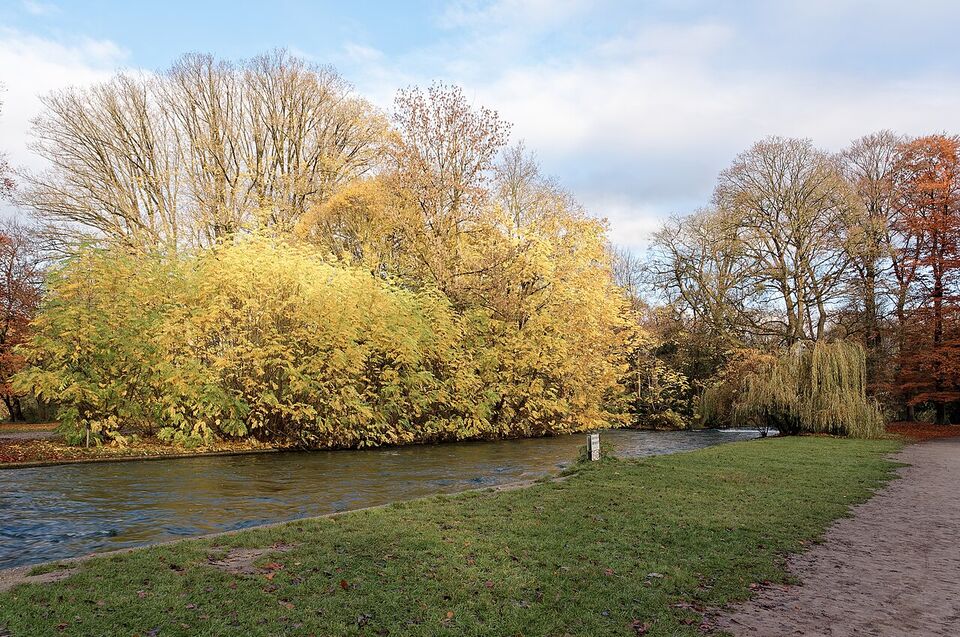
At the southern end of the park, near the Haus der Kunst, a standing wave on the Eisbach stream draws river surfers, and spectators watch from a nearby bridge. The wave has been closed or restricted at times since late 2025 for safety and maintenance reasons, and we could not confirm whether surfing is allowed now. Treat it as a bonus if it is running, and check local news before making a special trip. The water is cold and fast, and swimming in the Eisbach is not allowed.
Watch out
The Eisbach is a dangerous stream, and the wave is for experienced surfers only. Don't wade in and don't climb on the retaining walls.
BMW Welt and BMW Museum
BMW Welt is the company's delivery center and showroom, next to the Olympic Park. It is free, and open Monday to Saturday from 7:30 a.m. and Sundays and public holidays from 9 a.m., closing late in the evening. Staff are available in the showroom from 9 a.m. to 6 p.m. BMW Welt (and its parking garage) are closed December 24 to 26, 2026 and December 31, 2026 to January 1, 2027.
The BMW Museum, across the street, covers the company's history, from motorcycles to concept cars. Tickets cost €17 (about $19), reduced €9 (about $10), or €38 (about $43) for a family of up to two adults and three children. The ticket is valid for five hours. The museum is open Tuesday to Sunday from 10 a.m. to 6 p.m., with the last admission at 5:30 p.m. Take the U3 to Olympiazentrum; it is the best choice for car fans, and you can see the Welt and the Olympic Park in one trip.
Olympic Park
The Olympiapark was built for the 1972 Summer Games, and its tent-like roof is one of Munich's best-known modern landmarks. Walking in the park is free, and the small hill (Olympiaberg) gives a view of the city. Paid extras, such as the tower viewing platform, the roof walk and the swimming hall, have their own prices and hours, and some have been closed at times for renovation, so check the park's website for the current list.
Near the old Olympic Village, a memorial remembers the 11 Israeli athletes and a police officer killed in the 1972 attack. It is a quiet, serious place, and a short walk from the park.
Dachau memorial
The KZ-Gedenkstätte Dachau is the memorial site on the grounds of the first Nazi concentration camp, opened in 1933 about 12 miles (20 km) from Munich. Entry is free. It is open daily from 9 a.m. to 5 p.m. (the former crematorium area closes at 4:30 p.m.) and is closed December 24. Many visitors find it the most important thing they do in the Munich area, and it is the first-hand way to understand the history that other German cities show indirectly (see History Sites in Germany).
How to get there
Take the S2 (direction Dachau/Petershausen) from the Hauptbahnhof to Dachau station, about 25 minutes. Then take bus 726 toward Saubachsiedlung and get off at the stop "KZ-Gedenkstätte". A single or day ticket for zone M-1 covers the whole trip, and you can buy it at the machine. By car, the memorial's lot is at Alte Römerstraße 73; it costs €3 (about $3) for a car and does not take cards. It is often full in summer.
Tours and what to expect
- Time: allow 3 to 4 hours, plus about 1 hour each way for travel.
- Tours: English-language tours run daily at 11 a.m. and 1 p.m. We could not find the tour price; check the site and book ahead in high season. A guide adds a lot of context.
- Audio guide: available at the memorial; we could not confirm the current price, so check the site.
- Children: the memorial advises that it is not suitable for young children, so check its guidance for your child's age before bringing them.
- Behavior: this is a cemetery and a memorial. Speak quietly, don't eat inside, don't take smiling photos or selfies, and dress modestly.
Plan something gentle for the rest of the day, and don't schedule a beer hall right after unless you are comfortable with the contrast. The camp was liberated in April 1945, and the memorial opened in 1965.
Different from home
German memorials of this kind treat the history directly and without euphemism, and visitors are expected to approach it seriously. Staff may ask you to put away a phone or stop a photo. This is normal, and it is better to ask than to assume.
Prices at a glance
| Sight | Adult price | US$ | Time needed | Notes |
|---|---|---|---|---|
| Marienplatz, Glockenspiel | Free | - | 30 minutes | 11 a.m., noon, and 5 p.m. in summer |
| Frauenkirche | Free (tower: a few euros) | - | 30 minutes | Tower price not confirmed |
| St. Peter's tower | A few euros (not confirmed) | - | 45 minutes | About 300 steps |
| Viktualienmarkt | Free | - | 1 hour | Closed Sundays |
| Residenzmuseum | €10 | About $11 | 2 hours | Combined with Treasury €15 (about $17) |
| Nymphenburg Palace | €10 | About $11 | 3 to 4 hours | Combined summer €20 (about $22), winter €16 (about $18) |
| Deutsches Museum | €18 | About $20 | 3 to 4 hours | Some sections closed for renovation |
| Pinakotheks | About €7 to €10 (not confirmed) | About $8 to $11 | 2 hours each | Neue Pinakothek closed; most closed Mondays |
| English Garden | Free | - | 1 to 3 hours | Eisbach wave status unconfirmed |
| BMW Welt / Museum | Free / €17 | -/ About $19 | 1 hour / 2 hours | Museum closed Mondays |
| Olympic Park | Free to walk | - | 1 to 2 hours | Paid extras vary |
| Dachau memorial | Free | - | 3 to 4 hours | Audio guides available |
Save money
A single day ticket for the city transit zone costs €10.10 (about $11) in 2026, so it pays off from the third ride, and the group day ticket (€32.60, about $37) covers up to five adults. Several Bavarian palace sites also give free entry to everyone under 18. Check the combined tickets before buying the single ones, because they are cheaper if you see two or more parts of the same site.
A three-day plan
- Day 1
Old town and a beer hall
Start at Marienplatz for the 11 a.m. Glockenspiel. Visit the Frauenkirche, then climb St. Peter's tower for the view. Have lunch at Viktualienmarkt. In the afternoon, tour the Residenz (the Residenzmuseum and the Treasury). End with dinner at a beer hall such as the Hofbräuhaus, which serves until 10 p.m.
- Day 2
Art, park and the Isar
Spend the morning at the Alte Pinakothek or the Pinakothek der Moderne in Maxvorstadt. Take the U-Bahn to the English Garden for a walk, a look at the Eisbach if it is open, and a late lunch at the Chinese Tower beer garden in good weather (otherwise, a cafe in Schwabing). In the evening, explore the Gärtnerplatz area for dinner.
- Day 3
Choose: palace, cars or Dachau
Pick one. For royalty, take tram 17 to Nymphenburg for 3 to 4 hours. For cars and the 1972 Games, take the U3 to the BMW Welt and Museum, then walk through the Olympic Park. For history, spend the morning and early afternoon at Dachau, then return to the city for a quiet evening. If you prefer science, replace this day with the Deutsches Museum.
For a longer stay, a day trip to Neuschwanstein or the Alps is the usual fourth day: see The Bavarian Alps. If you are comparing the two big cities, Berlin vs Munich helps you choose.
Add it to a route in the trip builder, or ask us to plan the hotels, trains and guides for you.