Overview
Cologne (Köln) is worth two days: the cathedral is the main reason to come, and the old town, the Rhine promenade, the beer halls and a couple of museums fill the rest. The city is also an easy hub for trips to Düsseldorf, Aachen and the Rhine, and it sits on the main ICE line from Frankfurt and the Ruhr.
Two things have changed recently. Cologne Cathedral stopped being free for sightseeing on July 1, 2026, and the Roman-Germanic Museum's main building is closed for renovation. We cover both below, along with carnival 2027, the Christmas markets and the beer customs that surprise first-time visitors.
Cologne is a working city, rebuilt after heavy wartime damage, not a postcard town. The stretch around the cathedral, the station and the Rhine bridge is the part you want, and most of it is within a ten-minute walk. If you are building a longer route, our destinations guide shows how Cologne fits with the Rhine Gorge to the south and Frankfurt to the east.
Cologne Cathedral
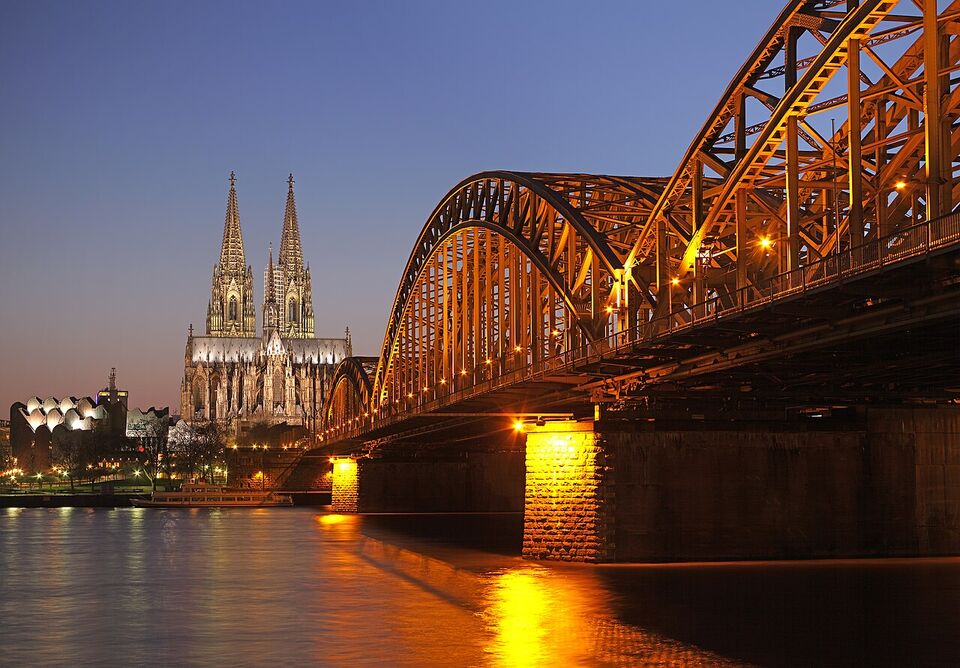
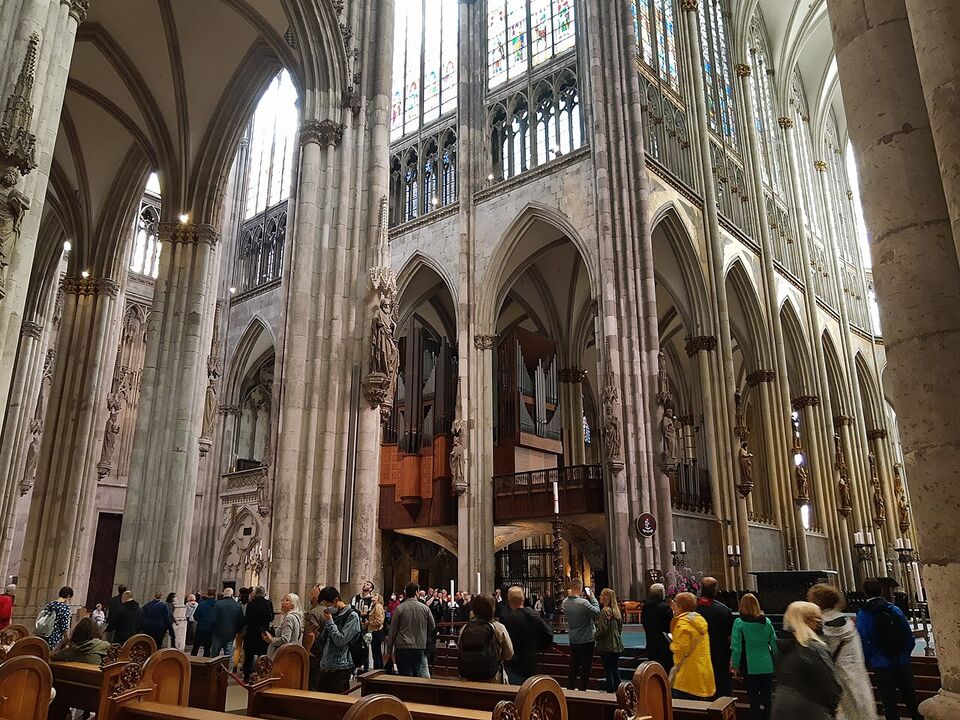
The Gothic cathedral (Kölner Dom) is a UNESCO World Heritage Site and one of the tallest churches in the world, with spires 515 ft (157 m) high. Building began in 1248 and finished in 1880. It is the first thing you see when you leave the main station, and the interior is dim, tall and full of stained glass, including a modern window by Gerhard Richter.
Tickets and prices (from July 1, 2026)
| Ticket | Adult | Reduced | Notes |
|---|---|---|---|
| Cathedral entry | €12 (about $13) | €6 (about $7) | Students and trainees 14+, KölnPass holders |
| Tower (533 steps) | €8 (about $9) | €4 (about $4.50) | No elevator |
| Treasury | €8 (about $9) | €4 (about $4.50) | Church vessels and relics |
| Tower and treasury combined | €12 (about $13) | €6 (about $7) |
Children 13 and under are free, as are visitors with a severe disability and their companion, members of the cathedral building association, and people attending services. A small prayer area reached through the north transept, close to the station, stays free to enter from 6 a.m. to 8 p.m. outside service times. Buy tickets online at koelner-dom.de/tickets or at the central ticket office at Roncalliplatz 2, open daily from 9 a.m. to 5:30 p.m.
Hours and when you cannot enter
Sightseeing visits (with a ticket) run Monday to Saturday from 10 a.m. to 5:45 p.m. (last entry 5:30 p.m.), and on Sundays and church holidays from 1:30 to 4:30 p.m. (last entry 4:15 p.m.). Masses are held in the morning and evening on weekdays, and on Sundays at 7, 8:30, 10 a.m., noon and 6:30 p.m.; during services the main nave is closed to sightseers. On Sunday mornings only worshippers are admitted, so plan a sightseeing visit for the afternoon.
The tower is open 9 a.m. to 4 p.m. from November to February and 9 a.m. to 6 p.m. from March to October (last entry 30 minutes before closing). It is closed on days including November 11, December 24, 25 and 31, and January 1. The climb is about 328 ft (100 m) up, and children under 12 must be accompanied. The treasury is open daily from 10 a.m. to 6 p.m. Check koelner-dom.de before you go, because hours change for holidays and events.
Different from home
German cathedrals are active churches. Cologne's now charges tourists but not worshippers, and the line between the two is enforced at the door. Dress respectfully, keep voices low and do not take photos during a service.
The Old Town and the Rhine
Most of Cologne's old town (Altstadt) was rebuilt after World War II, so do not expect a medieval maze. Expect a compact area of pedestrian streets between the cathedral and the river, with squares like Alter Markt and Heumarkt, the Romanesque church Groß St. Martin, and dozens of brewery taverns.
- Rhine promenade: A walkway along the old town's river edge, good for an evening stroll or a coffee in warm weather.
- Hohenzollern Bridge: A railway bridge with a footpath alongside the trains. Its fences carry a thick layer of "love locks", with a number commonly estimated in the hundreds of thousands, attached by couples. The walk across to the Deutz side gives the best view of the cathedral and old town skyline, especially at sunset.
- The Belgian Quarter: West of the ring road, with small cafes, shops and bars; useful if you want a break from the tourist center.
A boat trip is also an option: KD runs sightseeing cruises from Cologne's landing stages (see our river cruises guide), and a short city cruise gives a different angle on the skyline.
Kölsch and Beer Hall Etiquette
Kölsch is a pale, top-fermented beer brewed only in Cologne and its immediate area. It is served in a tall, narrow 0.2 l glass called a Stange (literally "pole"), so the beer stays cold and fresh. A glass is small by American standards, and refills come quickly.
- The Köbes: The waiter in a long blue apron is called a Köbes. He carries a round tray (Kranz) with full glasses and places a fresh one in front of you whenever your glass is empty, without being asked.
- The coaster: Every glass he delivers earns a pencil stroke on your coaster. To stop the flow, place the coaster flat on top of the glass. When you ask to pay, he counts the strokes.
- Sharing tables: In a traditional Brauhaus, strangers share long tables. Say "Ist hier frei?" (is this seat free) before sitting.
- Food: Brewery taverns serve hearty dishes. Try Himmel un Äd (blood sausage with apple purée and mashed potato, literally "heaven and earth") or Halve Hahn, a rye roll with a slice of aged Gouda, despite the name meaning "half chicken". Reibekuchen (potato pancakes) are the standard snack.
- Paying: Some Brauhaus prefer cash, so carry some, and a tip of 5 to 10% or rounding up is normal. Our money guide explains tipping and card use.
Prices vary, but a Stange in a traditional Brauhaus is usually in the low euros; check the board for the price of 0.2 l. For other German beer styles and wine regions, see our beer and wine guide, and for what to eat in general, our German food guide.
Insider tip
If you want only two or three beers, tell the Köbes "Das war's" (that's all) and put the coaster on your glass early. If you do not, the next glass arrives before you have finished the conversation.
Museums
Museum Ludwig
The Museum Ludwig stands opposite the main station, and its collection of Pop Art and 20th-century art is the main reason to go. Tickets cover the collection and all special exhibitions for the day. Check the museum's site for current hours and prices.
Chocolate Museum
The Schokoladenmuseum is open daily, 10 a.m. to 6 p.m. Tickets cost €17.50 (about $20) for adults on weekdays and €19 (about $21) on weekends and holidays, with children (up to 18) at €10 (about $11) or €11.50 (about $13) respectively. A family ticket is €35 (about $39) on weekdays, €38 (about $43) on weekends. It is closed on Mondays in November (the museum names November 9 and 16, 2026) and on Mondays from January to the end of March, so check the date.
Roman-Germanic Museum
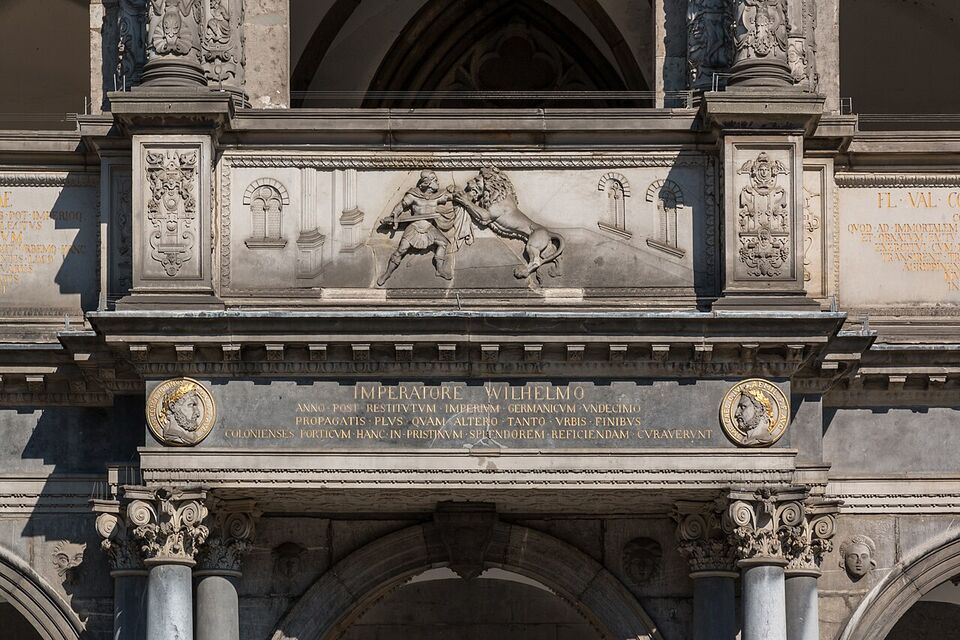
The museum on Roncalliplatz, beside the cathedral, is closed for renovation, with no reopening date stated. A selection of exhibits is shown at the Belgian House, Cäcilienstraße 46, near Neumarkt; the Ubier Monument (a Roman-era wall) is open on the first Thursday of each month, 2 to 5 p.m. It will also be closed on November 11, 2026, for the opening of the carnival season.
Hours and prices can change at short notice, so check each museum's page on the day. Many Cologne museums close on Mondays, but the Chocolate Museum is open on most Mondays outside November and January to March.
Carnival 2027
Carnival (Karneval or Fastelovend) is Cologne's biggest event, and 2027 is a good year to plan for. The "fifth season" officially opens every year on November 11 at 11:11 a.m. (a Wednesday in 2026), but the main days are:
| Day | Date in 2027 | What happens |
|---|---|---|
| Weiberfastnacht (Women's Carnival) | Thursday, February 4 | Street carnival begins in the old town; people wear costumes |
| Rosenmontag | Monday, February 8 | The big parade through the city |
| Aschermittwoch (Ash Wednesday) | Wednesday, February 10 | Carnival ends |
The days between are busy: Cologne's own greeting is "Alaaf", not the "Helau" of Düsseldorf and Mainz. The old town and the Zülpicher Straße student area get especially packed on Thursday evening, and costumes are the norm, from simple hats to full outfits. Trains to Cologne fill, and many shops and offices close around Rosenmontag even though it is not a legal holiday.
Watch out
Hotel prices can rise sharply during carnival week and rooms sell out months ahead. Book early, avoid arriving on Thursday afternoon by car, and expect to share space with large crowds. Keep your phone and wallet in a zipped inside pocket; pickpockets work in crowds like these. See our safety guide.
For other festivals across the country, including Mainz, Düsseldorf and the wine festivals, see our festivals guide. January is when carnival season builds; our January guide covers winter in the Rhineland.
Christmas Markets
Cologne has more than a dozen Christmas markets scattered across the center, each with its own character. The 2026 dates, from the city portal koeln.de, are:
| Market | 2026-27 dates |
|---|---|
| Cathedral market (Roncalliplatz) | November 16 to December 23 |
| Neumarkt | November 16 to December 23 |
| Nikolausdorf, Rudolfplatz | November 16 to December 23 |
| Altstadt market | November 23 to January 10, 2027 |
| Harbor market (Chocolate Museum) | November 13 to January 3, 2027 |
The listing does not give opening hours, so check each market's own page. The cathedral, Neumarkt and Rudolfplatz markets end on December 23, so for Christmas Eve only the Altstadt and harbor markets run past the holiday dates. Most mulled wine (Glühwein) comes in a mug with a deposit (Pfand) of a few euros, refunded when you return it. Our Christmas markets guide compares Cologne with Nuremberg, Dresden and Munich and explains how to string markets together by train.
Cologne is wetter and milder than Berlin or Munich. In the 1991-2020 normals, November averages a high of 50°F (10°C) and a low of 38°F (3.5°C), and December 44°F (6.5°C) and 34°F (1°C), with rain on 17 to 19 days a month, so bring a waterproof jacket and warm layers.
Side Trips: Düsseldorf and Aachen
Düsseldorf
Düsseldorf is about 25 to 40 minutes from Cologne by regional express or S-Bahn, depending on the train. Its old town is known for Altbier, a dark, top-fermented beer served in brewery taverns, and for the Königsallee ("the Kö"), a tree-lined boulevard of luxury shops with a canal down the middle. Add the Rhine promenade, the Medienhafen harbor with its modern architecture, and you have a comfortable day trip. Düsseldorf and Cologne have a long-running rivalry over which beer is better, which is fun to bring up at a bar.
Aachen
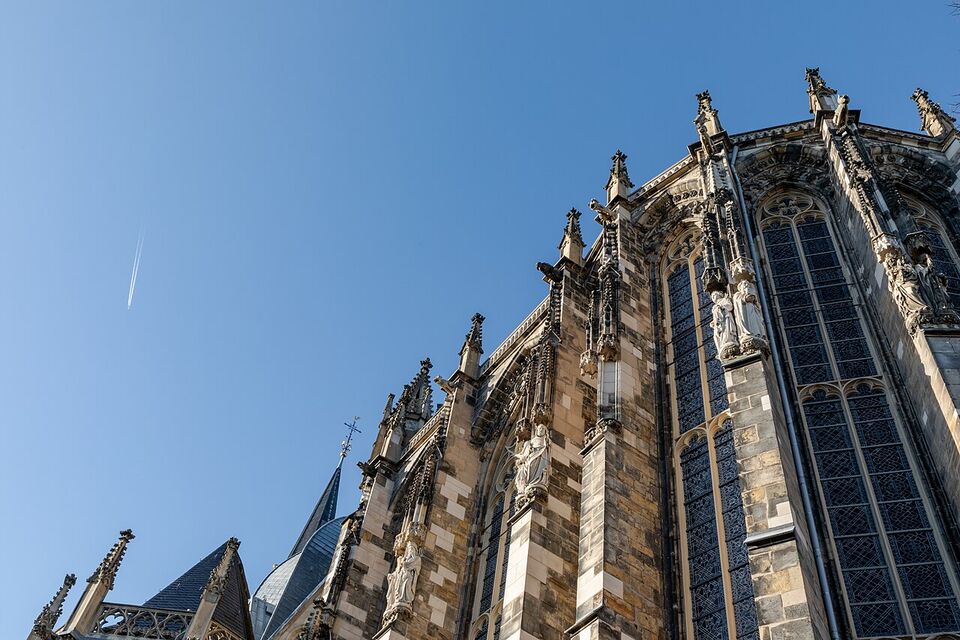
Aachen is about an hour west of Cologne by regional express, near the Belgian and Dutch borders. Its cathedral was the first German site to be listed as a UNESCO World Heritage Site (1978) and holds Charlemagne's throne and shrine; opening hours depend on services, so check before you go. Printen, a spiced gingerbread-style cookie, is the local specialty. Aachen's Christmas market runs November 20 to December 23, 2026, daily from 11 a.m. to 9 p.m. (with Sunday, November 22 from 6 p.m., and Saturday, December 12 until 10 p.m.).
Both trips are easy with regional trains; see our train tickets guide for how a Deutschlandticket works, and our Rhine and Moselle guide for the next step south by boat and train.
Getting There, Around and Where to Stay
Getting there
The main station (Hauptbahnhof) sits next to the cathedral. ICE trains reach Cologne from Frankfurt Airport in about an hour, and from the Ruhr and the Netherlands. Because the Hannover-Berlin line is closed until December 2027, trains from Cologne to Berlin take about 5.5 hours, around 80 minutes longer than normal. Check bahn.de for the current route. Our getting around guide explains fares and delays, and our Frankfurt guide covers the airport.
Cologne also has its own airport, Cologne Bonn, with an S-Bahn link to the city, but most American visitors fly into Frankfurt and take the train. The station area is busy at all hours: keep bags closed and in front of you, as at other large stations (see our safety guide). Left-luggage lockers at the station let you drop a bag before an afternoon train, which is handy because hotel check-in is usually after 3 p.m.
Getting around
The center is walkable. Trams and the U-Bahn (KVB) cover longer distances, and the Deutschlandticket works on local and regional trains. Check the KVB app for a day ticket before you buy several single tickets.
Where to stay
For a first visit, stay near the cathedral and old town, or in the Belgian Quarter if you prefer a quieter, more local feel. The Deutz side across the river is less atmospheric but has the trade-fair grounds and often cheaper rooms outside fair weeks. Cologne charges a Kulturförderabgabe (culture levy) of 5% of the room price, including for business stays since July 1, 2024. Rooms in the center are mostly in the $$ range (about $120 to $300 a night), with budget options in the $ tier a short tram ride out. Trade fairs, carnival and the Christmas markets raise prices, so see our where to stay guide for booking tips.
Save money
Skip the tower on a gray day, since the climb only pays off in clear weather. The combined tower and treasury ticket is €12 (about $13) and saves €4 over buying both separately.
A Two-Day Plan
- Day 1
Cathedral, old town and the Rhine
Start at the cathedral when it opens, then walk the old town to the river. Cross the Hohenzollern Bridge on foot for the skyline, and finish with Kölsch and a hearty dinner in a Brauhaus.
- Day 2
A museum and a side trip
Choose the Museum Ludwig or the Chocolate Museum in the morning, then take a train to Düsseldorf or Aachen. In December, return in time for the Altstadt or harbor market.
Our when to go guide compares the seasons, and Cologne works in any season, with carnival and the Christmas markets as the busiest times.
Add it to a route in the trip builder, or ask us to plan the hotels, trains and guides for you.