
Overview: what to know before you shop
Shopping in Germany works differently from shopping at home in three ways. Stores close on Sundays, prices on the tag already include 19% sales tax (VAT), and if you live outside the EU you can claim most of that tax back on bigger purchases. The rest is planning: what is worth buying here, how to carry it, and what US Customs will let through.
This page covers opening hours, the things Americans most often bring home, the VAT refund step by step, whether to ship or carry, and the customs rules on your return. Prices are in euros first, with dollars at €1 = US$1.12. Verified November 2026.
Different from home
The price on a German tag is the price you pay. There is no sales tax added at the register. That tax (Mehrwertsteuer, or MwSt) is 19% on most goods and 7% on food, books and medicines, and it is already inside the number you see.
Opening hours and Sunday closings
Each of Germany's 16 states sets its own shop-closing rules, so hours vary a little by region. The pattern for tourists is simple: shops are open Monday to Saturday and closed on Sundays and public holidays. Department stores and shops in city centers often open at 10 a.m. and close at 8 p.m. Supermarkets usually open earlier and may stay open until 10 p.m. or later in states that allow long hours, such as North Rhine-Westphalia and Baden-Württemberg. In Bavaria and Saarland, stores generally close by 8 p.m.
| Type of shop | Typical hours | Notes |
|---|---|---|
| Department stores and boutiques | Mon-Sat, about 10 a.m. to 8 p.m. | Small independent shops may close earlier or at midday on Saturday |
| Supermarkets and drugstores (Drogerie) | Mon-Sat, about 7 or 8 a.m. to 8 p.m. or later | Closing time is set by state law; check the door sign |
| Shops in main train stations and airports | Often seven days, including Sundays | Limited range, higher prices; allowed under conditions in most states |
| Gas stations | Long hours, including Sundays | Snacks, drinks and basics at a markup |
| Bakeries (Bäckerei) | Early morning to afternoon | Many sell for a few hours on Sunday morning; the rules differ by state and town, so check the sign |
Every state also allows a small number of special Sunday or holiday openings (verkaufsoffene Sonntage) a year, at least three, and Berlin allows more. Cities announce the dates, which often fall around festivals and the Christmas season. Plan to buy anything you need for Sunday on Saturday.
Holiday closures to plan around
The nationwide holidays on which shops close are listed on the when to go page. Two matter most for shoppers. On Thursday, December 24, 2026, many shops close by early afternoon (around 2 p.m., but hours vary, so check the door sign), then stay closed on Friday, December 25, Saturday, December 26 and Sunday, December 27. That is three days in a row. January 1, 2027 is also closed nationwide. On December 31 the closing time depends on the state, from early afternoon to the late evening.
Watch out
If your last full day in Germany is a Sunday or holiday, you cannot shop for souvenirs that day outside a train station or airport. Do the souvenir run on Saturday, and keep the receipts together for your VAT refund.
Cash and cards in shops
Larger stores and chains take foreign Visa and Mastercard. Small shops, market stalls and some bakeries may take only cash or the German debit card (Girocard), which is not the same as a US debit card. Carry some euros, and see money in Germany for ATMs, fees and tipping. If a card reader asks whether to charge in dollars or euros, choose euros.
What to buy in Germany
Buy things that Germany does well or that are noticeably cheaper than at home, and skip items you can find at a US mall at the same price. Prices of imported brands in the US have moved a lot with tariffs and exchange rates, so we describe what to look for rather than promise savings. Compare a price you care about on a US site before you leave.
Kitchen knives
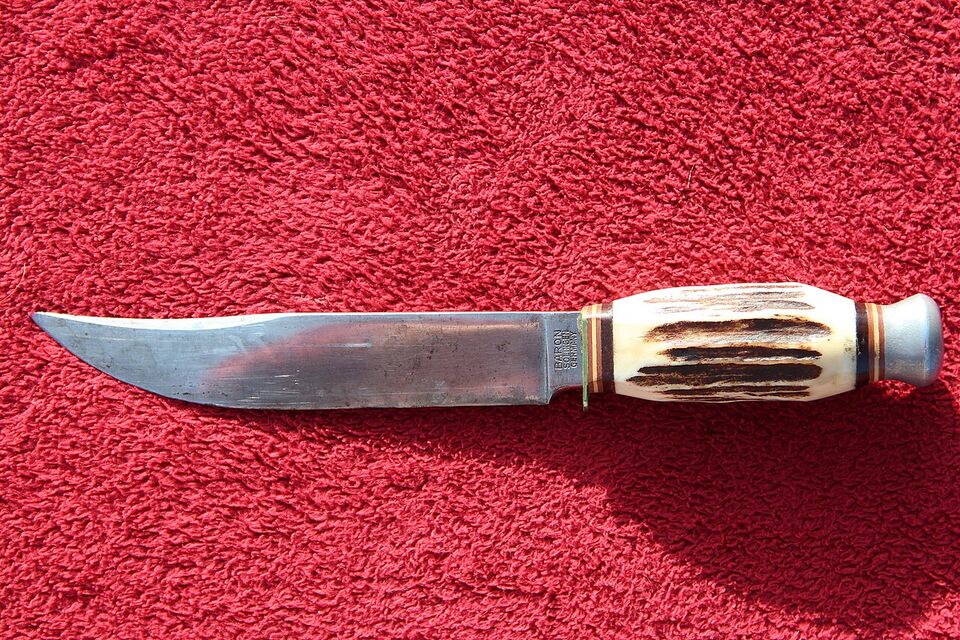
Solingen in North Rhine-Westphalia has made blades for centuries, and Zwilling (J.A. Henckels) is the best-known name; its stores stock sets and single knives. WMF, based in southern Germany, is strong in cookware, cutlery and kitchen tools. Knives must go in checked luggage on the flight home, not in your carry-on.
Christmas ornaments
Glass ornaments from Thuringia, wooden nutcrackers, smokers and pyramids from the Ore Mountains, and straw stars are the classic buys. Rothenburg ob der Tauber has a large year-round Christmas store, and the Christmas markets sell the same kinds of items from late November. Wrap glass in clothes in the middle of your suitcase.
Cuckoo clocks
A real Black Forest clock is mechanical, with a hand-carved case, and costs far more than the battery-powered souvenirs sold everywhere. Triberg and the villages around it are the home of the craft (see Heidelberg and the Black Forest). Ask the shop to remove the weights and pendulum, pack them separately, and ship insured if the clock is large.
Beer steins
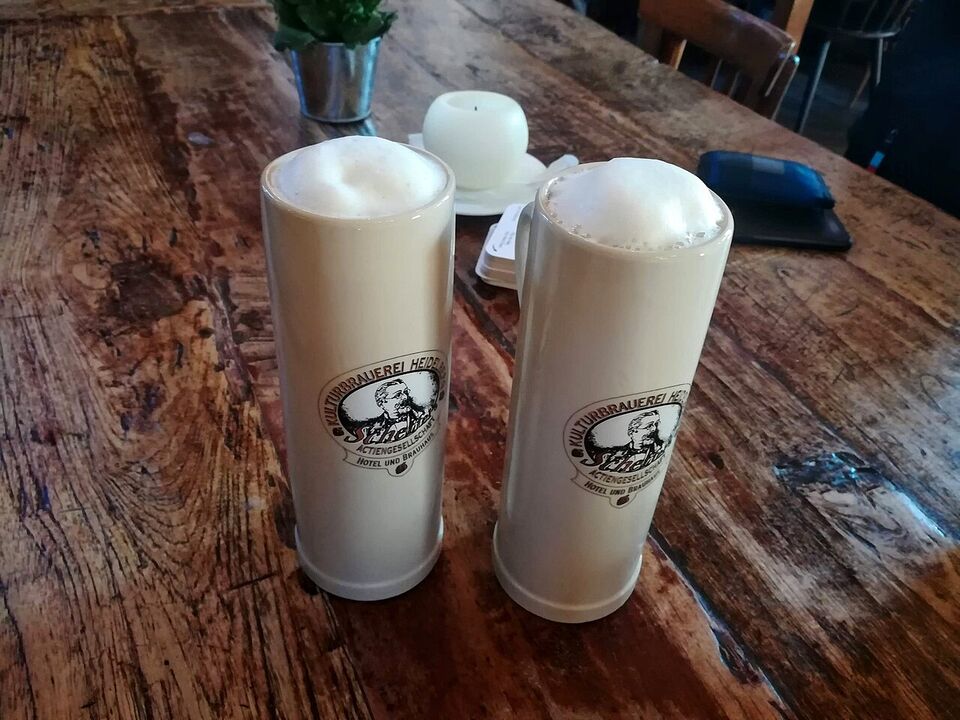
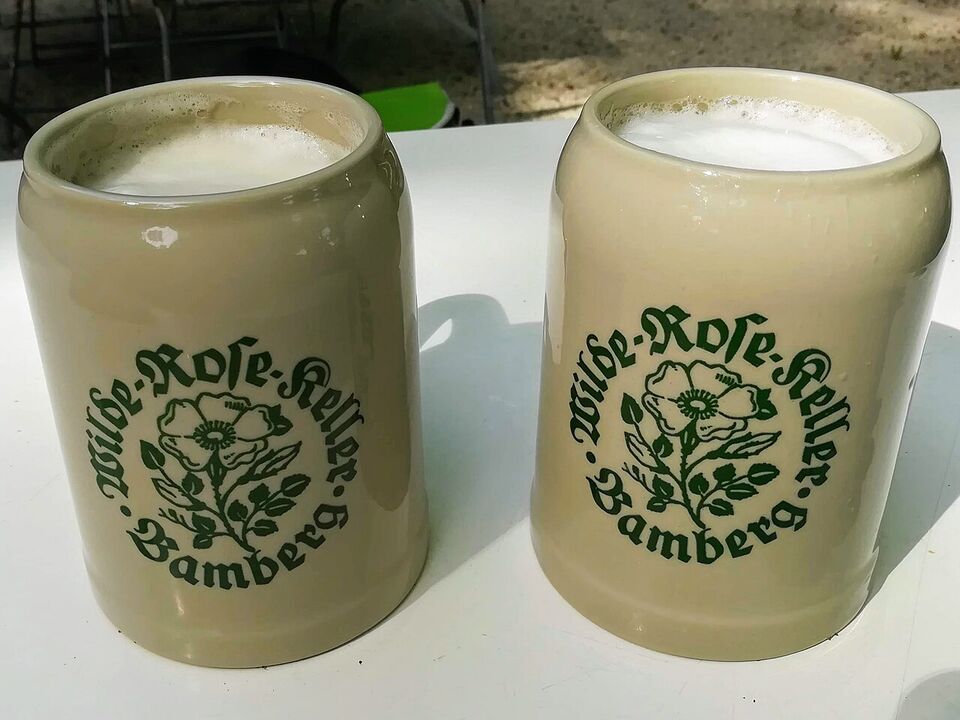
A ceramic stein with a pewter lid is a standard souvenir. Buy from a shop, not from a beer hall: the one-liter Maßkrug glasses at Oktoberfest and in beer gardens are the venue's property, and taking one is theft. For the drinks themselves, see beer and wine in Germany.
Porcelain
Meissen (near Dresden) is the oldest European hard-paste porcelain maker and sells at premium prices, with the factory visit covered on the Dresden and Saxony page. KPM in Berlin and brands like Rosenthal and Villeroy & Boch sell a wider price range. Factory outlets sometimes sell seconds at a discount.
Haribo and Ritter Sport
Haribo gummy bears are made in Germany, and some varieties (such as the licorice mixes) differ from US recipes. Ritter Sport, the square chocolate bar, comes in more flavors than most US shelves carry, and the company runs a shop and museum near Stuttgart. Candy and chocolate without meat or milk fillings come home without restriction.
Pharmacy and drugstore cosmetics
German drugstore chains (dm and Rossmann) carry house brands of skin care, shampoo and baby products at modest prices. Pharmacies (Apotheke) sell European dermatology brands and herbal remedies behind the counter. Read labels before using a new product, and see health and medical care for how pharmacies work.
Birkenstock and Steiff
Birkenstock is a German brand, and local stores carry the full range, including styles not always stocked in the US. Steiff, the stuffed-animal maker in Giengen an der Brenz, sells bears with the trademark button in the ear through its own stores and toy shops. Check shoe sizes with the converters and try shoes on.
Insider tip
Take a short list of your own US prices for the three or four things you might buy (a knife set, a pair of sandals, a clock). On the spot you can then work out whether the price after VAT refund is actually lower than at home, instead of guessing.
The VAT refund, step by step
You can claim back the German VAT on goods you carry out of the EU if you live outside the EU. Nationality does not matter, so a US citizen living in the US qualifies. You do not qualify if you hold a German residence permit valid for more than three months. Services such as hotels, restaurants and train tickets are excluded, and so is anything you ship rather than carry.
How the numbers work
The minimum is a single receipt of over €50 including VAT (in practice, €50.01 or more at one shop). A €300 knife set (about $336) contains about €47.90 of VAT. You will not get all of it back: the shop or the refund company deducts a processing fee, so the refund is a fraction of that VAT. The amount is shown on the tax-free form. Customs does not pay the refund; a service company or the shop does.
The German customs service has said the €50 minimum is expected to go away once automated export confirmation is available, but we found no date. For now, the minimum applies.
- Bring your passport. Shops that take part in tax-free shopping will ask for it to confirm that you live outside the EU. Look for a tax-free sticker in the window or ask at the register before you pay.
- Pay full price, including VAT. Ask the cashier for the export form (Ausfuhr- und Abnehmerbescheinigung) or a tax-free form, and check that your name, address and the amount are filled in. Keep the original receipt with it.
- Keep the goods unused and packed in your luggage. Customs may ask to see them. Do not wear or open the item before the stamp.
- Get the customs stamp. If you check the goods in your suitcase, go to the customs (Zoll) desk or stamp point at the airport of your first departure from the EU before you check in. If the goods go in your carry-on, the stamp is done at your last EU airport. If you connect through another EU country, that rule decides where. Ask the airline or the refund company which airport applies on your ticket.
- Collect the refund. After the stamp, take the form to the refund counter of the company named on it (the big ones are Global Blue and Planet), or drop it in the pre-paid envelope. You can often choose cash (limits apply) or a credit to your card.
The goods must leave the EU by the end of the third month after the month of purchase. A purchase on November 10 is good until the end of February. Claim the refund within the time stated on your form, which for some companies is up to three years.
Save money
Put it all on one receipt. The €50 minimum is per receipt and per shop, so two €30 items at the same store should be paid together. Ask for the form for every receipt, even smaller ones, and do the stamping once for all of them.
Watch out
Give yourself at least 90 minutes extra at the airport the first time. Lines at the customs stamp point can be long, and the stamp must come before you check a bag that contains the goods. Digital validation (a self-service kiosk) exists at some airports, but we could not confirm which, so do not count on it.
Refund options
| Goods are in | Get the stamp | Notes |
|---|---|---|
| Checked bag | At the first EU departure airport, before check-in | Take the goods out of the case for inspection and repack after the stamp |
| Carry-on bag | At the last EU airport you leave from | Liquids and sharp objects still follow security rules |
| Shipped home | Not eligible | VAT refund covers only goods carried in personal baggage |
Shipping purchases home
Shipping makes sense for large or fragile items such as a big clock, a set of heavy cookware, or a box of Christmas decorations that will not fit in your bags. It does not make sense for small items, because the cost is higher than a checked bag fee and the paperwork is more complicated.
How shipping works
DHL is the main option, since it runs Germany's post and also an express service. Ask the shop whether it ships to the US itself; some do, and they often handle insurance. Shipped goods do not qualify for the VAT refund, so ask whether the shop can deduct German VAT at the register for export deliveries (some do, since goods shipped outside the EU by the seller are zero-rated). Package size, weight and the carrier's service level set the cost, and overseas shipping often costs more than the product itself for small items.
De minimis and duties in 2026
The US used to let packages valued at $800 or less come in without duty or tax. That exemption, called de minimis, is no longer a safe assumption. In June 2026, US Customs and Border Protection published a rule that indefinitely suspends the exemption for goods arriving by international mail, with the main provisions in effect from July 24, 2026. Low-value postal packages are now handled through a new postal entry process, and duties are due. We understand that commercial courier shipments lost the exemption earlier. Rules and tariff rates on German and EU goods have changed several times, so check CBP's site before you ship anything valuable.
In practice, expect the carrier to bill you for duty and a handling fee when the package arrives, or to ask you to pay before it ships. Get the total in writing first. Never ship food, alcohol or anything on the restricted lists below by post.
Different from home
The $800 allowance you use when carrying goods in your luggage is a separate rule from the postal exemption that has ended. Goods in your bags still qualify for the traveler's allowance, which is the main reason carrying beats shipping.
US Customs: what you can bring back
US Customs and Border Protection (CBP) lets returning residents bring home goods acquired abroad for personal use or gifts, up to $800 per person, without duty. Family members traveling together can pool their allowances. Items above the allowance are taxed at a duty rate set by the item, and CBP may apply a flat lower rate to a first slice above $800; check the current rate on the CBP site. Declare everything on your customs form, whether it is dutiable or not.
| Item | Duty-free allowance | Notes |
|---|---|---|
| General goods | $800 per person | For personal use or gifts; counted at what you paid |
| Alcohol | 1 liter per person (age 21+) | More is allowed but taxed, and state limits apply |
| Cigarettes | 1 carton (200) | Limits on other tobacco apply; check CBP |
| Meat and meat products | Generally not allowed | Includes sausage; ham; most dried or canned meats |
| Bakery items and certain cheeses | Generally allowed | Commercially packaged items are the safest; declare them and check the APHIS travelers' tips |
| Fresh fruit, vegetables, plants, soil | Restricted or banned | Declare, or leave at home |
The food rule trips up many travelers. German sausages, salami and cured ham are popular gifts, but meat products from most countries are not allowed into the US because of animal-disease rules. Chocolate, cookies, gingerbread (Lebkuchen), mustard and packaged pasta are fine. CBP says bakery items and certain cheeses are allowed, but not every cheese is, so check the APHIS travelers' tips page first. When unsure, declare the item and ask the officer. A declared item that is refused costs you the item; an undeclared one can cost a fine.
Watch out
Leaving Germany, you are also subject to German and EU rules. Carrying €10,000 or more in cash out of the EU needs a written declaration. See entry requirements for the arrival rules and cash limits.
Packing for the trip home
- Keep every receipt, and put the tax-free forms in a folder that is easy to reach.
- Put knives, scissors and similar items in checked bags only.
- Wrap glass and porcelain in clothes and place it away from the suitcase walls.
- Check your airline's checked-bag weight limit before you buy something heavy. See flights to Germany for airports and airlines.
- Leave room: a spare duffel bag or a foldable suitcase is cheaper than shipping.
A simple plan for a shopping day
- Morning
Make a list and compare
Look up US prices for your top items. Visit one or two stores to compare brands, and ask whether the shop offers tax-free shopping.
- Midday
Buy, with the tax-free form
Bring your passport. Pay by card in euros. Ask for the form and check it.
- Last day
Customs stamp at the airport
Arrive with extra time, goods accessible in your bag, and receipts in hand. After the stamp, check the bag and claim the refund.
For where to stay and how to move between cities with shopping bags, see getting around Germany.
Add it to a route in the trip builder, or ask us to plan the hotels, trains and guides for you.