Can you drive in Germany? The short answer
Yes. A valid US driver's license lets you drive in Germany as a visitor, and rental cars are easy to get. The country has excellent roads, a free Autobahn network and clear signs. But the rules differ from home in ways that matter: passing only on the left, a lower alcohol limit, strict enforcement of speed cameras, and rules about emission stickers and winter tires.
A car is a good choice for villages, the Alps, the Black Forest and scenic routes, and a poor one for big cities, where parking is expensive and trains are faster. Many visitors combine both: trains between cities and a rental car for a few days in a region. For the broader picture, see getting around Germany and train tickets. For other practical planning, start with planning your trip.
Your US license and the International Driving Permit
A valid US license may be used by visitors to drive or rent a car in Germany. People who move to Germany can use it for six months after arriving, and the State Department also says a valid US license is good for up to six months without a German license. Longer stays need a German license or an extension through the local licensing office with an official German translation.
An International Driving Permit (IDP) is a booklet that translates your license into several languages. We could not find a German rule requiring it for US visitors, and the State Department's driving notes do not mention it. But some rental companies ask for one, police may find it easier to read, and it costs about $20 from AAA in the US. If you rent in an unfamiliar country, carrying both is the safest approach. Get it before you leave, since it must be issued in your home country.
You must be at least 18 to drive a car in Germany, and rental companies typically require 21 or older, with a young-driver surcharge under 25, though the exact ages and fees vary by company, so check at booking.
Keep these in the car: your license, your passport (border checks happen, see below), the rental contract and insurance papers. Germany requires a warning vest, a warning triangle and a first-aid kit in every car. Rental cars come equipped, but check that they are in the trunk.
Renting a car
Automatic vs manual
Most German cars have manual transmissions, and rental fleets reflect that. An automatic usually costs more and sells out first, especially in summer and at Christmas-market time. Book an automatic early and confirm it in writing. If you cannot drive a manual comfortably, do not accept one on the lot because the automatic is gone; hills, roundabouts and stop-and-go traffic are hard enough in a new country.
Where to pick up and what to check
Airport and train-station counters are convenient but often cost more. A downtown or edge-of-city office can be cheaper, and picking up where you start your drive avoids city traffic. Before you leave the lot:
- Photograph every scratch and dent, and make sure the staff mark them on the form.
- Check that the car has a warning triangle, vest and first-aid kit, and the green emissions sticker on the windshield.
- In winter, ask whether the tires carry the Alpine symbol (see below).
- Ask which fuel it takes and note it. Check the fuel flap label.
Cross-border driving
Driving into Austria, Switzerland, France or the Czech Republic is common, but many companies charge a cross-border fee and some restrict certain countries or car classes. Tell the company at booking. You may also need to buy a vignette (see Austria below). Germany has had temporary border checks since September 2024, so carry your passport and expect random checks.
Diesel, E10 and E5
Gas stations offer Super E10 (up to 10% ethanol, the standard), Super E5 (up to 5%, a bit pricier), Super Plus and diesel. Most modern cars run on E10. Putting the wrong fuel in a rental is an expensive mistake, so confirm what your car needs and read the pump label before you fill.
The ADAC auto club reported October 2026 averages of €2.114 per liter for Super E10 (about $2.37 per liter, or roughly $9 per US gallon) and €2.261 per liter for diesel, about $2.53 per liter or $9.60 per gallon. Both are very high compared with 2025, and they were lower than September because a fuel-tax discount took effect on October 1 and runs to the end of 2026. When it ends, prices may rise. Autobahn service stations typically charge more than stations in town.
Different from home
Fuel is sold by the liter, not the gallon. A US gallon is about 3.8 liters. So a 40-liter fill-up at €2.114 per liter is about €85 (about $95).
The Autobahn: rules and etiquette
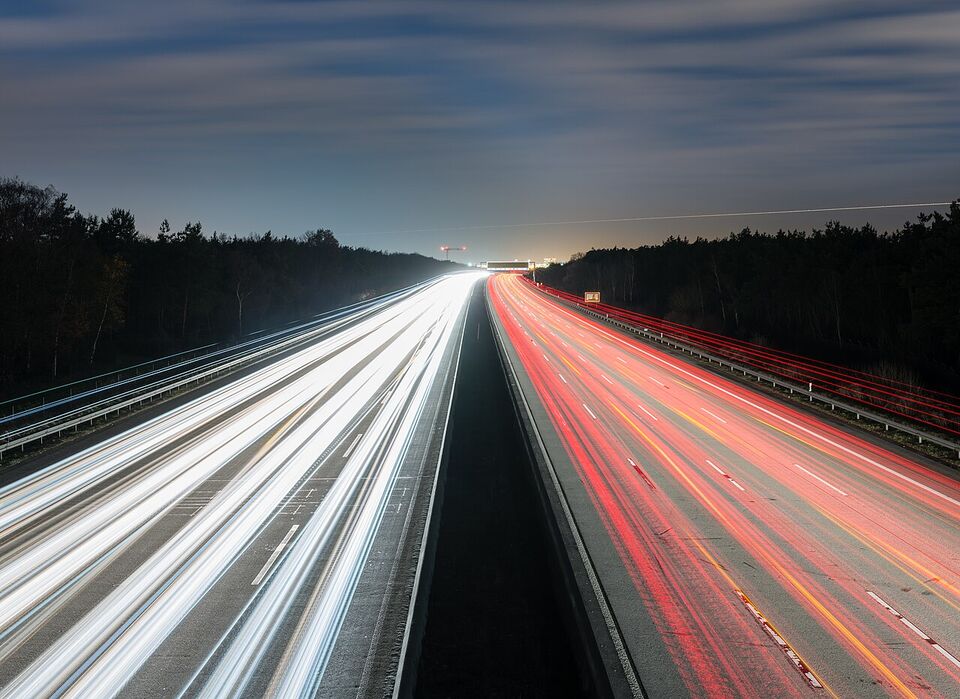
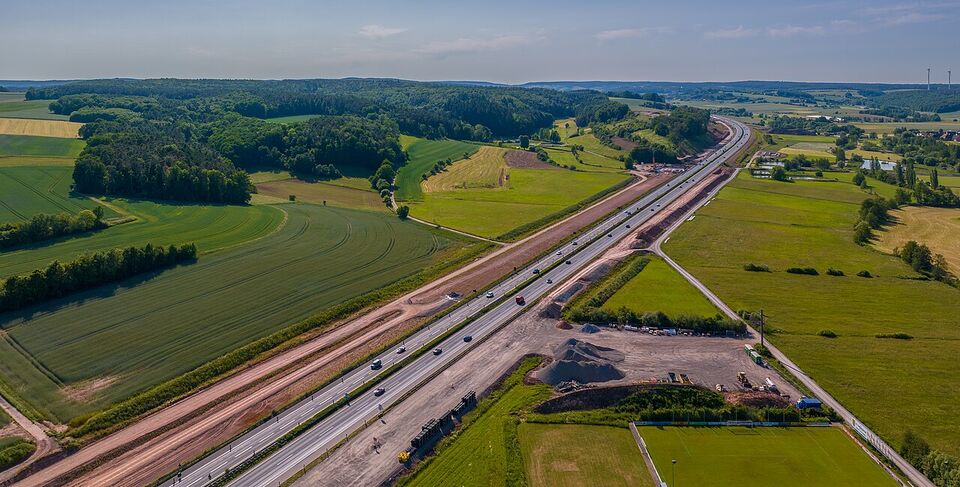
The Autobahn is a network of divided highways. Passenger cars pay no toll, and some sections have no speed limit. But the system works only because of discipline.
- Keep right. The left lane is for passing only. After you pass, move back right. Staying in the left lane while others approach is a ticketable offense and a common cause of anger.
- Never pass on the right. Overtaking on the right is illegal and dangerous, even on a slow-moving multi-lane road. (There is a narrow exception for slow, dense traffic, where a right lane may move faster than the left.)
- Check your mirror before pulling out. A car in the left lane may approach at 200 km/h (124 mph) or more. Look back twice before changing lanes, and signal early.
- Do not tailgate. The rule of thumb is half the speedometer value in meters (at 100 km/h, keep 50 m). Tailgating is penalized hard.
- Merging: on entry ramps, speed up to match traffic, and let others merge in turn. The zipper method (Reißverschlussverfahren) is expected when lanes end.
- No stopping on the Autobahn, including on the shoulder, except in an emergency. Running out of fuel is considered avoidable and can be fined. Use rest areas (Raststätte or Rastplatz).
The Rettungsgasse
When traffic slows or stops on a road with two or more lanes in a direction, you must form a Rettungsgasse (rescue corridor) for ambulances, fire trucks and police: the left lane moves to the far left, all other lanes move to the right, leaving a lane open in the middle. Do it as soon as traffic slows, before you hear sirens. Failing to do it brings a heavy fine and points.
Signs and speed
Autobahn signs are blue. A blue square sign with a number is a recommended speed, and a white circle with a red border and number is a legal limit. A round white sign with gray diagonal stripes ends all restrictions, and on a stretch with no sign, the 130 km/h (81 mph) advised speed applies as a recommendation. Electronic signs over the lanes can set variable limits for traffic, weather or construction.
Germany has no general speed limit on the Autobahn and expressways, only an advisory speed of 130 km/h (81 mph), and signs override it. Other limits:
| Road | Limit |
|---|---|
| Built-up areas (towns and cities) | 50 km/h (31 mph), often 30 km/h (19 mph) on residential streets |
| Outside built-up areas | 100 km/h (62 mph) |
| Autobahn and expressways | Advisory 130 km/h (81 mph); signs apply |
| With a trailer | 80 km/h (50 mph) outside towns, including the Autobahn (100 km/h with an exemption plaque) |
Insider tip
You do not need to drive fast. The right lane at 110 to 120 km/h (68 to 75 mph) is comfortable, uses less fuel and is where most visitors should stay. Reserve the left lane for short passes.
Other rules that catch visitors out
- Right before left. At unmarked intersections in residential areas, traffic from the right has priority. A yellow diamond sign means you are on a priority road; a yellow diamond with a black line through it ends that.
- Phones: using a handheld phone while driving is illegal.
- Red-yellow before green: traffic lights show red and yellow together just before green. No right turn on red unless a green arrow sign allows it.
- Trams and cyclists: trams have priority. Cyclists in bike lanes have priority, and drivers who turn must check for them.
- Seat belts are mandatory for everyone. Children under 12 and shorter than 1.50 m (4 ft 11 in) need a child seat.
- Accidents: stay at the scene and call the police (110) even for minor ones, as the State Department notes. Put on the vest, set the triangle and call 112 for injuries.
Cameras, tickets and fines
Speed and red-light cameras (Blitzer) are common in towns, in tunnels and at roadworks. Mobile units appear without notice. In Germany a speeding fine goes to the registered owner, so the rental company will receive the notice and forward your details, usually with an admin fee, weeks or months after you return. Treat it as real.
Fines scale with speed over the limit. As a rough guide, driving up to 10 km/h over in town is about €30 (about $34), and about €115 (about $129) plus a point at 21 to 25 km/h over, with bans for large overruns. These figures come from the standard fine catalog and may differ now, so we give them only as a range. Fines for mobile phone use, tailgating and blocking the Rettungsgasse are higher. Winter-tire violations carry a fine from €60 (about $67) plus costs and a point (€80, about $90, if you block traffic).
Low-emission zones (Umweltzonen)
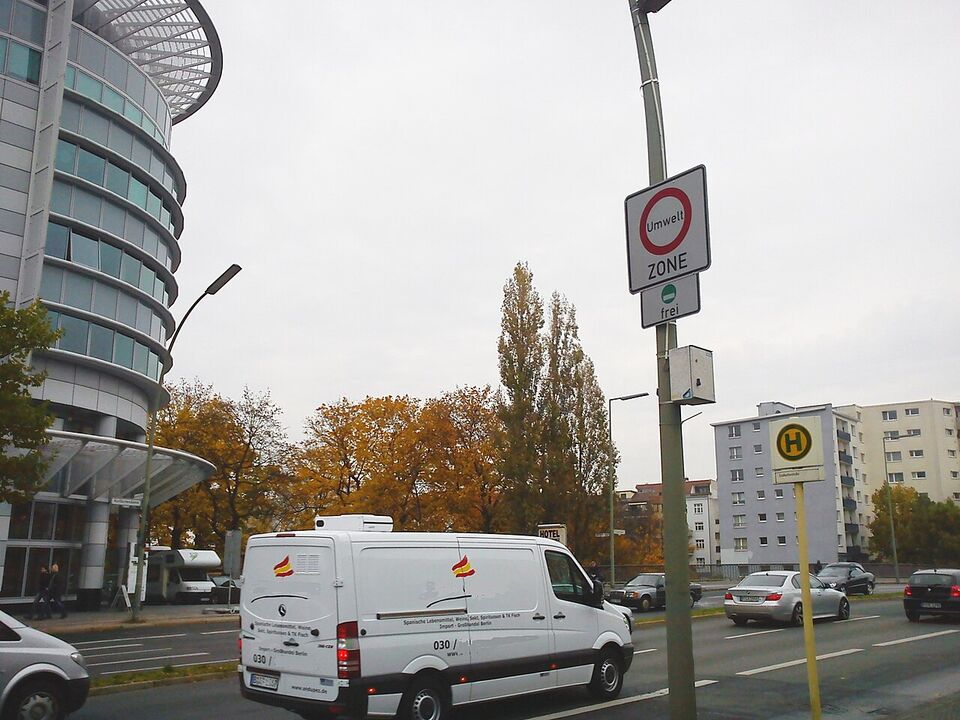
Many German cities restrict older, dirtier vehicles with an Umweltzone. To enter you need a green sticker (Umweltplakette, class 4) on the windshield. The sticker is valid nationwide and has no expiry date. The federal environment agency lists about 37 zones, including Berlin, Munich, Stuttgart, Cologne, Frankfurt, Düsseldorf and Nuremberg; some cities have recently lifted theirs, so a list changes. Check the city before you drive in.
Rental cars normally already have the sticker, but check the windshield, since driving into a zone without one risks a fine of €80 (about $90, federal agency) or €100 (about $112, one other source). The sticker costs about €5 to €12 (about $6 to $13) at TÜV or DEKRA stations, garages and some gas stations. Foreign cars need it too.
Parking: discs, meters and garages
Parking in cities is expensive and scarce, and old centers have pedestrian zones. Hotels in big cities often charge a daily fee for parking (check in advance), and public garages (Parkhaus) charge by the hour. For a day in a city, park outside and use transit or a park-and-ride lot.
Parkscheinautomat
On many streets you pay at a Parkscheinautomat (pay-and-display machine). Enter your license plate or just pay for time, take the ticket and put it face up on the dashboard. Many cities also let you pay in a parking app. Check the signs for the paid hours; on many streets, parking is free in the evening and on Sundays, but not everywhere.
The Parkscheibe
In some zones, parking is free for a short time with a Parkscheibe (parking disc): a blue cardboard clock you place behind the windshield. Set it to the next half-hour mark after you arrive (arrive at 10:12 and you set 10:30). The sign shows the maximum stay, such as 2 hours. Rental cars often have a disc in the glove box. Overstaying earns a fine.
Also note: residents-only parking signs, tow-away areas, and rules against parking on sidewalks and bike paths are enforced by officers who ticket quickly.
Winter driving
Germany has a situational winter-tire rule: tires suitable for winter are required whenever there is snow, slush, ice or frost. Since October 1, 2024, only tires with the Alpine symbol (a three-peaked mountain with a snowflake) count. Tires marked only M+S (mud and snow) are no longer accepted. The fine is from €60 (about $67) plus costs and a point, and €80 (about $90) if you block traffic. Studded tires are banned; snow chains are allowed and sometimes required on mountain roads.
Rental cars in winter normally carry compliant tires, but confirm when you book if you plan a trip to the Alps, Black Forest or Harz. Chains are rarely supplied; ask. For Christmas-market trips, parking is limited, so trains are often easier (see Christmas markets).
Alcohol and cannabis
The general legal limit is 0.05% blood alcohol (0.5 per mille), lower than the 0.08% limit in most US states. For drivers under 21 and anyone in the first two years of a license it is 0.0. Lower levels can still lead to charges if you drive badly or cause an accident. A beer or a glass of wine can put you near the limit, so the safest approach is not to drive after drinking, and at a Biergarten, to share a ride. For cannabis, the legal THC limit is 3.5 ng/ml (1.0 for under 21 or new drivers), and alcohol is banned entirely after cannabis use. See safety for more.
Driving into Austria: the vignette
To drive on Austrian motorways you need a vignette, a prepaid toll permit. ASFINAG's 2026 rates for a car (valid as of December 1, 2025) are €9.60 (about $11) for one day (digital only), €12.80 (about $14) for 10 days, €32.00 (about $36) for 2 months and €106.80 (about $120) for a year. ASFINAG says 2026 is the last year for the traditional sticker; from 2027 only the digital vignette, tied to your license plate, is sold. We did not find 2027 prices, so check the current rates on ASFINAG's site and buy only from official sellers or the official app or website. Ask your rental company whether the car already has a valid one. Fines for driving without one are high. Germany itself has no toll for passenger cars.
Scenic routes
Romantic Road
A string of walled towns and castles through Franconia and Bavaria. It works best over two to four days with stops, see the Romantic Road guide.
German Alpine Road
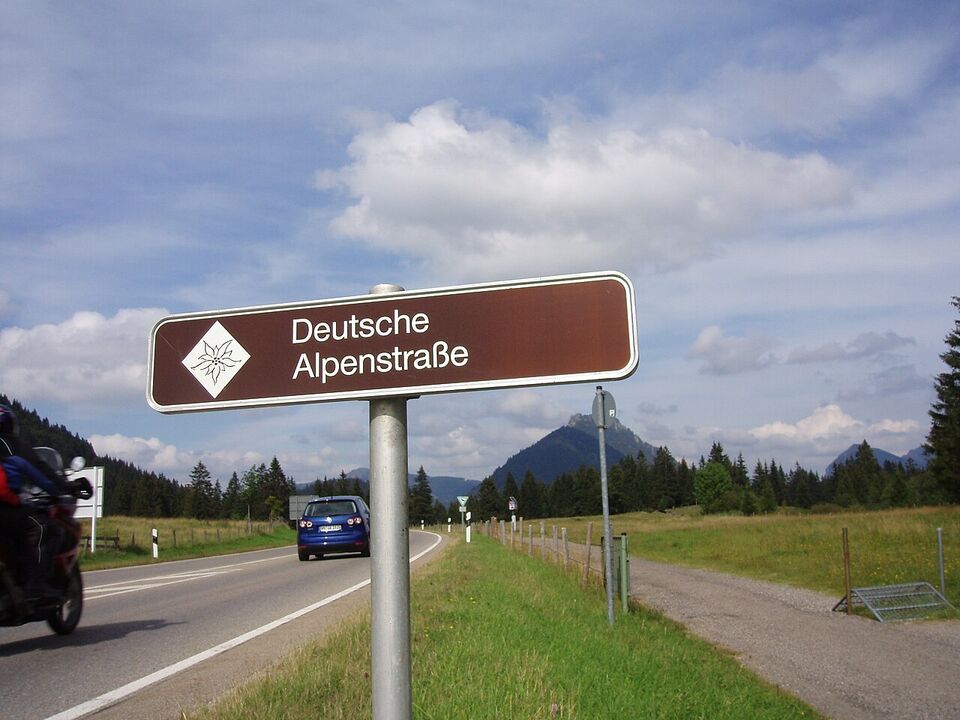
Follows the northern edge of the Alps through lakes and peaks. It is slow, scenic and best in summer. See Bavarian Alps and Lake Constance.
Black Forest High Road
A ridge road with views and forest trails. Snow can close or slow it in winter. See Heidelberg and the Black Forest.
Moselle and Rhine valleys
Vineyards, castles and river villages. Trains and boats also work well here, so see Rhine and Moselle before you commit to a car.
Distances are approximate and come from standard route descriptions; check the exact route with a map app.
Watch out
Do not rely only on a phone with a US data plan. Download offline maps, carry a charger, and know your rental company's breakdown number. Ask your rental company for its breakdown number before you drive off. In an emergency dial 112.
Add it to a route in the trip builder, or ask us to plan the hotels, trains and guides for you.