Overview: how to visit Germany's 20th-century history
Germany keeps its 20th-century history in plain view. The sites are well run, many are free, and most are easy to reach from big cities: Dachau from Munich, Sachsenhausen from Berlin, the Rally Grounds in Nuremberg, and the Berlin Wall in the center of the capital. The main decision is not which sites to see but how many. These places are heavy, and most people can handle one memorial a day.
This guide covers the Cold War and the Wall first, then the Nazi era, then the Allied and American military story that many US visitors want to follow. It also explains how to visit respectfully, what the German laws on Nazi symbols mean for tourists, and how to approach tours and travel with teenagers. For city-by-city detail, use our guides to Berlin sights, Munich sights, Nuremberg and central Germany, and see Germany by interest for other themes.
Watch out
The Kehlsteinhaus ("Eagle's Nest") above Berchtesgaden was severely damaged by fire on the night of October 23-24, 2026. It is closed, rebuilding has been announced, and there is no reopening date; and the surrounding area, including hiking routes, was closed at last report. Do not book a trip around it. The Documentation Center on the Obersalzberg is a separate site and is open. See The Bavarian Alps for the area.
The Cold War and the Wall
Berlin was divided from 1961 until 1989 by the Wall, and the city is the best place to understand it. Much of the Wall is gone, but a few places keep it in memory and in place.
Berlin Wall Memorial
The central memorial, with a preserved stretch of the border strip, a watchtower, a documentation center and a viewing platform. The outdoor exhibition is open daily from 8 a.m. to 10 p.m., and the visitor and documentation centers are open Tuesday to Sunday, 10 a.m. to 6 p.m. (closed Mondays, and on December 24, 25 and 31, 2026).
East Side Gallery
A long stretch of the Wall covered in murals, which you walk along the riverbank at any time. It is better in the morning, before the crowds, and it is best treated as street art rather than as a history lesson.
Allied Museum
The story of the Western Allies in Berlin, with an outdoor display that includes the last guardhouse from Checkpoint Charlie and a British "raisin bomber" from the Airlift. Open Tuesday to Sunday, 10 a.m. to 6 p.m., free; closed December 24, 25, 31 and January 1. Take the U3 to Oskar-Helene-Heim.
Stasi Prison, Hohenschönhausen
The former Stasi remand prison, where tours are led by former political prisoners and historians. The two permanent exhibitions are free, and the guided tours are ticketed separately through the memorial's site. Open daily 10 a.m. to 6 p.m.; closed December 24-26, 31 and January 1. English tour times vary, so check them before you go.
Stasi Museum
The former headquarters of the East German secret police, with the offices of Erich Mielke as the centerpiece. Check hours and prices on the museum's site.
DDR Museum
An interactive museum about everyday life in East Germany, with reduced tickets at €8.50 (about $10). Open daily 9 a.m. to 9 p.m. (4 p.m. on December 24 and 31). It works well with teenagers.
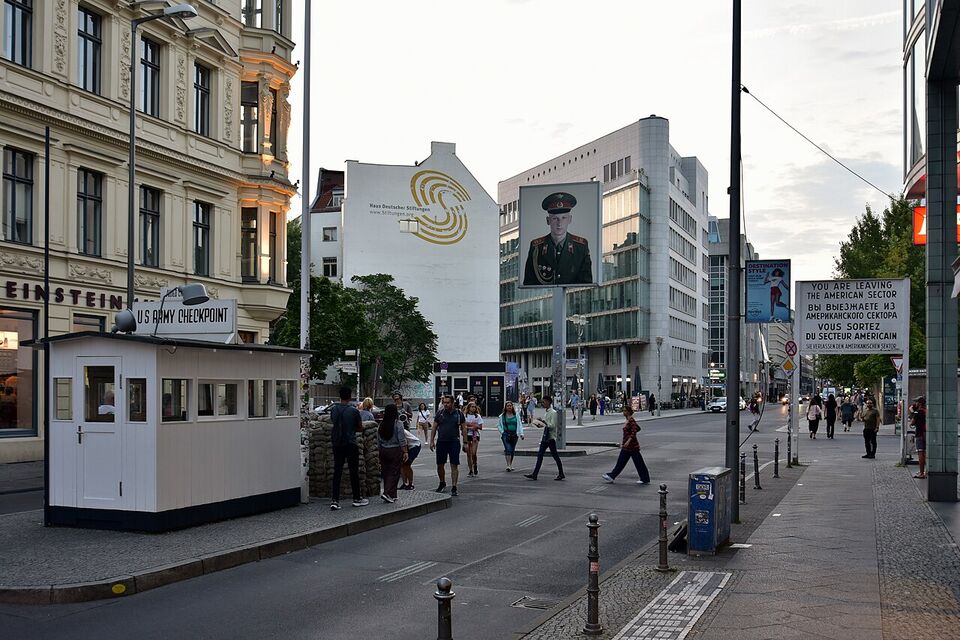
Checkpoint Charlie, the former crossing for Allied personnel and foreigners, is today a street corner with replica guard booth and a privately run museum. It is worth a quick look but is not the best place to learn the history. The Wall Memorial and the Allied Museum cover it more thoroughly, and both are free.
On the old border
Outside Berlin, three places show what the border looked like in the countryside, and each needs a car or a long train ride.
- Point Alpha sits on the former border between Hesse and Thuringia near Rasdorf and Geisa. It was a US Army observation post, and the memorial links the American camp on the Hessian side with the "House on the Border" in Thuringia. Guided tours must be booked in advance; the memorial's listed tour prices start at €45 (about $50), likely per tour, and a family day ticket is €22 (about $25), with €6 (about $7) for students and others. Confirm adult prices and winter hours on pointalpha.com.
- Marienborn is the former East German inspection point on the Berlin-Hannover Autobahn (A2), now a memorial. You can only explore it on foot, and it is reached from the rest-stop exit. Check admission and hours before you go.
- Mödlareuth, on the Thuringia-Bavaria line, was known as "Little Berlin" because a wall ran through the village. The German-German Museum charges €6 (about $7) for adults, €4 (about $4) reduced, and €15 (about $17) for a family. In winter (November to February) it is open Tuesday to Sunday 9 a.m. to 5 p.m., and Mondays 9 a.m. to 4 p.m.
Leipzig and Dresden also belong to this story. The 1989 demonstrations began with Monday peace prayers at Leipzig's Nikolaikirche, and the Forum of Contemporary History there is free. See Dresden and Saxony.
The Nazi era: Berlin
Berlin's sites cover how the regime worked and how the genocide was planned, and several are free and central.
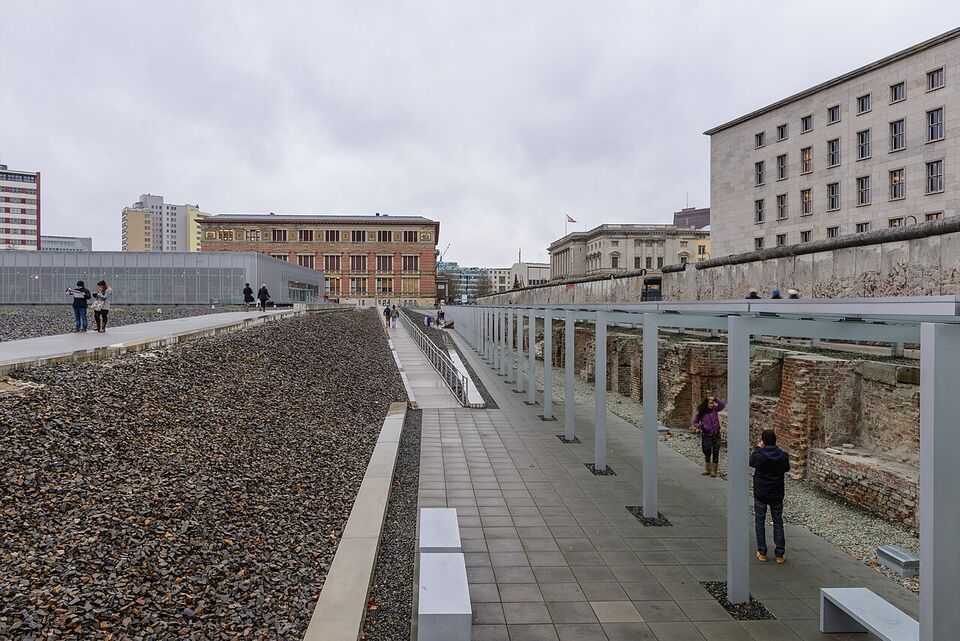
- Topography of Terror: an exhibition on the site of the former Gestapo and SS headquarters, with a long outdoor section along an excavated cellar wall. It is free, and open daily 10 a.m. to 8 p.m. (the outdoor area is open until dusk, at most 8 p.m.). Allow 1.5 to 2 hours.
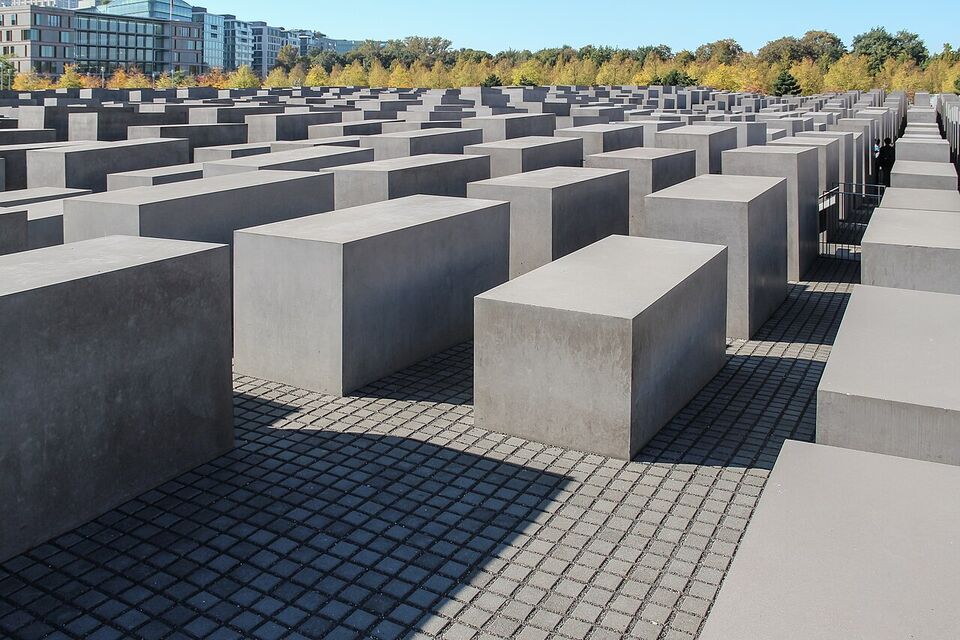
- Memorial to the Murdered Jews of Europe: a field of 2,711 concrete pillars near the Brandenburg Gate that you can walk through at any hour. The underground Information Center is open Tuesday to Sunday, 10 a.m. to 6 p.m., with last entry 45 minutes before closing, and is free. There is a security check, and large bags and suitcases are not allowed. Closed December 24-26 and from 4 p.m. on December 31. An audio guide costs €3 (about $3).
- House of the Wannsee Conference: the lakeside villa where senior Nazi officials met on January 20, 1942 to coordinate the "Final Solution." It is a quiet, educational site rather than a dramatic one, and admission is free. The exhibition and garden are open daily from 10 a.m. to 6 p.m. (last admission 15 minutes before closing), but the memorial is closed on a list of days that includes January 1-4 and December 24-31, so check ghwk.de before you go.
- Sachsenhausen Memorial: a former concentration camp about 20 miles (30 km) north of Berlin, in Oranienburg. Entry to the memorial and its museums is free. From October 27, 2026 to March 30, 2027 the grounds and exhibitions are open 8:30 a.m. to 4:30 p.m., and the visitor center is open until 5 p.m. An audio guide is €3.50 (about $4). Short days mean you should arrive by late morning in winter. See Day trips from Berlin for the trip.
The Nazi era: Bavaria
Dachau
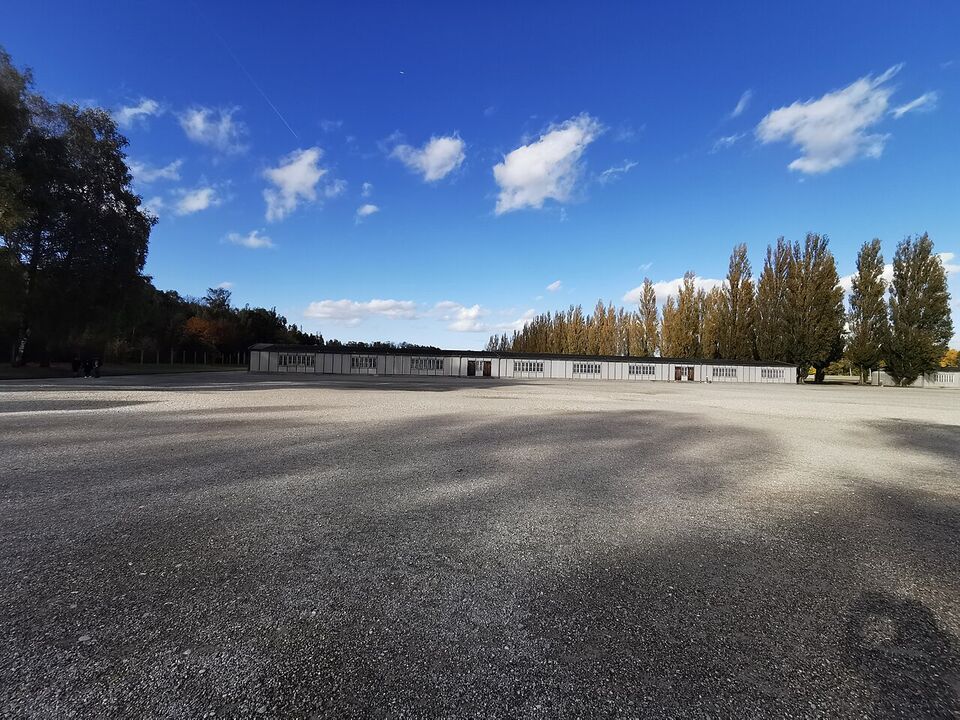
Dachau, the first concentration camp, opened in 1933 near Munich. The memorial is free and open daily from 9 a.m. to 5 p.m., with the former crematorium area closing at 4:30 p.m.; it is closed on December 24. Tours in English run daily at 11 a.m. and 1 p.m. (the price is not listed on the memorial's page, so check). The audio guide costs €5 (about $6). From Munich, take the S2 to Dachau station (about 25 minutes from the main station), then bus 726 toward Saubachsiedlung to the "KZ-Gedenkstätte" stop. A Munich "M1" day ticket covers the whole trip. Allow 3 to 4 hours. More detail is in Munich sights.
Nuremberg: the Rally Grounds and the trials
Nuremberg was the stage for the Nazi Party rallies, and the unfinished Congress Hall and the Zeppelin Field survive. The Documentation Center, in the Congress Hall, reopened after renovation, with a trial operation from May 22, 2026 and an official opening on November 4, 2026. Adults pay €7.50 (about $8), reduced is €2.50 (about $3), and a media guide (about 90 minutes, in nine languages) is included. It is open Monday to Friday 9 a.m. to 6 p.m. and weekends 10 a.m. to 6 p.m.
The Memorium Nuremberg Trials, in the courthouse, covers the trials of 1945-46, and Courtroom 600 can be viewed when it is not in use for a court session. Public tours are listed on Saturdays at 11 a.m. and 12:30 p.m. and Sundays at 2 p.m., and the museum has a free app with a media guide. Check the museum's pages for prices and for days when the courtroom is closed. See Nuremberg.
Obersalzberg and Flossenbürg
The Documentation Center on the Obersalzberg, above Berchtesgaden, explains Hitler's mountain retreat, with a bunker complex and the exhibition "Idyll and Atrocity." It is open daily from 9 a.m. to 5 p.m. and was not affected by the fire at the Kehlsteinhaus. Hours and prices change by season, so check them. Flossenbürg, near the Czech border, is a former camp where the theologian Dietrich Bonhoeffer was executed in April 1945. The memorial is free, but it is remote and has no easy public transport, so a rental car or a guided tour from Nuremberg is the practical way to get there.
Buchenwald and Bergen-Belsen
Buchenwald, near Weimar, was one of the largest camps, and US forces reached it on April 11, 1945. The memorial is open Tuesday to Sunday, 10 a.m. to 4 p.m. from November to March (10 a.m. to 6 p.m. from April to October). City bus 6 runs from Weimar's main station. On November 9, 2026 the former cells in the gatehouse can be visited only until 11:30 a.m. See Weimar, the Wartburg and the Harz.
Bergen-Belsen, in Lower Saxony between Hannover and Hamburg, is where Anne Frank died in early 1945. British forces liberated it in April 1945. The grounds hold mass graves and memorials, and the documentation center has an exhibition. It is free and open daily 10 a.m. to 5 p.m. from October to March. The documentation center is closed during Lower Saxony's Christmas school holidays, but the grounds stay open. It is hard to reach without a car, so plan around a taxi or a rental.
| Memorial | Admission | Winter hours (Oct-Mar) | Getting there |
|---|---|---|---|
| Dachau | Free; audio guides available | 9 a.m.-5 p.m. daily | S2 from Munich, then bus 726 |
| Sachsenhausen | Free; audio guide €3.50 (about $4) | 8:30 a.m.-4:30 p.m. (Oct 27-Mar 30) | Train from Berlin to Oranienburg, then a walk |
| Buchenwald | Free (has long been) | Tue-Sun 10 a.m.-4 p.m. | Bus 6 from Weimar |
| Bergen-Belsen | Free | 10 a.m.-5 p.m. daily | Car or taxi from Celle |
| Flossenbürg | Free | Check; open at 9 a.m. | Car or guided tour |
Visiting respectfully
These places are cemeteries as well as museums. A few simple habits go a long way.
- Dress and behavior: dress modestly, speak quietly, and do not eat, smoke or drink alcohol on the grounds. Dachau's rules also bar bringing flags or banners, loudspeakers or dogs, and they say visitors should not wear right-wing extremist clothing or symbols.
- Photos: memorials differ. The Berlin Holocaust memorial allows photography without flash, while Dachau bans recording or publishing guided-tour content. Look for signs at each entrance. As a matter of courtesy, avoid posed, smiling selfies at camp sites and graves, and do not climb on the pillars of the Berlin memorial.
- Bags and security: some sites have security checks and limits on bag size. Travel light, and use the cloakroom or lockers where they are offered.
- Time: a full visit to a former camp takes 3 to 4 hours. Do not plan a second heavy site the same day. Winter days are short, and many grounds are outdoors and unheated, so wear warm layers.
- Language: English audio guides and apps are available at the larger memorials. For other tips on manners, see German etiquette.
Children and teenagers
The Dachau memorial advises against visits to the exhibitions, grounds and former crematorium for children under 12 because some material could be disturbing, and the responsibility lies with parents and teachers. For younger children, the Wall Memorial, the Allied Museum (with its aircraft) and the DDR Museum are easier introductions. For teenagers, the Topography of Terror and the Wall Memorial are strong first steps, and a camp memorial works best when you talk through what you will see beforehand and plan time to talk afterwards. Choose the shorter guided tour rather than the longest if the teen is unsure.
German laws on Nazi symbols and gestures
Different from home
In the US, Nazi symbols are protected speech. In Germany, using them is a crime. Section 86a of the criminal code bans the public use of symbols of unconstitutional organizations, including the swastika, the SS runes, "Heil Hitler" and "Sieg Heil," and the Hitler salute. The penalty is up to three years in prison or a fine. The law covers anyone in Germany, tourists included, and has no exception for jokes, dares or photo poses.
There are exceptions for art, research, teaching and reporting on history, which is why swastikas appear in museum exhibits and in film and video games. Outside those contexts, do not do it, even as a joke or a photo pose. Denying the Holocaust is also a crime in Germany. Memorial rules separately forbid extremist clothing and symbols. For the broader safety picture, see Is Germany safe?
Allied and American military history
Americans can follow a thread of their own through Germany. The sites below are mostly small and specific, and several require a car.
Remagen bridge museum
On March 7, 1945 the US 9th Armored Division captured the Ludendorff Bridge at Remagen intact and crossed the Rhine. The bridge collapsed on March 17, killing 28 US Army engineers. The Peace Museum in the surviving towers is closed for the winter and reopens on March 7, 2027 (weekends only in March, then Tuesday to Sunday from 10 a.m. from April, with Monday afternoons added).
Hürtgen Forest
From September to mid-December 1944 US forces fought a long and costly battle in the forest, with American casualties in the tens of thousands. Memorials stand in Vossenack and at the Kall Bridge, and a local museum covers the battle; check its hours before you go.
Berlin Airlift
In 1948-49 US and British aircraft supplied West Berlin during the Soviet blockade. The Allied Museum has a new section on 1945-49 and an outdoor "raisin bomber." The former Tempelhof airport, the symbol of the airlift, is now a public park.
Nuremberg trials
The International Military Tribunal sat in Nuremberg in 1945-46, and the successor trials ran under US authority. The Memorium covers the courtroom and the legal legacy.
Camp liberations
US forces liberated Buchenwald on April 11, 1945, and Dachau and Flossenbürg later that month. The memorials include the American role in their exhibitions.
Ramstein, near Kaiserslautern, is one of the largest US Air Force bases overseas and the center of a large American community. It is not open to casual visitors: access is controlled, and you generally need a sponsor with base access. If you have family stationed there, arrange it through them. Otherwise, the Rhineland-Palatinate region around it is better known for its wine and its castles; see Castles and palaces.
Tours and how to plan
For most sites, the memorial's own tour is the best first choice. Dachau and Buchenwald run public tours led by trained staff, and Hohenschönhausen's tours are led by former prisoners and historians. Book official tours through the memorial's site, since they are usually cheaper than private ones and the guides are trained by the institution. A private guide is worth considering for Nuremberg, Berlin's government quarter or a trip to the old border, where the sites are spread out. Check reviews, ask whether the guide is licensed, and ask what the price includes. Large bus-tour operators often pack a lot into a day, and that can be hard at a former camp.
A realistic schedule is one heavy site per day, with a lighter museum or a walk in the afternoon. Three days in Berlin can cover the Wall Memorial, the Topography of Terror, the Holocaust memorial and Sachsenhausen. From Munich, Dachau is a half day, and Nuremberg adds one day. See Berlin and Germany's destinations for how to place these in a wider route.
Insider tip
Go early in winter. Many memorial grounds close by 4:30 or 5 p.m., and a late arrival gives you an hour of daylight at a site that deserves three. Eat before you go, and check the memorial's page for the day: special commemorations, such as November 9, can close some areas.
Add it to a route in the trip builder, or ask us to plan the hotels, trains and guides for you.