Overview
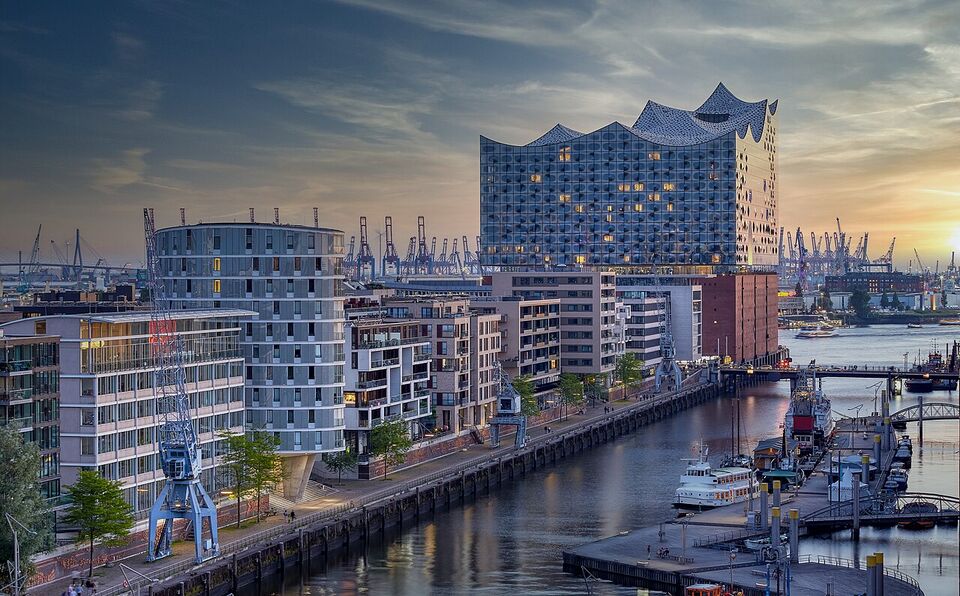
Hamburg is worth two or three days on a Germany trip, and it is the easiest big city to enjoy on a public transit ticket: the harbor ferries, the underground, the S-Bahn and the buses all run on the same system. It is a port city first. The sights are about water, red-brick warehouses, sailors' history and a concert hall that has become the skyline's signature.
The city is also the main gateway for the north coast. If you plan to continue to Lübeck, the Baltic or the North Sea, see The North Sea and Baltic Coast. If your family emigrated from Germany, Hamburg is where many of them left, and the city has a museum for exactly that story (see below).
Hamburg is wetter and gray more often than Berlin or Munich, so plan for rain in every season. The 1991-2020 averages show a daytime high of 74°F (23°C) in July and 40°F (4°C) in January, with rain on 16 to 18 days in a typical winter month. That is a reason to bring a light rain jacket, not a reason to stay away.
Getting there and getting around
By train
Hamburg's Hauptbahnhof (main station) sits at the edge of the old town and is one of the busiest in Germany. An ICE from Berlin usually takes about 1 hr 45 min, and trains run roughly hourly. Construction work is common on this corridor. Trips may take longer at times in 2027 because of rebuilding work near Berlin-Spandau, so check the exact trip on bahn.de or the DB Navigator app before you book. See German Train Tickets and Passes for how fares work.
From December 13, 2026, Deutsche Bahn plans a Sprinter service between Hamburg and Munich with three pairs of trains a day and a trip of about 5 hr 20 min. Bremen is about an hour away, and regional trains reach Lübeck in under an hour (see the coast guide).
By air
Hamburg Airport (HAM) is about 5 miles (8 km) north of the center, and the S1 line reaches the Hauptbahnhof in roughly 25 minutes. We could not confirm any nonstop flights from the US to Hamburg for winter 2026/27, so plan on connecting through Frankfurt, Munich, Berlin or a European hub. Our flights guide covers the US routes.
Transit tickets (HVV)
Hamburg's HVV transit system covers the U-Bahn, S-Bahn, buses and the harbor ferries. In 2026, a single ticket for the city (zones AB) is €4.10 (about $5) and a day ticket is €8.20 (about $9); buying online or in the app is cheaper in 2026, with a roughly 7% online discount (HVV drops that discount from January 2027). A group day ticket is €16.40 (about $18). The ticket for the wider six-ring area, which includes the airport, costs €12.60 (about $14) for a single trip. Prices rose about 5.4% on average on January 1, 2026. HVV has announced an average rise of 4.95% from January 1, 2027, but the AB single, the AB day ticket, the group day ticket and the six-ring single are due to stay at their 2026 prices, while the online discount and the weekly ticket are dropped, so check hvv.de.
If you hold a Deutschlandticket (€63 a month in 2026, rising to €66.80 on January 1, 2027), it also works on the HVV network in the same way as in other cities. We could not confirm whether it covers the harbor ferries on every line, so ask or check the HVV app before you rely on it.
Insider tip
The Hamburg CARD (listed from €12.90, about $14) gives free HVV rides and discounts on some attractions. It only pays off if you ride a lot and use several discounts, so compare it with a €8.20 day ticket before you buy.
The harbor: ferries, Landungsbrücken and the fish market
The cheapest way to see the harbor is on the HADAG ferry line 62. It leaves Landungsbrücken (the long floating pier complex by the harbor), pier 3, and calls at the Fischmarkt, the Cruise Center Altona, Dockland, the Övelgönne museum harbor and Finkenwerder, where the boat turns around. Boats run about every 15 minutes in the daytime, every day, with a longer gap early and late.
The ride takes about half an hour each way (check the HVV timetable for the exact time). It passes the shipyard docks, the cruise ships at their berths and the container cranes. Because it is a normal transit line, you pay nothing extra if you already have a day ticket. There is no commentary on the boat, so it suits people who like to watch the harbor rather than hear about it.
Different from home
Many large American harbor tours are priced as tourist attractions. In Hamburg, a ferry is simply part of public transit. Tourist-style "Hafenrundfahrt" boats also leave from Landungsbrücken and cost extra, and they add recorded or live commentary, usually in German with some English.
Övelgönne and the Elbe beach
One of the best stops is the Övelgönne museum harbor, where old sailing ships and tugs are moored in front of a row of former captains' houses. A sandy stretch of the Elbe river is nearby, and in mild weather locals walk along the water. You can get off and walk, then board a later ferry.
The Sunday fish market
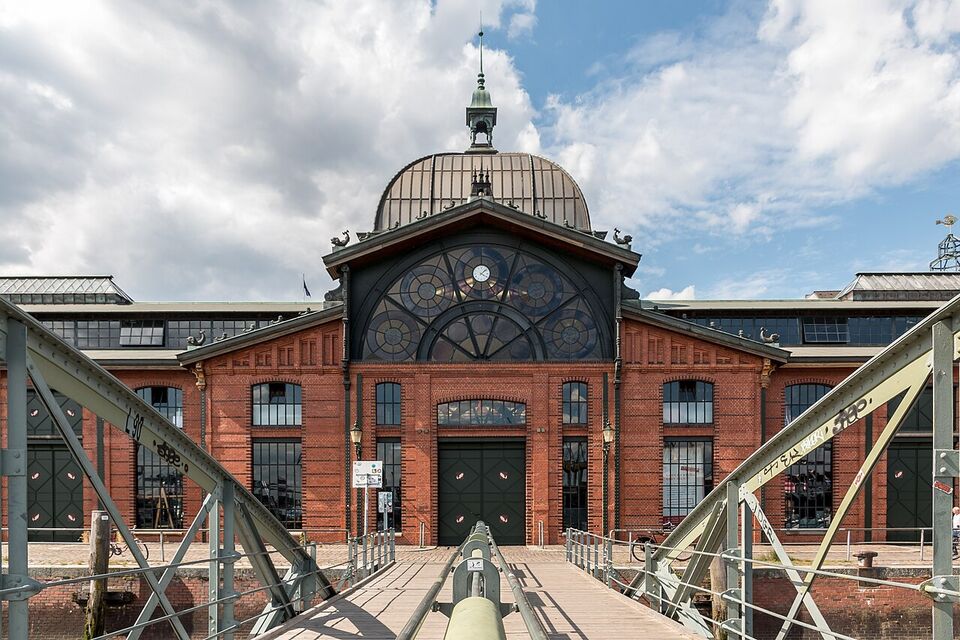
The fish market (Fischmarkt) is held only on Sunday mornings by the water in St. Pauli, from 5:00 to 9:30 a.m. from April to October and 7:00 to 9:30 a.m. from November to March. The market has been held since 1703. You will find fish by the bucket, fruit, flowers, souvenirs and a lot of noisy sales patter. The historic Fish Auction Hall (built in 1896) hosts breakfast and live music.
Part of the crowd comes straight from the Reeperbahn after a night out, so arrive with some patience. A listed event for November 8, 2026 shows a 5:00 a.m. start that does not match the winter hours, which is why we suggest confirming the time on the Hamburg tourism site the week you go.
Speicherstadt and HafenCity
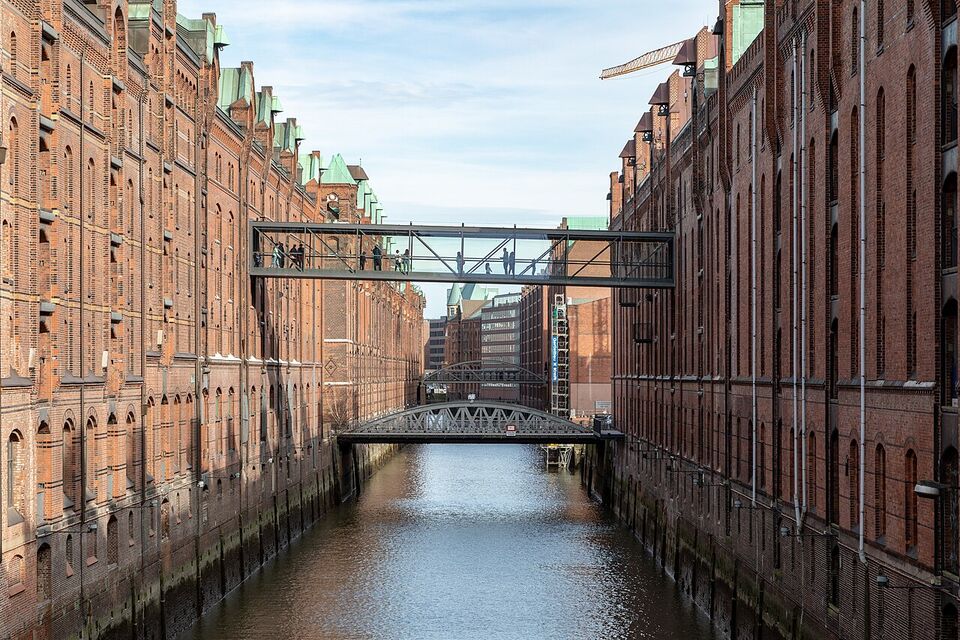
The Speicherstadt (warehouse district) is a UNESCO World Heritage Site and one of the largest warehouse complexes in the world, built from 1883. The red-brick buildings stand on wooden piles along tidal canals called Fleete. Coffee, tea, spices and carpets were stored here. The district is lit by spotlights at night all year, and the light on the canals after dark is the reason to go in the evening.
Walk through in 1 to 2 hours. The Wasserschloss and the Fleetschlösschen are popular photo spots. Nearby, the Kontorhaus district has the Chilehaus, an office building with a sharp brick prow. Museums in the area include the Speicherstadtmuseum (the district's history and trade goods), a spice museum and a coffee museum, and Miniatur Wunderland (see below).
Just east is HafenCity, a large new neighborhood built on former port land. It is mostly offices, apartments and restaurants, so treat it as a walk with a few anchor points, not a destination for a whole day. The Elbphilharmonie is its centerpiece.
The Elbphilharmonie
The free Plaza (with a booking)
The Elbphilharmonie is a glass concert hall built on top of an old brick warehouse. Its public viewing terrace, the Plaza, is open to everyone, not only concertgoers, daily from 10 a.m. to midnight (last admission at 11:30 p.m.). It is closed on December 24 and open 10 a.m. to 6 p.m. on December 31.
Entry is free in the sense that you do not pay for the view, but you need a ticket with a booking fee: €5 (about $6) per person online or on site, €3 (about $3) for some groups such as students, and free for children under 3. You can buy online through the official Plaza shop or at the Ticket Pavilion on the forecourt. Booking ahead guarantees you the time slot you pick. On a clear evening, the terrace is crowded; a weekday morning or late evening is easier.
Concerts
Tickets to concerts in the Grand Hall and the smaller Recital Hall go on sale on set dates for each event, and popular shows sell out fast. Concert prices range widely: the program we saw listed events from about €12 (about $14) to around €65 (about $73) and more for star soloists. A ticket for the Grand Hall or Recital Hall includes Plaza access from two hours before the start, so you do not need a separate Plaza ticket.
The ticket shop lets you set an alert that emails you a day before sales open. Use it if you want a specific concert, because the best seats go in minutes.
Watch out
Only buy tickets through elbphilharmonie.de. Resale sites often charge well above face value, and the only way to know a ticket is valid is to buy it from the venue.
Miniatur Wunderland
Miniatur Wunderland is a huge indoor model railway with miniature scenes of cities and landscapes, and it is the most visited attraction in Hamburg. It works for families and for adults who like detail. Plan 2 to 3 hours.
| Ticket | Price | US$ |
|---|---|---|
| Adult | €22.00 | about $25 |
| Discounted (students from 16, seniors 65+, others with proof) | €19.00 | about $21 |
| Children under 16 | €13.00 | about $15 |
| Children under 1 m (3 ft) with a parent | Free | Free |
The attraction is open every day, usually from about 9:30 a.m. to 6 p.m., with longer hours at weekends and in school holidays. Buy tickets online ahead of time and choose your date; the site currently offers tickets only up to August 31, 2027, and later dates will be released afterward. Entry is normally tied to a booked window, so confirm the rules when you pay. On weekends, holidays and school breaks, lines can be long, and the site shows a waiting-time forecast if you decide at the last minute.
Save money
If you visit on a gray weekday, book the earliest slot. You will pay the same price and skip the longest waits. An annual pass costs €99 (about $111) for adults, so it only makes sense if you are returning.
St. Pauli, the Reeperbahn and the Beatles
St. Pauli is the harbor district west of the old town, and the Reeperbahn is its main street, a stretch of bars, clubs, theaters and sex shops. It is lively and often silly rather than frightening, but it has the street problems of any nightlife strip.
What to expect
Go in the evening if you want the atmosphere and in the afternoon if you want to see it without the crowds. On weekend nights, the area is full of groups, stag parties and street hawkers. Pickpockets work crowded bars and the Landungsbrücken area, so keep your phone and wallet in front pockets. Be wary of touts who steer you to a bar, and agree on drink prices before ordering. Do not accept drinks from strangers.
The Reeperbahn area has a weapons-ban zone on weekend nights, marked by signs, and the police station on Davidstraße is in the middle of the strip. For general advice and emergency numbers (112 for fire and ambulance, 110 for police), see Is Germany Safe?. Herbertstraße, the walled street with window prostitution, is closed to women and prohibits photos, so skip it.
The Beatles in Hamburg
The Beatles played in Hamburg clubs between 1960 and 1962, and they honed their stage show on the Reeperbahn before they were famous. Beatles-Platz, at the Reeperbahn and Große Freiheit corner, has life-size black steel silhouettes of the band. The Große Freiheit street nearby has the former Kaiserkeller and Star-Club locations. Most of the original clubs are gone or changed, so treat it as a short walk and a photo stop.
Insider tip
Combine the fish market with the Reeperbahn: finish a Saturday night out, or go to the market on Sunday and then walk up to St. Pauli for brunch. The market closes at 9:30 a.m., so you will have the day free.
BallinStadt: the emigration museum
BallinStadt is the museum of Hamburg emigration on the Veddel island, south of the center. From 1850 to 1934, about five million people sailed to the United States and elsewhere from Hamburg, many of them from Germany and Eastern Europe. The museum tells their story, from the village to the ship. It has a research area for family history, which we cover in Tracing German Roots.
The exhibition is open Tuesday to Sunday, 10 a.m. to 6 p.m. from March 1 to October 31, and 10 a.m. to 4:30 p.m. from November 1 to the end of February (last admission an hour earlier). It is closed on Mondays and on December 24 and 31. Prices are €14.90 (about $17) for adults, €12.50 (about $14) reduced, €8.50 (about $10) for children 5 to 13, and €35.50 (about $40) for a family of two adults and two children. Check ballinstadt.de before you go, because the page does not show when its prices were last updated.
To get there, take the S-Bahn (the S3 or S31) from the Hauptbahnhof to Veddel station and walk a few minutes. If you want to see the other major emigration museum, the German Emigration Center in Bremerhaven, read the north coast guide.
Parks, lakes and quieter Hamburg
Planten un Blomen
A large park just west of the old town with gardens, a Japanese garden, greenhouses and a water-light show in summer evenings. It is free to enter and good for a break after the harbor. Check the park site for the exact season and times of the evening show.
Alster lakes
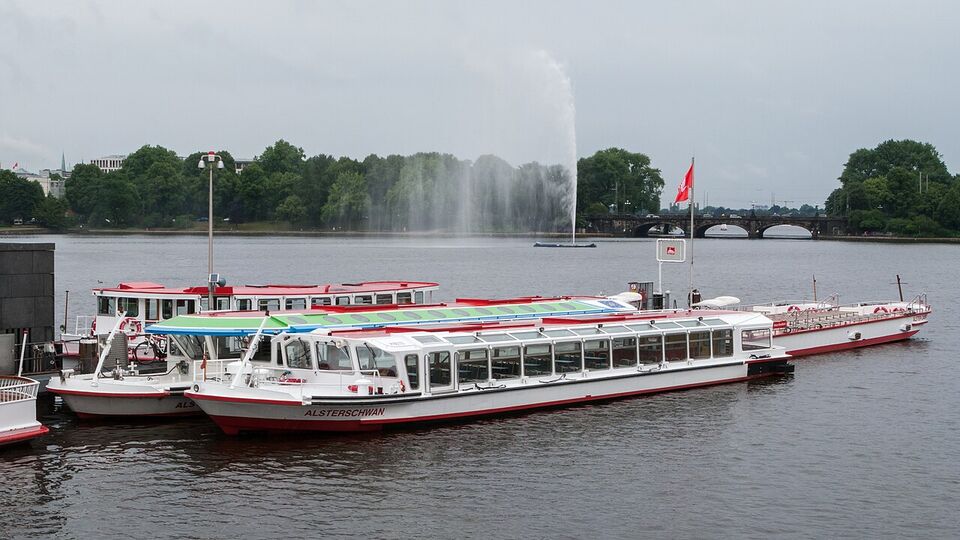
The Binnenalster and the larger Außenalster are lakes in the middle of the city. Walk the Jungfernstieg promenade along the Binnenalster, or take a long walk or a boat tour around the Außenalster. Boat service is more limited in winter, so check ahead.
Rathaus and the old town
The neo-Renaissance city hall dominates the market square. The nearby shopping streets and arcades make a good rainy-day walk.
Altona and Ottensen
Neighborhoods with cafes, small shops and a local feel, a short ride from the fish market. Good for lunch if you want to leave the tourist center.
Where to stay in Hamburg
For a first visit, pick a neighborhood by what you want to do, not by the hotel's name. We do not recommend specific hotels here. Hamburg rooms are cheapest in January and February and most expensive during big events and trade fairs, when prices can double.
- Altstadt and Neustadt (old and new town): central, walkable to the Rathaus, Speicherstadt and Planten un Blomen. Good for first-timers with limited time. Mostly $$.
- St. Georg (near the Hauptbahnhof): convenient for trains and the Alster, with many hotels from $ to $$. The streets around the station can be rough at night, so look at a map before you book.
- St. Pauli and Sternschanze: good for nightlife and the harbor, noisy on weekends. Light sleepers should ask for a back room.
- HafenCity: modern hotels near the Elbphilharmonie, usually $$ to $$$. Quiet and a little sterile in the evening.
- Altona and Ottensen: local cafes and neighborhood restaurants, with a short ferry or S-Bahn ride to the harbor.
The city tax
Hamburg adds a culture and tourism tax per guest per night, based on the net room price (without VAT). The tax is low for cheap rooms and rises in steps: the city's own example is a €250 net room costing €6 (about $7) per person. Business stays are also taxed, and the hotel adds the tax to your bill. Some compilations list different amounts for the middle price bands, so ask your hotel for the amount before you pay.
Seasons, markets and events
Hamburg works in every season, but the weather is mildest from late May to September. The harbor ferries and outdoor terraces are at their best then. In winter, the days are short and wet, and the museums and the Elbphilharmonie make better plans.
- Winterdom: the Hamburg funfair (the DOM) runs November 6 to December 6, 2026, with the next Frühlingsdom from March 19 to April 18, 2027 and the Sommerdom from July 23 to August 29, 2027, according to the city.
- Christmas market: the Rathausmarkt market runs November 23 to December 23, 2026, daily from 11 a.m. to 9 p.m. It closes before Christmas, so do not plan a visit for December 24 to 26. Our Christmas markets guide compares the other cities.
- Holidays: Hamburg observes Reformation Day on October 31, in addition to the national holidays, so shops close on that date in years when it falls on a weekday.
How to plan your days
- Day 1
Old town, Speicherstadt and the Elbphilharmonie
Start at the Rathaus, walk through the shopping streets to the Speicherstadt, and have lunch near the Kontorhaus district. In the afternoon, visit Miniatur Wunderland or the Speicherstadt museums. End at the Elbphilharmonie Plaza for sunset (book a slot).
- Day 2
Harbor, Övelgönne and St. Pauli
Take ferry 62 from Landungsbrücken, get off at Övelgönne, and walk along the river. Return to the Fischmarkt area if it is Sunday morning. In the evening, walk the Reeperbahn and Beatles-Platz.
- Optional third day
BallinStadt and Planten un Blomen
Spend the morning at the emigration museum on Veddel and the afternoon in the park or around the Alster.
If you only have one day, do the Speicherstadt, a ferry ride and the Plaza. Combine Hamburg with Berlin by train, with a few days of Berlin first (see Berlin), or use it as the start of a north coast loop. For the whole country, see Germany's Destinations.
Add it to a route in the trip builder, or ask us to plan the hotels, trains and guides for you.