Which airport, in one minute
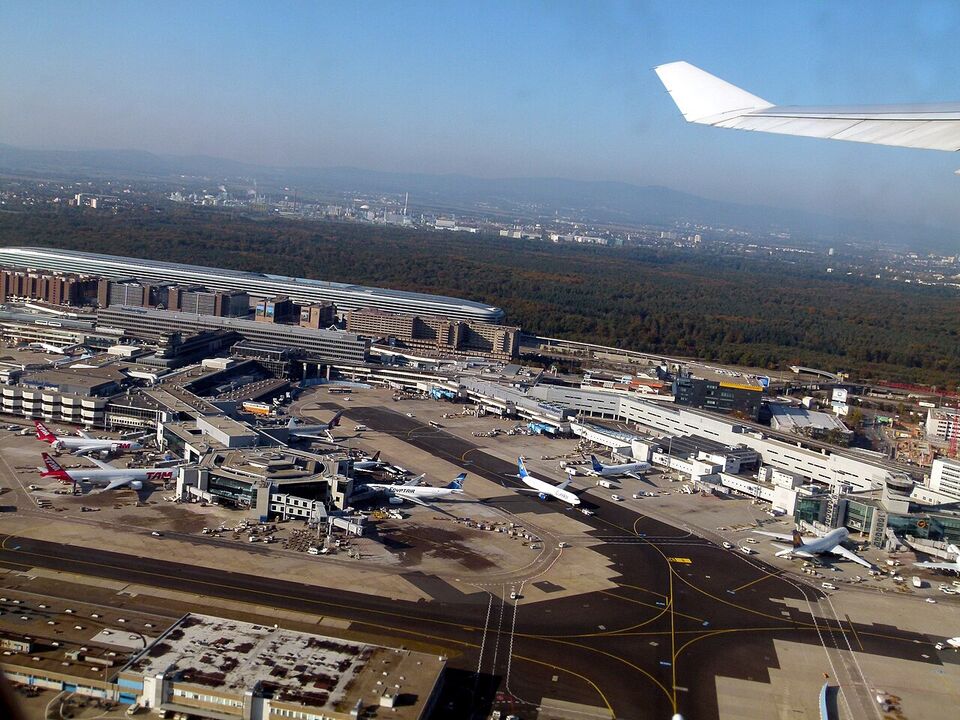
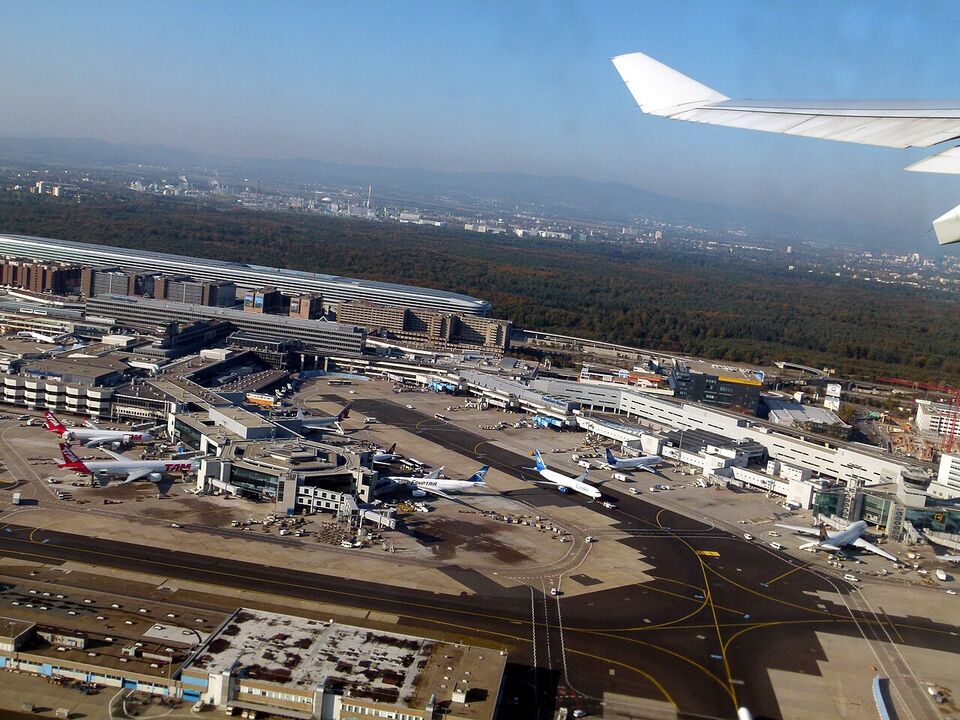
Most Americans should fly into Frankfurt (FRA) or Munich (MUC). Frankfurt is Germany's largest airport and has the broadest list of US nonstops, plus a long-distance train station inside the terminal area. Munich is the better gateway for Bavaria, the Alps and Neuschwanstein. Berlin Brandenburg (BER) has little nonstop service from the US, and Düsseldorf and Hamburg have almost none, so those trips usually involve a connection.
Flights from the US East Coast are about 7.5 to 9 hours, and most go overnight, landing in Germany the next morning. From the West Coast, expect 10 to 11.5 hours. Everything below is based on airport and airline schedules as of November 2026, but routes change, especially seasonal ones, so check the airline's site before you book.
Once you land, you pass through the EU border system for the first time, so read our entry requirements page before you go. For a first itinerary, our planning guide shows where each airport fits.
Nonstop routes from the US
The table lists US cities with nonstop service to German airports, from airport and route listings checked in November 2026 (a secondary source; airline pages did not load). "Seasonal" routes may not run in winter. We have left out routes that were listed only as future starts, except where noted below.
| US city | Frankfurt (FRA) | Munich (MUC) | Berlin (BER) |
|---|---|---|---|
| New York (JFK) | Lufthansa, Delta, Condor | Lufthansa | Delta (seasonal) |
| Newark | Lufthansa, United | Lufthansa, United | United (summer; winter unconfirmed) |
| Boston | Lufthansa; Condor (seasonal) | Lufthansa | None listed |
| Washington, D.C. (Dulles) | Lufthansa, United | Lufthansa, United | None listed |
| Philadelphia | Discover | None listed | None listed |
| Charlotte | American | American, Lufthansa (check American's schedule) | None listed |
| Raleigh/Durham | Lufthansa | None listed | None listed |
| Atlanta | Lufthansa, Delta | Delta | None listed |
| Miami | Lufthansa | Lufthansa | None listed |
| Orlando, Tampa, Fort Myers | Discover | Orlando: Discover | None listed |
| Chicago (O'Hare) | Lufthansa, United; Condor from May 14, 2027 | Lufthansa, United | None listed |
| Detroit | Lufthansa, Delta | Delta (seasonal) | None listed |
| St. Louis | Lufthansa | None listed | None listed |
| Minneapolis/St. Paul | Discover (seasonal) | None listed | None listed |
| Dallas/Fort Worth | American, Lufthansa | None listed | None listed |
| Austin | Lufthansa | None listed | None listed |
| Houston (IAH) | Lufthansa, United | United | None listed |
| Denver | Lufthansa, United | Lufthansa, United | None listed |
| Las Vegas | Discover, Condor | None listed | None listed |
| Los Angeles | Lufthansa, Condor | Lufthansa | None listed |
| San Francisco | Lufthansa, United, Condor | Lufthansa, United | None listed |
| San Diego | None listed | Lufthansa | None listed |
| Seattle/Tacoma | Lufthansa, Condor | Lufthansa | None listed |
A few things to know about this table:
- Frankfurt is the biggest by far. Munich covers most large US hubs but fewer secondary cities.
- Berlin is thin. Delta returned to New York JFK in 2026, with daily flights from May 1 to October 25, 2026 and fewer in spring. Berlin's own winter 2026/27 release (October 20, 2026) lists no North American routes. Treat Berlin nonstops as a summer-only possibility until you see a ticket.
- Düsseldorf and Hamburg: We found no confirmed US nonstops for winter 2026/27. A listing shows a seasonal Düsseldorf to Newark flight on La Compagnie starting April 21, 2027, which you should verify. Hamburg showed no US service.
- New routes: Lufthansa plans Frankfurt to Columbus, Ohio from May 5, 2027 (three weekly) and Munich to Phoenix from August 3, 2027. Condor adds a daily Frankfurt to Chicago flight from May 14 to September 12, 2027. Discover plans Frankfurt to Edmonton from June 1, 2027. These come from news reports of schedule filings.
- Reductions happen too. United cut Newark to Frankfurt from 11 to 7 weekly flights in March 2026. American's Charlotte to Munich flight was reported suspended for part of the year.
Airlines also add or drop routes every season. The winter 2026/27 schedule runs from October 25, 2026 to March 27, 2027. Always confirm on the airline's website, or use a fare search that shows nonstop flights only.
Flight times
Times depend on the route, the aircraft and the winds. The jet stream makes eastbound flights (to Germany) shorter than westbound ones (home) by about an hour. These are typical ranges, not schedule quotes.
| From | To Germany (eastbound) | Coming home (westbound) |
|---|---|---|
| New York, Newark, Boston, Washington | About 7.5-8.5 hr | About 8.5-9.5 hr |
| Chicago, Detroit, Atlanta, Charlotte | About 8.5-9.5 hr | About 9-10 hr |
| Dallas, Houston, Denver, Miami | About 9.5-10.5 hr | About 10.5-11.5 hr |
| Los Angeles, San Francisco, Seattle | About 10-11.5 hr | About 11-12 hr |
One published figure: Berlin to New York JFK is about 9 hours. Frankfurt to Anchorage was listed at 9 hours 40 minutes on a seasonal Condor route that may have ended. Most other times above are our estimates from typical schedules, so check your actual flight.
Jet lag and the clock
Germany is normally 6 hours ahead of US Eastern, 7 ahead of Central, 8 ahead of Mountain and 9 ahead of Pacific. The two sides change their clocks on different dates, so the gap is one hour smaller for short stretches: from March 14 to March 27, 2027, and again from October 31 to November 6, 2027. (The same thing happened this fall, from October 25 to October 31, 2026.) Germany's clocks go forward on March 28, 2027 and back on October 31, 2027; US clocks go forward on March 14 and back on November 7, 2027. This matters for calls home and for flights booked around those dates.
For jet lag, the usual advice is to get outside in daylight on arrival day and to stay up until a normal local bedtime. A short nap of under an hour is fine. We suggest keeping your first day light on plans: a walk, a late lunch, and an early dinner.
Best airport for your trip
Frankfurt (FRA)
Best default for first-timers. The long-distance station at the airport has ICE trains to Cologne, Stuttgart, Nuremberg and other cities without changing in the city. Good for the Rhine, Heidelberg and the Romantic Road. See Frankfurt and the Romantic Road.
Munich (MUC)
Best if Munich, Neuschwanstein, Garmisch or Salzburg are your main stops. Fewer US cities than Frankfurt, but most big hubs. See Munich and the Bavarian Alps.
Berlin (BER)
Only convenient if a nonstop runs on your dates. Otherwise, fly to Frankfurt or Munich and take a train, or connect through a European hub. Our Berlin vs Munich guide helps with the choice.
Düsseldorf and Hamburg
Useful for the Rhine, Cologne or the north coast, but expect a connection. A Frankfurt arrival and a train often costs less than a connecting ticket. See Hamburg and Cologne.
Open-jaw tickets
Consider flying into one airport and out of another, for example into Frankfurt and home from Munich or Berlin. It saves backtracking, and the price is often similar to a round trip. Look for it in the "multi-city" search. Combined with a rail pass or point-to-point tickets, it supports a one-way route such as Frankfurt, Heidelberg, Munich. See train tickets for how to buy them.
When fares are lowest
Fares depend on demand, and demand follows the weather and the holidays. The pattern below is the usual one; we did not check live prices, so use it as a guide, then confirm on a fare calendar.
- Lowest: January through early March, outside school holidays. November, outside the week of US Thanksgiving. Germany is cold and short on daylight then, but it is a good season for museums, spas and cities. See our January and November guides.
- Middle: April to May and September to October. Weather is good and crowds are moderate. Oktoberfest and the first weeks of fall are popular, so book those flights and hotels early. See Oktoberfest.
- Highest: June to August, and the days around Christmas and New Year. The Christmas market season, from late November to December 23, is busy, with fares rising as December goes on. See Christmas markets.
Save money
Use a fare-calendar view and compare flying a day earlier or later. Midweek departures are often cheaper than Fridays and Sundays. Compare Frankfurt and Munich on the same dates, and check a nearby US airport if you live near more than one. Read the fare rules: basic economy fares may exclude a checked bag and seat choice.
For a rough idea of how far ahead to buy, many travelers find that booking two to six months before departure works for peak summer travel, and a shorter window works for off-season trips. This is a rule of thumb, not a guarantee.
From the airport into the city
All the main German airports connect to the city center by train. Taxis are available but cost far more. Here is what we could confirm.
Frankfurt (FRA)
The airport has two stations. The Regionalbahnhof has S-Bahn lines, and the Fernbahnhof has ICE and IC long-distance trains. The S8 and S9 run to Frankfurt Hauptbahnhof in about 12 minutes with three intermediate stops, with a train about every 10 minutes. Regional and long-distance trains also run to the Hauptbahnhof from the airport. The S-Bahn ticket from the airport is priced in a separate zone from the city, and we could not confirm the current fare, so buy it in the RMV app or at the machine. The Frankfurt city single is €3.80 (about $4.25), but the airport fare is higher. A taxi to the city center is a short ride; ask the driver for an estimate, since we could not find an official fixed fare.
If your next stop is Heidelberg, Cologne or Nuremberg, you can often take an ICE straight from the airport's Fernbahnhof and avoid the Hauptbahnhof. See our Frankfurt guide for the city.
Munich (MUC)
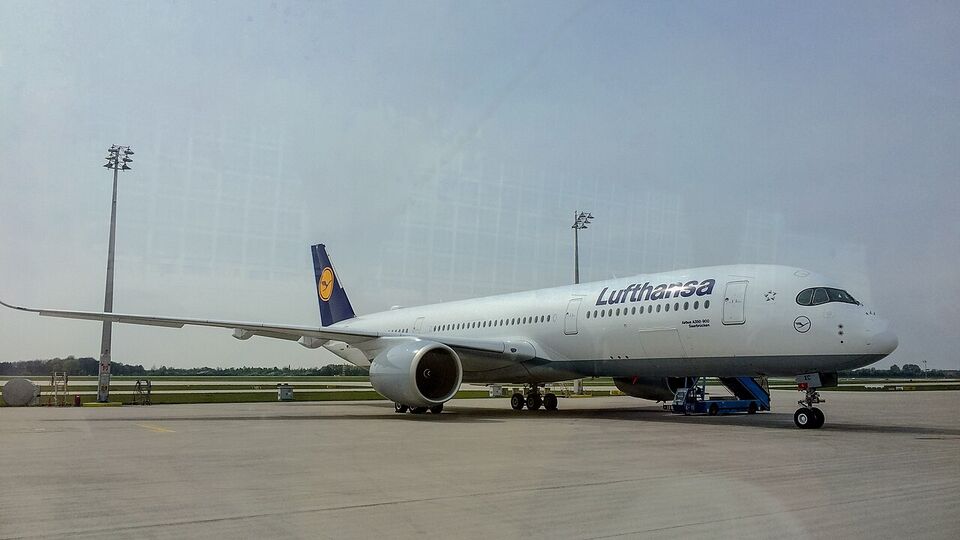
The S1 and S8 S-Bahn lines run from the airport to the Hauptbahnhof and Marienplatz in about 35 to 40 minutes. MVV lists about 35 minutes, and the airport says about 40 minutes. Lines alternate, so there is a train about every 10 minutes: the S8 runs all night, and the S1 runs every 20 minutes from around 3 a.m. to midnight. The Lufthansa Express Bus runs every 20 minutes and takes about 45 minutes from the Hauptbahnhof (or about 25 minutes from Schwabing).
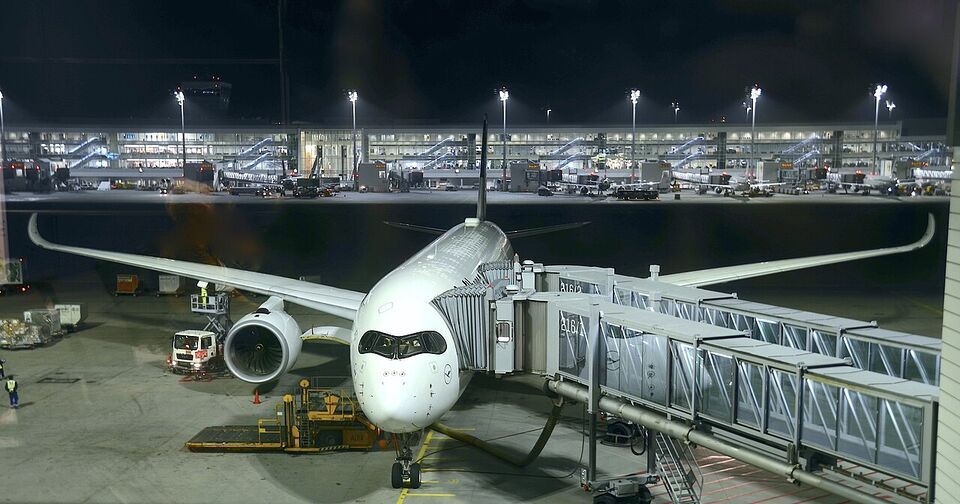
The airport is in MVV fare zone 5. A normal Munich city single is €4.20 (about $4.70) in zone M, but the airport trip costs more, and the Airport-City-Day-Ticket (zones M to 5, valid to 6 a.m. the next day) is an option for visitors who will keep riding. We could not confirm either price, so check the MVV or MVG app. Taxis from the airport are the most expensive option because of the distance (about 28 miles (45 km) to the center), and we could not find an official fare, so ask the driver for an estimate before you get in. See Munich for tickets inside the city.
Berlin (BER)
Since December 14, 2025, the FEX airport express runs from Berlin Hauptbahnhof to BER in about 23 minutes, about 19 minutes from Potsdamer Platz and about 14 minutes from Südkreuz. The FEX runs every 15 minutes, and a regional train (RE20) adds an hourly service on the same route. The S9 runs from Alexanderplatz in about 40 minutes and from Schöneweide in about 25 minutes. The S45 no longer goes to BER. A single ticket for zones ABC is €5.00 (about $5.60), as listed by the transit authority. Buy it in the BVG app, at a machine, and validate if it's a paper ticket. A taxi is also possible, but we could not find an official fare, so ask for an estimate. Our Berlin guide covers fares and day tickets.
Insider tip
Public transport tickets in Germany are usually validated by a machine or in the app. When you buy a paper ticket, check whether it needs a stamp before boarding. Inspectors do not accept "I didn't know" and issue fines. Digital tickets in the app are already valid.
Connecting through other European hubs
Connecting is sometimes cheaper than a nonstop, especially for smaller US cities, and it opens Düsseldorf, Hamburg, Stuttgart or Berlin. The common hubs are Amsterdam, Paris, Zurich, Vienna, Copenhagen and London. Some points to weigh:
- Where you clear passport control. If you connect through another Schengen airport (Amsterdam, Paris, Zurich, Vienna or Copenhagen), you are registered and checked there, not in Germany. London is outside the Schengen area, so your first Schengen entry is in Germany. A UK transfer may bring UK entry requirements for Americans if you leave the airport, so check them first.
- Allow long connections. The EES lines can make a short connection risky. At a large hub, we suggest booking at least 2 to 3 hours between flights, and more if you have separate tickets.
- Keep it on one ticket. If a delay makes you miss a flight, an airline on a single booking must rebook you, but on separate tickets you are on your own.
- Compare the full cost, including a possible train from the hub. A Frankfurt arrival plus a train is often simpler than a flight connection.
Arrival day: passport control and the EES queue
The Entry/Exit System has been fully in operation since April 10, 2026. At your first Schengen arrival, you are photographed and fingerprinted at a booth or kiosk. The registration itself takes a minute or two, but queues at some large European airports have run to hours in busy periods. Frankfurt had reports of two to three hours in the first days of the rollout. We could not confirm current typical waits at Frankfurt or Munich, and they change by day and hour.
What helps:
- Have your passport, return flight and first-night address ready on your phone.
- Do not book an onward train for the first hour after landing. A flexible ticket or a later train is safer.
- If you have a connecting flight in Germany, tell the airline if you are delayed; ask about the transfer assistance.
- Follow signs for "non-EU passports" and the self-service kiosks when staff direct you to them.
- Carry a small snack and an empty water bottle to fill after security.
After passport control, you collect your bag and go through customs. Nothing to declare means you take the green exit. Cash over €10,000, meat and dairy products and some medicines are covered on our entry page. Then it is a train ride to town.
Coming home, remember to allow time at the airport. German airports have security screening (with limits on liquids) and the VAT refund stamp, if you have one, comes first. See money in Germany for that process.
Add it to a route in the trip builder, or ask us to plan the hotels, trains and guides for you.